-
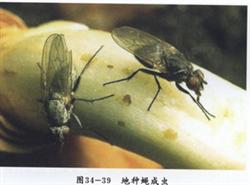
Garlic Cultivation Techniques: What Pests Attack Garlic Roots and Bulbs?
What pests attack garlic roots and bulbs? How to control them, please give an introduction. Garlic root and bulb pests include: Seed maggot. Control methods: First, for fields where a small number of seed maggots have been found causing damage, switch from applying various types of manure to applying refined organic compound fertilizer. For example, bio-organic compound fertilizer containing humic acid bacteria, etc., or apply multi-element compound fertilizer; Second, use Dithane...
-

Why does lotus root only grow leaves and not lotus roots?
Why does lotus root only grow leaves and not lotus roots?
-
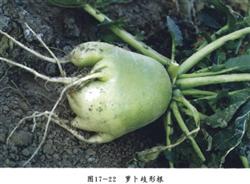
How to prevent and control forked radish roots? Practical methods to share
How should forked radish roots be prevented and controlled? Please advise. The forked radish root phenomenon is when the fleshy root is short and small and branches out. The causes of forked radish roots include the following aspects: 1. Poor soil properties: if the soil is too hard or there are stones in the soil, the fleshy root cannot grow downward and becomes bent and branched, forming forked roots. 2. Organic fertilizer...
-
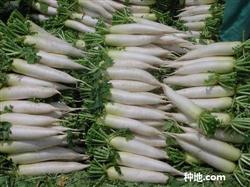
What causes the cracking of radish fleshy roots?
How can radishes be grown for high yields? Please advise. To grow radishes for high yields, you can refer to the following cultivation techniques: (1) Site selection: For growing radishes, choose fields that consume little fertilizer, are rich in organic matter, and have no same-type pests or diseases. For autumn and winter radishes, the previous crop should preferably be melons or solanaceous and cucurbit crops. For vegetable plots in outer suburban counties, in addition to the above-mentioned types of fields...
-
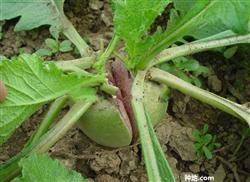
How to prevent and control branched roots and cracked roots in white radish?
How to prevent and control branched roots and cracked roots in white radish? Please advise on the causes of branched roots and cracked roots in white radish and the prevention of deformed roots such as forked and crooked fleshy roots, as well as cracking of the fleshy root forming cracked roots, which are common phenomena in production and important problems affecting yield and quality. The radish fleshy root has lateral roots on both sides, and under...
-
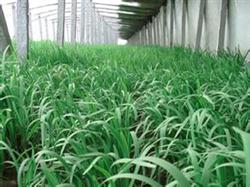
Chives have the most pesticide residue at the roots; remove half an inch of the root and first soak them in lightly salted water.
1. Temperature management. Chives like cool conditions, with an optimum growing temperature of 15-24°C, and should be ventilated appropriately during the day. To promote sprouting, after covering with a plastic tunnel the daytime temperature should be kept at 18-25°C, and after sprouting the daytime temperature should be controlled at 17-23°C. Before harvesting the first cut of chives, the daytime temperature should be 15-22°C and the nighttime temperature 10-12°C. After that, with each cut...
-

Causes of Adventitious Roots in Tomatoes and How to Prevent and Treat Them
Causes and Prevention of Adventitious Roots in Tomatoes
-

What to do when winter melon does not grow new roots? Causes and control measures
Causes of winter melon not growing new roots and control measures
-

Master the correct method when earthing up ginger to avoid damaging the roots
Ginger needs to be earthed up several times during its growth period. It is understood that the mechanical earthing-up machine used locally in Anqiu causes more serious root damage to ginger than manual earthing up, because the furrow bottom formed by the earthing-up machine is about 20 cm wide and the ridge height is 40 cm, while manual earthing up with a hoe leaves a furrow bottom of about 10 cm and a ridge height of around 35 cm. "When the earthing-up method cannot be changed, excessive root damage can be avoided by adjusting the growth direction of the underground ginger tubers, that is, when sowing the seed ginger, deliberately place the seed ginger perpendicular to the planting row, so that the daughter ginger and granddaughter ginger are also perpendicular to the planting row. By the time of earthing up, the entire ginger tuber is then perpendicular to the planting row, while the fleshy roots, lateral roots and fibrous roots caused by earthing up extend along the direction of the planting row, so they will not be damaged too much during earthing up. If the underground seed ginger is sown parallel to the planting row, too many roots will be damaged during earthing up." said Liu Shinian of Qianyulin, Linghe Town, Anqiu City.
-
Detailed Explanation of the Growth, Development and Functions of Rice Roots
After the seeds are pre-germinated, they sprout and grow roots. At first, only one root grows, called the seminal root (primary root), which develops from the radicle of the seed. The fibrous roots that later grow from the root primordia at the stem nodes are called adventitious roots. The coleoptile node and the incomplete leaf node produce about 5 roots, the first, second and third leaf nodes produce about 10 roots each, and the nodes above the fourth leaf position produce about 10 to 20 roots each. This is because the leaves increase in size in sequence from bottom to top, so the nutrients supplied for root growth increase in sequence, and the number of roots produced also increases. The nodes of the aboveground part generally do not produce roots. The nutrients produced by the leaves are
条件筛选