-

In 2016, citrus prices generally rose when the fruit hit the market, and the overall market was better than last year
In 2016, citrus prices rose across the board when the fruit hit the market, and the overall market was better than last year
-
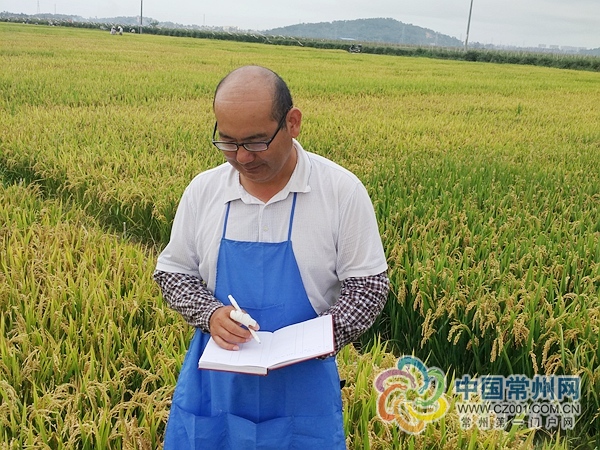
17 years of rice breeding, Zhu Banghui has achieved abundant results
Zhu Banghui: 17 years of rice breeding, with abundant results
-
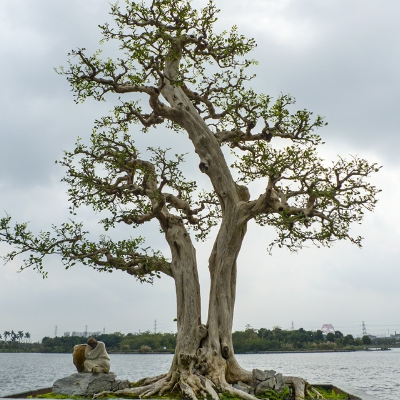
Lingnan bonsai: production methods and price introduction
Lingnan bonsai, this is a bonsai association, that is, one specializing in this area of bonsai, and many people like it
-
Characteristics and Traits of the Rice Variety Huayou Gui 99
[Basic Information] The promotion of hybrid rice has played an important role in increasing China's grain production. With the development of the national economy and the continuous improvement of people's living standards, the requirements for grain quality have become increasingly higher. Breeding early indica hybrid rice combinations with good quality, high yield, and disease resistance is an important issue urgently needing to be solved in current rice breeding. The Department of Agronomy of South China Agricultural University, in collaboration with Tengxian Seed Company and Raoping County Seed Company, used the high-quality male sterile line Y Huanong A, which is highly resistant to rice blast, and the restorer line Gui 99 to develop the high-quality, high-yield, rice blast-resistant South China early indica hybrid rice
-
Detailed Explanation of the Principles and Key Technologies of the Three-Super Cultivation of Rice in Cold Regions
The Three-Super cultivation technology for rice in cold regions addresses the growth-limiting factors currently present in high-yield rice cultivation in cold regions, such as a short growth period, excessive basic seedlings, excessive consumption of growth, poor light-receiving posture of the plant type, and decline of late-stage growth. Taking the "ridge-edge rice cultivation effect" as a model, it takes creating the largest super-high-yield population with the fewest basic seedlings as its basic approach, and takes "extending and expanding the nutritional time and space, releasing production potential, and strengthening the dual canopy (plant canopy and root canopy) performance" as its basic principle. It adopts standard high-quality super rice, uses single (double) seed positioning with ultra-early, ultra-low-rate sowing
-
Yesizhan: Main Agronomic Traits and High-Yield Cultivation Techniques of a High-Quality Conventional Rice
Yesizhan is a temperature-sensitive, early- and late-season dual-purpose, high-quality, high-yield variety bred by the Foshan Institute of Agricultural Sciences through sexual hybridization of Xiyepzhan 10 and Zhong'er Ruanzhan, and was approved by the Crop Variety Approval Committee of Guangdong Province in March 2005. Its main agronomic traits and high-yield cultivation techniques are introduced as follows: 1 Main agronomic traits. Yesizhan is early to mid-early maturing in the early season, with an average full growth period of 127 days; it is early maturing in the late season, with an average full growth period of 108 days. The plant is short and sturdy, with strong tillering ability, green leaf color, narrow and upright leaves, and the capacity to hold many panicles, with large panicles and dense grains, and good grain filling
-
Detailed Introduction to the Functions and Roles of Rice Leaves
The rice leaf is composed of two main parts: the leaf blade and the leaf sheath, in addition to accessory organs such as the auricle and ligule. The junction where the leaf sheath connects to the stem is called the leaf node. The junction where the leaf sheath connects to the leaf blade is called the leaf collar. When the seed germinates, the first thing to grow out is the coleoptile that protects the young shoot as it emerges, also called the sheath leaf. The sheath leaf differs from other leaves in that it is white and shaped like a cylinder. The second leaf has only a leaf sheath and no leaf blade, and is called an incomplete leaf. Leaves beginning from the third node have both a leaf sheath and a leaf blade, and are called complete leaves. Counting the number of leaves of a variety
-
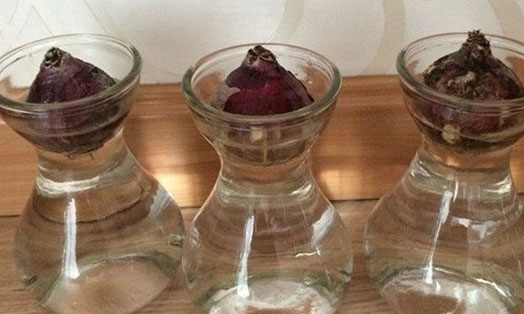
How much does a pot of hyacinth cost? Market price reference
It's hyacinth season again, and many flower lovers buying them for the first time want to know how much a pot of hyacinths costs, while others ask how much a single hyacinth costs. I've gotten to know hyacinths fairly well over the past few years, so I'm writing an article to tell flower lovers a thing or two about hyacinth prices. How much a hyacinth costs depends on the size and the variety.
-
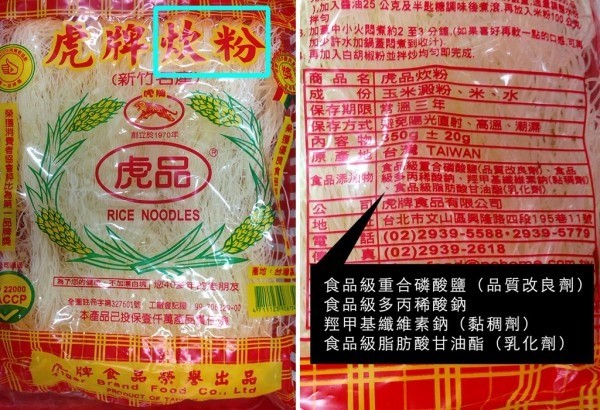
Can Hsinchu rice noodles still be called rice noodles without rice? Scholar suggests renaming them Hsinchu starch
Can something with no rice still be called "Hsinchu rice noodles"? Scholar: Just rename it "Hsinchu starch"
-
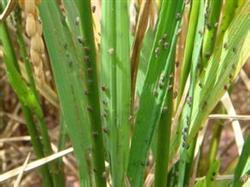
Control Methods for the Brown Planthopper Infestation in Rice
The brown planthopper, also known as the brown rice planthopper, is commonly called ascarid worm, soft-shelled ascarid, yóu worm, and midge. Scientific name Nilaparvata lugens (Stdl), order Homoptera, family Delphacidae. The brown planthopper is one of the major pests of rice in China, causing damage in all major rice-growing regions across the country, north and south, and every year it occurs and causes damage mixed with the white-backed planthopper. The two planthoppers...
条件筛选