How much does a pot of hyacinth cost? Market price reference
It's hyacinth season again, and many flower lovers buying them for the first time want to know how much a pot of hyacinths costs, while others ask how much a single hyacinth costs. I've gotten to know hyacinths fairly well over the past few years, so I'm writing an article to tell flower lovers a thing or two about hyacinth prices.
How much a hyacinth costs depends on the size and the variety. The larger the size and the rarer the variety, the more expensive it is; some hyacinth varieties are even half the price of expensive ones. Size can be understood as the size of the hyacinth bulb: the bigger the bulb, the more expensive it is. Below we'll look at the approximate price ranges.
1. Flower market: a pot of hyacinth with a hydroponic vase costs about 15-20 yuan, though in some places it may sell for less, and 10 yuan is also possible.
2. Online shopping: one hyacinth bulb costs about 4-5 yuan (not counting the hydroponic vase), and one hydroponic vase costs about 3-5 yuan (plastic ones are cheaper than glass ones).
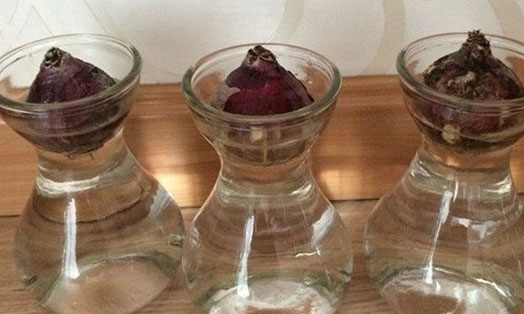
Speaking of price, I have to tell flower lovers that some sellers advertise 0.5 yuan each, or 6 yuan with free shipping, and even throw in nutrient solution, a hydroponic vase and the like. I suggest flower lovers not buy such goods; being greedy for small bargains easily leads to big losses, and there's no such thing as a free lunch. According to feedback from flower lovers who have bought them, these hyacinths are mostly rather small (because hyacinth flowering mainly relies on the nutrients in the bulb, and a bulb that is too small is not good for flowering), or the flower color is a single one.
Buying advice for hyacinths: first, look at the size (the bigger the better); second, look at the variety (this depends on personal preference, and an expensive variety is not necessarily one flower lovers like).
How much does a pot of hyacinth cost
It's hyacinth season again, and many flower lovers buying them for the first time want to know how much a pot of hyacinths costs, while others ask how much a single hyacinth costs. I've gotten to know hyacinths fairly well over the past few years, so I'm writing an article to tell flower lovers a thing or two about hyacinth prices.
How much a hyacinth costs depends on the size and the variety. The larger the size and the rarer the variety, the more expensive it is; some hyacinth varieties are even half the price of expensive ones. Size can be understood as the size of the hyacinth bulb: the bigger the bulb, the more expensive it is. Below we'll look at the approximate price ranges.
1. Flower market: a pot of hyacinth with a hydroponic vase costs about 15-20 yuan, though in some places it may sell for less, and 10 yuan is also possible.
2. Online shopping: one hyacinth bulb costs about 4-5 yuan (not counting the hydroponic vase), and one hydroponic vase costs about 3-5 yuan (plastic ones are cheaper than glass ones).
Speaking of price, I have to tell flower lovers that some sellers advertise 0.5 yuan each, or 6 yuan with free shipping, and even throw in nutrient solution, a hydroponic vase and the like. I suggest flower lovers not buy such goods; being greedy for small bargains easily leads to big losses, and there's no such thing as a free lunch. According to feedback from flower lovers who have bought them, these hyacinths are mostly rather small (because hyacinth flowering mainly relies on the nutrients in the bulb, and a bulb that is too small is not good for flowering), or the flower color is a single one.
Buying advice for hyacinths: first, look at the size (the bigger the better); second, look at the variety (this depends on personal preference, and an expensive variety is not necessarily one flower lovers like).
Click to read how to grow hyacinths
How much does a pot of hyacinth cost and how to grow hyacinths
Hyacinth, also known as Dutch hyacinth, Western hyacinth and five-colored hyacinth, is a perennial herbaceous bulbous plant of the genus Hyacinthus in the family Hyacinthaceae. Before flowering it looks like garlic. It originated in the Mediterranean coast and Asia Minor region and has very high ornamental value. It is suitable for arranging flower beds, flower borders and flower troughs, and can also be used as cut flowers, potted plants or water-grown ornamentals. Let's take a look below at how much a pot of hyacinth costs!
How much does a pot of hyacinth cost?
The price of hyacinth depends on the size and variety. The larger the size and the rarer the variety, the more expensive it is. Size can be understood as the size of the bulb: the bigger the bulb, the more expensive it is. At the flower market, a pot of hyacinth with a hydroponic vase costs about 15-20 yuan, though in some places it may sell for less, and 10 yuan is also possible. Online, one hyacinth bulb costs about 4-5 yuan (not counting the hydroponic vase), and one hydroponic vase costs about 3-5 yuan (plastic ones are cheaper than glass ones). Some sellers advertise 0.5 yuan each or 6 yuan with free shipping, and even throw in nutrient solution, a hydroponic vase and the like; it is suggested not to buy such goods, as being greedy for small bargains easily leads to big losses. According to feedback from flower lovers who have bought them, these hyacinths are mostly rather small (because hyacinth flowering mainly relies on the nutrients in the bulb, and a bulb that is too small is not good for flowering) or the flower color is a single one.
How to select hyacinths
1. Touch the surface of the bulb with your hand to see whether there is mold and incomplete development. If there is mold, you will feel small pits and a soft texture; if development is incomplete, the surface of the bulb will not feel round and plump.
2. Visually check whether the basal plate is neat, whether the surface is smooth, and whether there is serious color difference.
3. Hold the bulb and smell it carefully to see whether there is a serious rotten smell. Some bulbs are placed together with other rotten bulbs and plants during transport, and are easily infected and carry mold.
How to grow hyacinths
1. Disinfect and dry in the shade: first disinfect and sterilize the bulb to prevent rot. Remove the dried outer skin and old roots of the bulb, soak it in potassium permanganate solution (the concentration should be a faint purple-red) for a quarter of an hour to soak and disinfect. After disinfection, shake the water off the bulb and let it dry naturally in the shade for one day.
2. Plant at the right time: since the flower buds of the bulb have already differentiated and formed, no base fertilizer is needed during planting. Plant the bulb into the potting soil, with the soil level covering the highest point of the bulb by 2 cm. If you have no experience growing bulbs, it is advisable to leave the highest point of the top of the bulb half a cm above the soil (mainly to prevent stem rot caused by overwatering; the latter is recommended). After planting, water the pot thoroughly.
3. Early care: after planting, it can be placed in an environment no higher than about 10°C to promote root growth and sprouting. The whole root-promoting and sprouting period is about 20-30 days (it may vary depending on the ambient temperature). When watering, water thoroughly only after the soil has dried out; be sure not to water at will. You can judge the degree of dryness and moisture by weighing the pot.
4. Later care: after sprouting, the temperature of the growing environment can be appropriately raised to shorten the time needed for flowering. The growing temperature should preferably be kept at about 15-20°C. Below 10°C, growth is relatively slow, but it has no great effect on growth; above 25°C, blind flower phenomenon is likely to occur (the flower buds do not grow well and cannot bloom). Normally, the sunshine duration can be lengthened; with more sunshine, the plant is relatively shorter and the plant shape is beautiful. Under normal care, it takes about 30 days from sprouting to flowering; if the ambient temperature is high, it blooms relatively early.
5. Care during the flowering period: the flowering period of hyacinth is about 10-15 days; if the ambient temperature is low, the flowering period is relatively longer. After flowering, it can be moved indoors for viewing, with a proper amount of light given every day to prevent the leaves and flower stems from growing leggy.
6. After-flowering treatment: after the flowers fade, the spent flowers can be removed to nourish the bulb. In daily management, apply nitrogen fertilizer (cake fertilizer) about once every 2 weeks to promote the development of the bulb in the soil; how well the bulb is nourished directly affects whether it will bloom again the following year. After summer arrives, the leaves will slowly turn yellow naturally, and the amount of watering can be gradually reduced. Once the bulb enters dormancy, stop watering completely and place it in a cool place (preferably below 30°C; too high a temperature is bad for the formation of flower buds).
Precautions for growing hyacinths
1. Hyacinth likes moist soil but is afraid of waterlogging. Soil humidity should be kept between 60-70%. If too high, root respiration is inhibited and the roots easily rot; if too low, the aboveground part wilts and may even die. Air humidity should be kept at about 80%, and humidity can be increased by misting and sprinkling water on the ground, or reduced by means such as ventilation.
2. Hyacinth likes fertilizer and can also tolerate poor soil. During the growing period and the early flowering stage, apply 10 times diluted decomposed liquid fertilizer 1-2 times each, or 1000 times diluted "Huaduoduo" general-purpose fertilizer 2-3 times each. After flowering, apply a top dressing of 10 times diluted decomposed liquid fertilizer mixed with an equal amount of 500 times diluted potassium dihydrogen phosphate, or 1000 times diluted "Huaduoduo" general-purpose fertilizer 1-2 times, which is beneficial for enlarging the underground bulb. Water-grown hyacinths do not need fertilizing; just grow them in clean water. When they are about to bloom, adding a few grains of urea to the water can make the leaf color more emerald green.
3. If the growing temperature for hyacinth is too high, even above 35°C, flower bud differentiation will be inhibited, growth will be deformed, and the rate of blind flowers will increase; if the temperature is too low, the flower buds will suffer frost damage. At the beginning of the 20th century, flower growers began to produce hyacinths in greenhouses and give them certain temperature treatment.
4. Hyacinth needs low temperatures to take root, so potted and water-grown hyacinths should be placed under natural conditions to grow, and moved into an enclosed balcony with light only when the temperature reaches about 0°C. Potted hyacinths should be watered regularly to keep the soil moist.
5. Water-grown hyacinths should have their water changed regularly. Since light is not good for root growth, at the initial stage of water-grown hyacinths the transparent hydroponic vase should be wrapped with black light-blocking material; the wrapping can be removed only when the roots grow to the bottom of the vase. Never fill the water so full that it covers the bottom of the bulb.
6. Hyacinth is relatively cold-tolerant. Potted plants can be grown on a balcony or windowsill with light at about 0°C, keeping the potting soil moist; when the temperature is relatively high at noon, mist the leaves and the surroundings several times. Water-grown hyacinths should be placed in an environment of about 5°C to prevent the water in the hydroponic vase from freezing and squeezing and damaging the hyacinth roots. If the indoor temperature is maintained above 10°C in winter, it can bloom early, as early as the Spring Festival.