-

How to make fish, vegetable and rice cereal: recipe and detailed steps
Ingredients: rice cereal (or infant rice cake), 15-25 g each of fish and green vegetables, a pinch of salt. Method: soak the rice cereal in a little water until soft, stir into a paste, put it in a pot, bring to a rolling boil over high heat for about 8 minutes; wash the green vegetables and fish, chop each into a paste and add both to the pot, continue cooking until the fish is thoroughly cooked, season and it is ready. The secret of calcium supplementation: fish is rich in calcium, which not only helps your baby grow taller and supports bone development, but also promotes brain development and meets the body's need for a variety of nutrients, so you may want to regularly
-
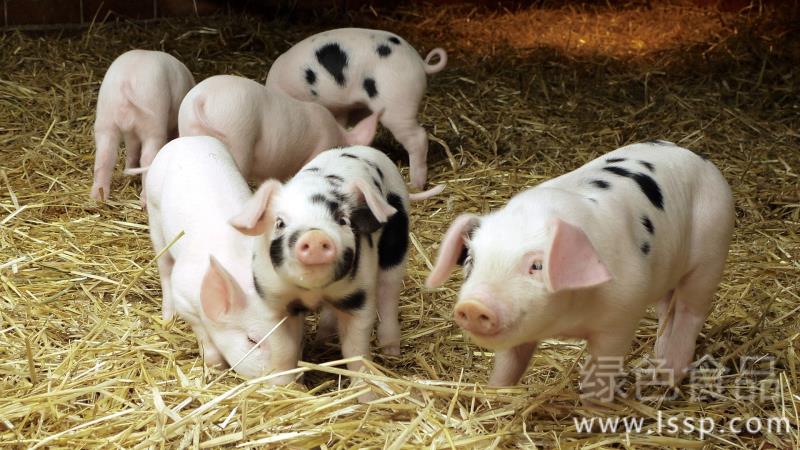
Pork prices are so high, so why is pig farming still not profitable?
Why is pig farming still not profitable when pork prices are high?
-
How to cook long-snout catfish deliciously? Home-style recipe for steamed long-snout catfish with rice powder
Cooking category: Steamed dishes Cuisine: Anhui cuisine Ingredient category: Fish Taste: Light Suitable season: Summer Color, aroma and taste: Steamed wrapped in lotus leaves, filling the air with a delicate fragrance, the fish is plump and tender, making it a summer seasonal dish. It also has the effects of tonifying the middle and boosting qi, strengthening the spleen and opening the appetite, and clearing yin. Main ingredients: long-snout catfish, fried japonica rice powder, lotus leaves Auxiliary ingredients: Shaoxing wine, soy sauce, doubanjiang, salt, sugar, scallion, ginger, sesame oil Method: 1) Clean the long-snout catfish, remove the flesh from both sides, and cut into small oblong
-
How to make spicy fish slices delicious? A simple home-style recipe that goes great with rice
1. Take one live fish, gut and clean it, remove the flesh from both sides, cut into butterfly slices, and marinate with seasoning for 30 minutes. 2. Heat oil and fry until cooked. 3. Leave a little oil in the wok and saute the garlic slices until fragrant. 4. Then saute the dried chilies and minced ginger until fragrant, add a little water, soy sauce, and sugar, and bring to a boil. 5. Add the fish slices and coat them with the sauce, drizzle with vinegar, thicken with a thin slurry, sprinkle with scallion sections, toss, and serve.
-
Eight Treasure Crab Rice Recipe and Home Cooking Tips
Cuisine: Fujian cuisine Ingredients/Seasonings: 2 blue swimming crabs, 4 cups glutinous rice, 2 tablespoons each of diced shiitake mushrooms, dried shrimp, diced bamboo shoots, and diced ham, 1 tablespoon wine, 1 tablespoon soy sauce, 5 cups superior stock, 3 tablespoons raw peanuts (skin removed), 2 scallions, 1 tablespoon chopped scallion, 4 slices ginger. Preparation: ① Heat oil in a wok, stir-fry the finely diced shiitake mushrooms, dried shrimp, diced bamboo shoots, ham, peanuts, etc., splash with wine, add soy sauce and salt to season, then add 1 cup superior stock and bring to a boil. Turn off the heat, add the cooked glutinous rice, and mix evenly
-
Five Steps for Stocking Brood Shrimp in Rice-Shrimp Rotation Explained
Now is the golden time for stocking brood shrimp. Farmers should pay attention to the following points when stocking brood shrimp: 1. Carry out basic rice field renovation, mainly by digging perimeter ditches, reinforcing embankments, building water inlet and drainage systems, and setting up anti-escape facilities. 2. Disinfect the perimeter ditches well, preferably by spreading quicklime throughout, with a dosage of 100 jin per mu, and stock brood shrimp one week later. 3. Select good brood shrimp and stock them reasonably. Choose sexually mature, healthy individuals with complete appendages, and stock them at a female-to-male ratio of 3:1. Stock 15-20 kg of brood shrimp per mu. In rice fields that have been used for farming before
-
How to Achieve High Yield and Efficiency in Rice-Fish Rotation? A Detailed Explanation of the Field-Pond Technique
The field-pond rice-fish rotation is a high-yield, high-efficiency technical model formed in western Fujian over the past two years through continuous improvement based on the extension of "pit-pond" and "ditch-trench" rice-field fish farming. In 2000, Longyan City extended rice-field fish farming over 20,000 mu, of which the field-pond rice-fish rotation area was nearly 5,000 mu. On March 21 this year, the Longyan City Animal Husbandry and Fisheries Bureau and the Liancheng County Science and Technology Bureau organized relevant experts to conduct an on-site sampling inspection of the rice-field fish farming on Li Jincai's household's 1.8 mu of paddy field in Songyang Village, Gechuan Township, where this model was implemented. The total output of fresh fish was 1,112.5 kg
-
Detailed Explanation of Techniques for Self-Breeding Rice Field Eel Fry
1. Selection and Cultivation of Parent Eels. Eels used for breeding must have a robust physique and swim actively. The body color is best in coarse black mud, yellow-brown, or black speckled, green-brown. The source of parent eels should be those caught in cages the same day with relatively small wounds. Rice field eels (Monopterus albus) have sex reversal characteristics; 1-winter-age and 2-winter-age rice field eels are basically female, and after 2-winter-age rice field eels spawn, the proportion of males gradually increases, until at 6-winter-age they are basically male. During the non-spawning season, it is difficult to distinguish male from female; generally, body length and body weight are used as standards, generally body length 37-50 cm, weight 7
-
Occurrence and Prevention Methods of Rice Field Eel Diseases
Rice field eels live year-round in water bodies with complex environmental factors and are frequently attacked by pathogens such as viruses, bacteria and parasites. During the rearing process, sudden changes in water temperature, insufficient dissolved oxygen, excessively high water acidity, and poor feeding management, such as insufficient feed, malnutrition, or feeding rotten and spoiled feed, and deterioration of water quality, disrupt their physiological state, weaken the eel body and lower their resistance, and in severe cases often cause mass death. Even if they do not die, it directly affects the growth and development of the rice field eels. In some cases, it is also due to excessive stocking density, or
-
Principles and Methods of Oral Medication for Preventing Rice Field Eel Diseases
Also called the oral administration method, it generally involves mixing the medication to be used into the feed at the prescribed dose to make medicated bait, so that the rice field eel ingests the medication by eating the feed, thereby achieving the purpose of preventing and treating diseases. The problem with using this method is that usually once rice field eels become ill, it becomes a group outbreak, with generally reduced appetite or almost complete cessation of feeding, meaning that the amount of medication entering the rice field eels' bodies will not be very large, and the treatment effect will not be very good either. Therefore, certain technical measures need to be taken to do everything possible to get the sick rice field eels to better ingest the medicated bait, such as stopping feed
条件筛选