-

Detailed Introduction to New American Red-Fleshed Plumcot Varieties
Plumcot is an emerging fruit obtained through a complex hybridization process between apricot and plum. Its fruit is richly aromatic with excellent flavor, and it also has fine characteristics such as large fruit, early fruiting, high and stable yield, a long harvest period, good storage tolerance, strong adaptability and high economic value. Red-fleshed plumcots are extremely rare on the market and bring very high cultivation returns. Three new American red-fleshed plumcot varieties with different ripening periods are introduced here. 1. Flavor Rose. The earliest-ripening new American red-fleshed plumcot hybrid variety; its fruit is flat in shape, turns purple-black when ripe, with a smooth and glossy, very attractive skin
-

Detailed Explanation of Field Management Techniques for Angelica dahurica Cultivation
Key Field Management Points for Angelica dahurica
-
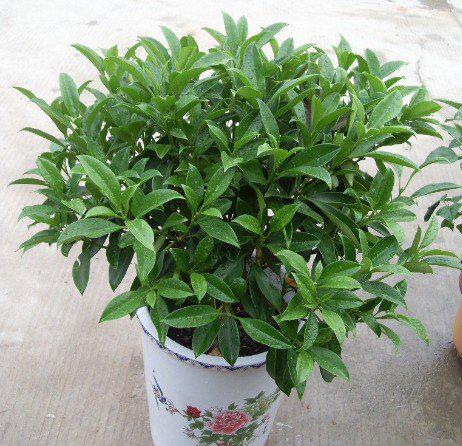
What causes yellowing leaves on the African jasmine?
African jasmine readily adapts to unfamiliar environments and can be grown in courtyards and on balconies. Its branches are the color of jade, its leaves are glossy and shining, and its flowers are slightly fragrant with an elegant shape, each with five petals, arranged in umbels clustered at the tips of the flowering branches. Its flowering period is very long, blooming in both winter and summer, with the most splendid blooms in spring and summer.
-
Key Cultivation Techniques and Management Methods for American Plumcot
American plumcot, namely the new intergeneric hybrid cultivar of apricot and plum, is a new cultivar introduced from the United States by the Economic Forest Research and Development Center of the Chinese Academy of Forestry. This cultivar was developed through multiple generations of hybridization between apricot and plum. Its fruit has a unique rich and fragrant aroma, and its sugar content is much higher than that of any single apricot or plum cultivar, with soluble solids content reaching 18-20%. It is one of the emerging fruit varieties with the best market prospects. Currently, 7 cultivars have been introduced: Flavor Rosa, Flavor Queen, Flavor Delight, Flavor King, Dinosaur Egg,
-
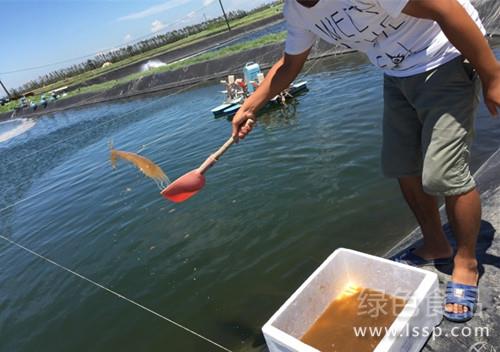
South American shrimp feed costs are high, how can feed be saved?
South American shrimp feed is expensive and costs are high; how to save feed when farming shrimp
-
Diagnosis and Control of Type I Paramyxovirus Infection in American King Pigeons
In recent years, with changes in the rural economic structure, the breeding of American White Feather King Pigeons has gradually developed in our city. From January to May 2002, some King Pigeon farms in Youxian District, Fucheng District, Anxian County, Santai County, and Zitong County of Mianyang City successively experienced outbreaks of a disease characterized by green watery diarrhea, refusal to eat, short disease course, and high mortality, causing serious economic losses to breeders. Based on comprehensive on-site diagnosis (epidemiology, symptoms, necropsy) and laboratory testing, the author confirmed it as pigeon type I paramyxovirus infection. Using
-
What are the similarities and differences between Chinese and American cotton grading standards?
The United States is a major cotton-producing and cotton-consuming country, with half of its annual cotton production used for domestic consumption and half for export. As a result, American cotton standards have an important influence worldwide and are used by 24 countries and regions; they are also known as the universal cotton standards. Below is a brief introduction to the similarities and differences between Chinese and American cotton grading standards: Cotton grade is a reflection of the overall quality performance of cotton, and the cotton standards of most cotton-producing countries in the world include a cotton grade inspection item. In the U.S. cotton standard
-
What kind of fish is the American flagfish? Let's get to know this fish
The American flagfish, Jordanella floridae, is also known as the flagfish and the star-striped fish. Place of origin: Florida, USA. Appearance: the body grows up to 6 cm long, and its shape resembles a moonfish, but the back and belly are broad, and the caudal peduncle is also wide. The head and snout are bluntly rounded. The outer edge of the caudal fin is straight. The dorsal fin is larger than the anal fin, the dorsal and anal fin edges are curved, and the body color is variable, with red, pale yellow, blue, purplish red and other colors, some deep and some light, some leaning blue or leaning red, and the whole body has more than 10 longitudinal rows of star-spotted stripes, while the dorsal fin is covered with dark star spots; its star-spotted stripes closely resemble the stars-and-stripes pattern of the American flag, which is how it got its name. Habits
-
New Black Sweet Potato Variety: Introduction to the American Ultra-Short-Vine Black Sweet Potato
1. Characteristics: ① Excellent appearance: The tubers are long and cylindrical, with a single tuber weighing 300-800 grams, and the largest around 1000 grams. It sets many tubers evenly, with 4-8 tubers per plant. The tuber surface is purple-black, glossy, and attractive. ② Excellent quality: Its nutrient content is significantly higher than other tuber crops. Its lysine, potassium, manganese, and zinc contents are 5-8 times higher than ordinary sweet potatoes, and in particular, its content of the anti-cancer substances iodine and selenium is more than 20 times higher than other sweet potatoes, ranking first among foods. For this reason, it is hailed in the United States as a "green health food." ③ Excellent eating quality: When cooked, it is sweet, fragrant, and palatable.
-
Characteristics and Key Cultivation Points of the American Black Hybrid Sweet Potato Variety
This variety is a cross between the American Black sweet potato and Shuangwanyi No. 1. The vines grow about 1.5 m long. The tubers are spindle-shaped, uniform and attractive, and set in a concentrated cluster. It yields 50-80% more than the American Black sweet potato and Japanese Chuanshanzi. The tuber skin is purple-black, and the flesh is purple-black with silvery-white netting. When cooked, the flesh turns jet black, fine and smooth in texture, with a sweet fragrance and a mealy, sandy taste. It is rich in selenium, an anti-cancer element. Yield is 3000-6000 kg per mu, with 3000-3500 plants per mu.
条件筛选