South American shrimp feed costs are high, how can feed be saved?
Farming whiteleg shrimp (Litopenaeus vannamei) generally requires pelleted compound feed, but this feed is expensive, so shrimp feed costs are high, accounting for more than 70%. Reducing feed costs and reasonably saving feed during farming is one of the important ways to achieve high efficiency in farming whiteleg shrimp. The relevant techniques are introduced below for reference.
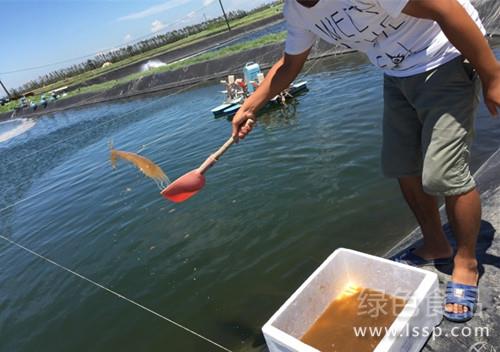
Feeding South American shrimp
1. Remove wild and miscellaneous fish.If there are many wild miscellaneous fish and shrimp in the pond, they will compete with whiteleg shrimp for food and may even prey on the shrimp. Because low-quality fish and shrimp compete for food, feed utilization will be reduced, so they should be removed. Method: before releasing the seedlings, fill with 20-30 cm of water, use 150 kg of quicklime per 1/15 hectare, slake it into a slurry and splash it over the whole pond to thoroughly clear the pond and kill wild miscellaneous fish in the pond. When filling with water, add a filter mesh bag to prevent wild miscellaneous fish from entering the pond.
2. Feed selection and supplementation.Choose special feed for whiteleg shrimp produced by a reputable manufacturer. A reasonable feed formula can ensure rapid shrimp growth and avoid feed waste. Do not replace it with other shrimp feed. In the early stage of farming, pay attention to fertilization to cultivate biological communities beneficial to shrimp growth, such as benthic organisms and plankton. Also transplant some beneficial feed organisms into the pond, so that less or no bait needs to be fed. As the basic bait is consumed, some pathogen-free and fresh live bait and special compound feed for juvenile shrimp can be fed, then gradually transition to feeding special feed. This can save part of the feed.
3. Keep the water quality fresh.Whiteleg shrimp prefer fresh water quality. When water quality is good, shrimp grow rapidly, there are fewer diseases, feed can be fully utilized, and the feed coefficient is reduced. Generally, the water is required to be yellow-green, with a transparency of 30-40 cm and dissolved oxygen of 4 mg/L. Common water quality adjustment methods: change water frequently, once every 7-10 days, changing 10%-20% each time; regularly splash quicklime, once every 10-15 days, at a concentration of 15×10-6; install aerators and use them to regulate; use biological agents such as photosynthetic bacteria and Bacillus to regulate water quality.
4. Master feeding techniques.
First, feed small amounts many times. According to the feeding habits and growth characteristics of shrimp, adhere to the principle of small amounts many times, and the feeding amount also differs at different times. Generally, at 7 o'clock feed 30% of the daily feeding amount, at 11 o'clock feed 10%, at 18 o'clock feed 40%, and at 23 o'clock feed 20%.
Second, master the appropriate feeding amount. The feeding amount is difficult to control. Too much causes feed waste, while too little means the shrimp do not eat enough, which is not conducive to growth. A more practical method is to set up feeding trays. Set up several feeding trays of about 1 square meter around the pond. When feeding, scatter the feed evenly. After 1.5-2 hours of feeding, check the shrimp's feeding situation.
Third, feed according to weather conditions. When the weather is clear, with gentle wind and warm sun, feed more; when the weather is bad, with continuous rain, stuffy heat, or a cold snap, feed less or not at all.
Fourth, feed according to the condition of the shrimp. Flexibly control the feeding amount according to the growth condition of the shrimp and whether there is disease. When the shrimp grow vigorously and there is no disease, feed appropriately more; otherwise, feed less. When the shrimp molt in large numbers, feed less, and feed more one day after molting.