-
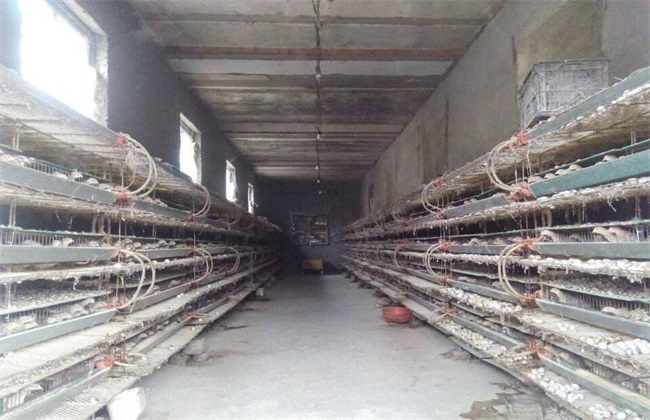
Key Points of Quail Rearing and Management Techniques in Winter
Quail Rearing and Management in Winter
-
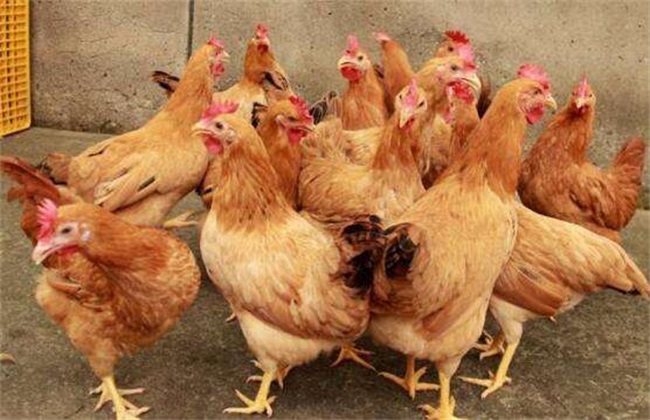
Key Points of Laying Hen Rearing and Management Techniques in Autumn
Autumn Rearing and Management of Laying Hens
-

Poultry Farming Considerations: Healthy Rearing and the Development Trend of Antibiotic Alternatives
Over the past decade or so, scientists have discovered that a poor gut microbiome is linked to many diseases, so how to increase beneficial gut bacteria has become a hot research topic among scientists. In fact, gut health is also very important for livestock. To reduce the use of antibiotics, recently a research team at National Ilan University
-

Selection methods for grafting in artificial queen rearing in beekeeping
Queen-rearing conditions: besides the close relationship between queen body weight and egg weight and queen quality, every factor in the artificial queen-rearing process has a great influence on queen quality...
-

What issues need attention in catfish farming? A full analysis of the rearing key points
What issues need attention when farming catfish
-
Detailed Explanation of Breeding Rooster Rearing Management and Artificial Insemination Technical Procedures
Rearing Management and Artificial Insemination Technical Procedures for Breeding Roosters
-
How are common diseases of Silkie chickens diagnosed? With a detailed explanation of rearing methods
1. Newcastle disease (fowl pest) [Diagnosis] Sick chickens are listless, have reduced appetite, elevated body temperature, tremors, head tilted backward, opisthotonus, and circular movement, etc. Difficulty breathing, drooping wings, greenish watery droppings, death after 2 to 3 days, with a relatively high mortality rate. [Treatment] At 7 to 8 days of age, chicks are given Newcastle disease strain II vaccine by nasal or eye drops; at 28 days of age, the vaccine is administered once more; at 50 to 60 days of age, Newcastle disease strain I vaccine is injected intramuscularly. If the disease breaks out suddenly, Newcastle disease strain I vaccine should immediately be injected intramuscularly.
-
Key Points of Broodstock Rearing Technology and Feeding Management Methods
1. Broodstock Rearing (1) Sexual Maturity The sexual maturity age of Wuchang bream (Megalobrama amblycephala) is 2 to 3 years, and the sexually mature body weight is above 0.5 kg. The spawning and breeding period is from May to June. (2) Male and Female Identification Sexually mature male fish have a large number of "nuptial tubercles" on the head, pectoral fins and caudal peduncle, with a rough feel when touched by hand; the abdomen is narrow and small, and when sexually mature, lightly pressing the testis area of the abdomen causes milky white semen to flow out; the first fin ray of the pectoral fin is thick and wavy-curved. Female fish have no "nuptial tubercles" or only a small number of tubercles on the eyes and back, and the abdomen is obviously
-
What is the one-year-old fish fingerling rearing model in the Guangdong-Guangxi region?
The method of rearing one-year-old fish fingerlings in the Guangdong-Guangxi region differs from that in Jiangsu and Zhejiang. Rather than starting with polyculture of multiple species, monoculture is carried out in the early stage, and after the fish grow to 5-6 cm, polyculture is then carried out according to a ratio. The advantages of this method of rearing one-year-old fish fingerlings in Guangdong and Guangxi are: (1) The survival rate of fish in early-stage monoculture is relatively high, generally 80%-90%. (2) When stocking in proportion in the later stage, "eliminating the inferior and selecting the superior" can be applied. Selecting fish with strong constitutions for polyculture can correspondingly increase the survival rate
-
Conditions Required and Main Technical Requirements for Collective Rearing of Young Silkworms
I. The Purpose of Collective Rearing of Young Silkworms. As the saying goes, "Rearing young silkworms well is half the harvest," which fully illustrates the importance of rearing young silkworms. The purpose of collective rearing of young silkworms is to strengthen the constitution of young silkworms, ensure the safety of grown silkworms, and achieve high-quality and high-yield cocoons. Advantages of collective rearing of young silkworms: (1) It facilitates scientific silkworm rearing, adopts advanced silkworm rearing techniques and facilities, promotes uniform development and strong constitution of young silkworms, provides a guarantee for grown silkworm rearing, and lays the foundation for high and stable cocoon yields. (2) It facilitates disinfection and disease prevention. It overcomes the difficulties of young silkworms' weak resistance to adverse environments and susceptibility to pathogen infection, reduces lost silkworms, and ensures the number of silkworms. Collective rearing of young silkworms can achieve comprehensive disinfection of rearing rooms and equipment and strict disease prevention measures, reducing opportunities for pathogen infection and effectively controlling the occurrence of silkworm diseases. (3) It helps improve work efficiency. Collective rearing of young silkworms can save mulberry leaves, labor, fuel, equipment and housing, reduce silkworm rearing production costs, and improve economic benefits.
条件筛选