Selection methods for grafting in artificial queen rearing in beekeeping
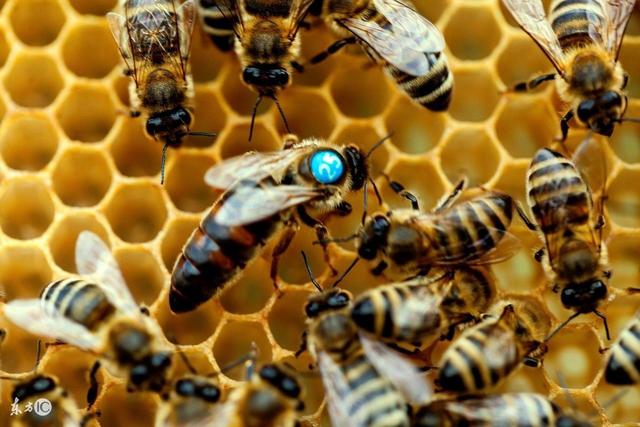
Queen-rearing conditions: besides the close relationship between queen body weight and egg weight and queen quality, every factor in the artificial queen-rearing process has a great influence on queen quality. These factors include the larval age at grafting, the larval state at grafting, the grafting technique, the feed for the larvae used to rear queens, the number of queens reared in the same batch, the condition of the artificial queen cups, the presence of sealed queen cells in the nurse colony, and the state of the nurse colony.
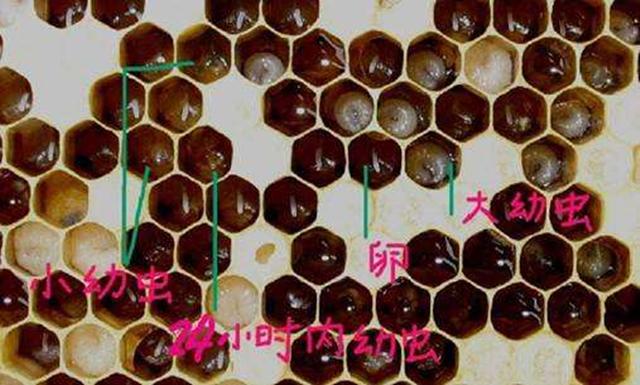
1. Relationship between larval age at grafting and queen quality
Weifer found that queens reared from larvae of different ages showed decreases in body weight and number of ovarioles as larval age increased.
Walker studied the effect of the age of grafted larvae on the quality of reared queens:
found that queens reared from 1-day-old larvae had an average body weight of 189 mg,
queens reared from 2-day-old larvae had an average body weight of 172 mg,
queens reared from 3-day-old larvae had an average body weight of 147 mg.
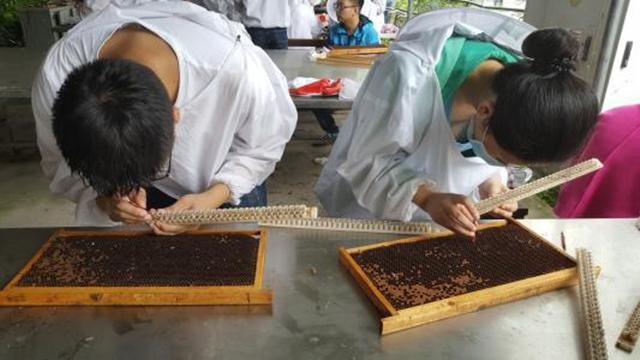
As the age of grafted larvae increases, indicators such as queen body weight, number of ovarioles, diameter of the spermatheca, and the number of sperm entering the spermatheca all decline. Some scientists reared queens from larvae of different ages and confirmed this by dissecting and measuring the number of ovarioles:
queens reared from grafted 1-day-old larvae had an average of 208 ovarioles,
queens reared from 2-day-old larvae had an average of 202 ovarioles
Ross reared queens from eggs and from 1- to 3-day-old worker larvae, with the following results:
queens reared from grafted eggs had an average of 315 ovarioles, with 80% having more than 300;
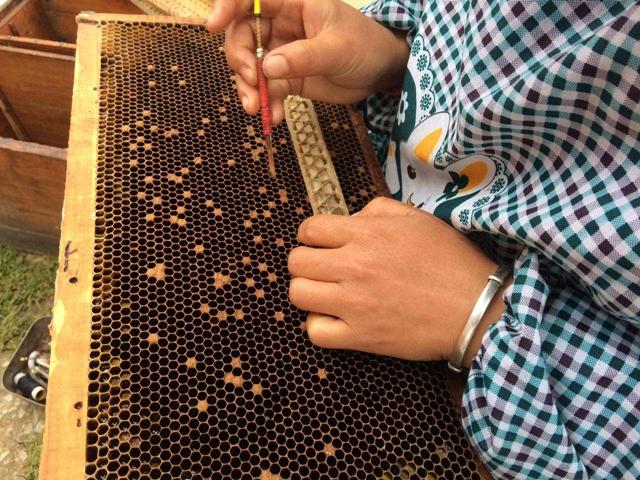
when grafting 1-day-old larvae to rear queens, the reared queens had an average of 299.5 ovarioles, with 51% having more than 300;
when grafting 2-day-old larvae to rear queens, the reared queens had an average of 293.7 ovarioles, with 39% having more than 300;
queens reared from 3-day-old larvae had an average of only 264.8 ovarioles, with only 12% having more than 300.
Queens reared from larger worker larvae show a higher natural supersedure rate than queens reared from smaller larvae. Chen Shibi found that queens reared from newly hatched larvae had a significantly higher birth weight than queens reared from 1-day-old larvae. The quality of queens reared from worker larvae of different ages differs, mainly because as larval age increases, the difference in food composition between worker and queen larvae increases; therefore, the older the small larva grafted, the closer its development is to that of a worker.
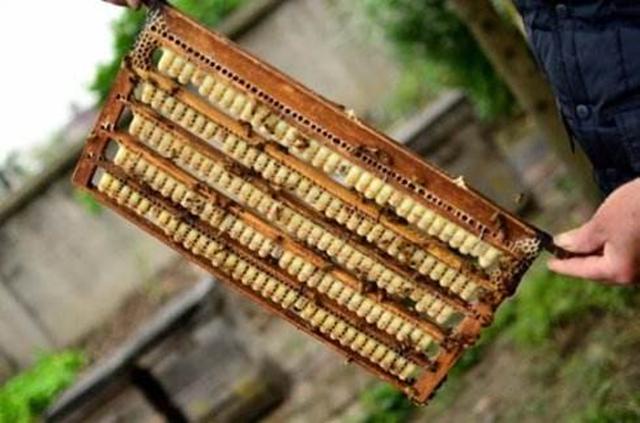
2. Relationship between larval state and queen quality
Worker larvae molt 4 times during postembryonic development before sealing. Before molting, the larval surface gradually changes from glossy to dull and lusterless. The Soviet Bee Research Institute reared queens from larvae with glossy and with lusterless cuticle: with glossy larvae, the acceptance rate was 79%, the average birth weight of queens was 195.9 mg, and the average number of ovarioles per ovary was 176.5; whereas with lusterless larvae, the acceptance rate was 35.6%, the average birth weight of queens was 190.5 mg, and the average number of ovarioles per ovary was 157.7.
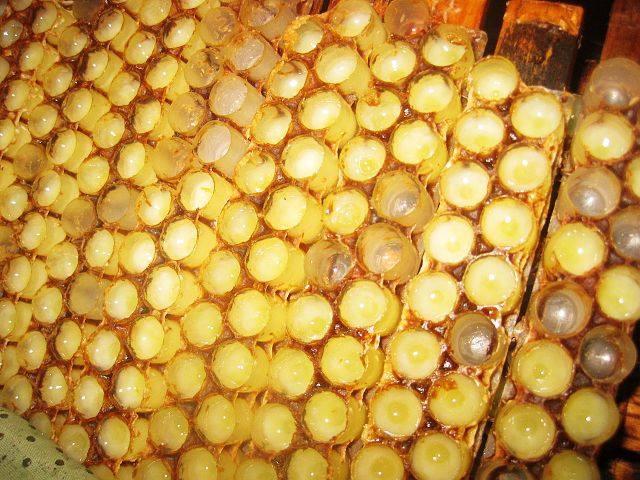
3. Relationship between larval feed and queen quality
Chen Shibi and others selected 4 colonies with similar conditions as nurse colonies and divided them into 4 groups. In the first group, royal jelly was placed in the center of the queen cup at grafting; in the second group, honey was placed in the center of the queen cup; the third group used double grafting; the fourth group used dry grafting with no feed added to the queen cup.
Each nurse colony received a queen-rearing frame with 30 queen cups placed in it. The average birth weight of queens from double grafting was 250.36 mg; the average birth weight of queens reared in queen cups with honey placed in them was 250.82 mg, almost the same as with double grafting; the average birth weight of queens from dry grafting was 228.21 mg; the smallest average birth weight, 226.07 mg, was for queens reared in queen cups into which ordinary royal jelly produced over 72 h had been placed and diluted with water.
This shows that ordinarily produced royal jelly is not suitable as feed for young queen larvae. With double grafting, as soon as the young larva is grafted into the queen cup, it immediately has feed for young larvae to eat, so the development of the queen larva is affected very little. When fresh thick honey taken from the comb cells is placed in the center of the queen cup and the young larva is grafted onto it and placed in the nurse colony, the nurse workers immediately suck the honey in the queen cup dry and immediately feed the queen larva.
The quality of queens reared by double grafting and by placing honey in the queen cup is relatively ideal. In other experiments, the birth weight of queens reared by double grafting was always the most stable. What deserves attention is that in recent years there have often been cases of royal-jelly-type bees rearing smaller-bodied queens even when a relatively large amount of royal jelly remains in the queen cup. Whether this is variation of the bee stock or a change in royal jelly composition has not yet been confirmed.
4. Relationship between the number of grafted larvae and queen quality
According to the experimental results of Chen Shibi and others, the fewer queens a nurse colony rears, the heavier the birth weight of the queens; as the number of queens reared in the nurse colony increases, the birth weight of the reared queens decreases. Generally, for nurse bees of 12-15 frames of bees, it is appropriate to rear 20-30 queen cells at a time. For colonies with very strong populations, it is still best not to exceed 40 queen cells.
5. Relationship between the condition of the queen cup and queen quality
Suletanov observed that larvae grafted into artificial queen cups were accepted within 6 hours, mostly within 4-5 hours; if the colony had trimmed the artificial queen cup before grafting, the larva could be accepted 1 hour earlier after grafting. The earlier the bees accept it, the greater the body weight of the queen reared from that larva and the better its quality. After the queen-rearing frame is added to the colony, the birth weight of queens reared from larvae accepted within 4 hours increased by 10-20 mg (milligrams) compared with those accepted 1-2 hours later.
6. Effect of the presence of sealed queen cells in the nurse colony on queen quality
When adding a new queen-rearing frame, Taranov separately removed and retained the original queen-rearing frame with already sealed queen cells, in order to compare the effect of the presence of sealed queen cells in the nurse colony on the quality of reared queens. Queens reared by colonies without sealed queen cells gained about 15 mg more in birth weight than queens reared in colonies with sealed queen cells.
7. Relationship between the state of the nurse colony and queen quality
Research by Chen Shibi and others confirmed that nurse colonies with many nurse bees, many sealed brood combs, and few eggs and larvae rear queens of higher quality.
Source: compiled from literature
Beekeeping techniques: queen-rearing tips Link
Foreign beekeeping techniques: queen rearing and swarming tips video link
Beekeeping techniques: several behavioral languages of the Chinese honey bee link
Beekeeping techniques: biological characteristics of the honey bee colony (Part 1) link
Interested beekeepers can look at the books below.