-

Detailed Explanation of Integrated Pest Management (IPM) Technology in Peach Orchards
The 6 core components of IPM technology in peach orchards: (1) Agricultural control measures for pests and diseases in peach orchards. During winter pruning, remove diseased and pest-infested branches and mummified fruit, and destroy them in a centralized manner; adjust the tree structure, improve ventilation and light penetration conditions, and strengthen tree vigor; (2) Frequency-vibration insect-killing lamp technology for trapping and killing pests. Install 1 insect-killing lamp per 3.3 hm2 of orchard, and use it from early April to mid-October, which can achieve a good insect-killing effect; (3) Sugar-vinegar basin technology for trapping and killing pests. Starting in mid-March, placing sugar-vinegar basins in the orchard has a clear effect on trapping and killing overwintering-generation adults of the peach leafminer moth; (4) Sex phero
-
Key Technical Points for Field Cultivation of Shiitake Mushrooms on Substitute Substrates
With the advancement of science and technology and the development of the market economy, shiitake mushroom cultivation is also continuously improving and innovating. Not long ago, the editor received phone calls from farmers such as Li Xiliang of Baigenli Village, Kele Town, Nenjiang County, asking about the techniques for field cultivation of shiitake mushrooms. We have specially selected and compiled the manuscript "Cultivation Techniques for Field Cultivation of Shiitake Mushrooms on Substitute Substrates," hoping it will be of help to you. 1. Preparation of the cultivation substrate There are many formulas for the culture medium used in field cultivation of shiitake mushrooms on substitute substrates. Two are introduced here: one is 80% hardwood sawdust, 10% wheat bran, 7% rice chaff, 1% gypsum powder, 2% soybean cake powder, and 0.1-0.2% 50% wettable
-
Several New Methods for Reducing the Contamination Rate of Edible Mushroom Spawn
1. Bottled fermented substrate (1cm). The improved method is: above the culture medium, about 4cm from the bottle mouth, fill in 1-2cm of fermented substrate, then sterilize. Because the fermented substrate itself is sterile, after inoculating the spawn, the mycelium quickly covers the upper part of the whole bottle, and the mycelium feeds on the substrate at the same time. The advantage of this method is that contaminant microorganisms can hardly infect the culture medium, and the spawn age is uniform. The contamination rate can be reduced to below 3%. 2. Wheat grain germination method. The improved method is: let the wheat grains germinate before bottling and sterilizing. The storage substances of wheat grains are mainly starch, fat and protein,
-
How to cultivate lion's mane mushroom (Hericium erinaceus) from spent mushroom substrate? Detailed new technique
Lion's mane mushroom is named for its resemblance to a monkey's head and its delicious flavor, and has long been known by the saying "monkey's head among mountain delicacies, bird's nest among sea treasures." During mushroom spawn production or transfer, contaminated spawn sometimes appears due to carelessness in sterilization, disinfection, inoculation, culturing and other steps. If contaminated spawn is discarded in the wild, it causes environmental pollution; if the substrate is dug out and the spawn bottles are washed for reuse, it wastes labor and time. But if contaminated spawn is used to cultivate lion's mane mushroom, waste can be turned into treasure with twice the result for half the effort. The specific method is as follows: 1. Collect contaminated spawn and sterilize. Promptly
-
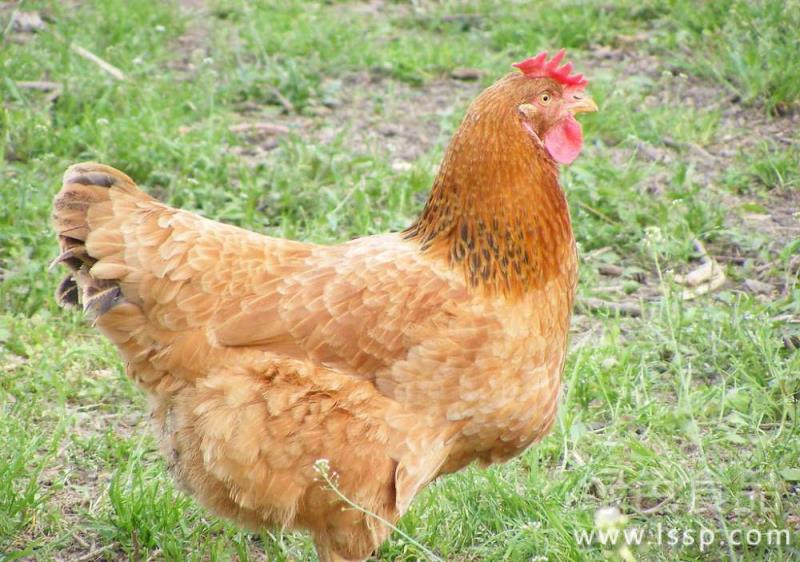
Chicken proventriculitis has many complications and a high mortality rate. How can it be comprehensively prevented and treated?
Proventriculitis has many complications and causes high mortality. Comprehensive prevention and treatment methods for chicken proventriculitis.
-
Prevention Methods for Pig Urate Deposition Disease in Cold Weather
Pig urate deposition disease is a metabolic disease caused by pigs eating protein-rich concentrated feed, and it mostly occurs in winter and early spring. Clinical symptoms mostly occur in nursing piglets and growing pigs that are physically strong, well developed, and have a vigorous appetite. The most acute form often shows no symptoms at all before sudden death. Most cases take an acute course, with sudden onset, reduced or lost appetite, and body temperature initially rising by about 0.5 degrees Celsius, then quickly returning to normal or falling below normal. Most affected pigs are lame in the hind legs, while some are lame in the front legs, gradually progressing to swollen joints
-
US uses genetic technology to accelerate pig growth
Professor Robert Schwartz and other researchers at Baylor College of Medicine in Houston, USA, have used genetic technology to increase pig growth speed by 40%, speeding up the time for pork to reach the market and reducing feeding costs. Recently, according to a report in the journal Nature Biology, the key to this technology is the use of a synthetic chemical substance that can make piglets' pituitary glands secrete more growth hormone than those of ordinary pigs. The researchers inserted this chemical substance into biodegradable DNA fragments, and then injected the DNA fragments containing this
-
Product Introduction of Baofeng Brand 811 Concentrated Feed for Pigs
This product is a high-efficiency concentrated feed. Its main contents: crude protein >= 39%, crude fat >= 5%, crude fiber <= 5%, calcium >= 4%, phosphorus >= 1.4%, lysine 1.3-1.5%. Suitable for growing-finishing pigs from weaning to market. Feed-to-meat ratio 3.14:1, feed utilization rate increased by 7.32%, feeding cost reduced by 8.25%, with significant benefits. When mixed with energy feed at 20%, 15%, and 10%, it yields complete feed for small, medium, and large finishing pigs. It passed appraisal on September 29, 1987. In 1988 it was rated as Jiangxi
-
How to prevent and treat heatstroke in cattle? A detailed explanation of integrated prevention and treatment technical points
Heatstroke in cattle is a common disease in summer and autumn, especially in draft cattle and calves. If heatstroke in cattle is not prevented and treated in time, it often causes death or seriously affects farm work, so great attention should be paid to it. I. Causes and symptoms. Heatstroke in cattle is the general term for sunstroke and heatstroke. In hot seasons, when the head of cattle is exposed to intense sunlight, it causes congestion of the blood vessels of the brain and meninges and substantive brain lesions, resulting in sunstroke. Narrow, low, stuffy, humid, and poorly ventilated cattle sheds; excessive work and insufficient drinking water; walking for a relatively long time on cement or
-
What are the key measures to improve the hatching rate of turtle eggs?
1. Selection of parent turtles: Parent turtles should be selected from individuals aged over 5 years, robust, free of disease and injury, active in movement, and with strong limbs. 2. Male-to-female ratio: Generally, a female-to-male ratio of 2-3:1 is appropriate. If the proportion of male turtles is too low, it will be detrimental to normal fertilization of the females. 3. Egg collection time: Generally, collecting eggs within 10-30 hours after laying is appropriate; if conditions permit, collecting eggs within 3-5 days after laying is even better. Generally, eggs should be collected in the afternoon to avoid human interference with daytime egg-laying. Fertilized
条件筛选