-
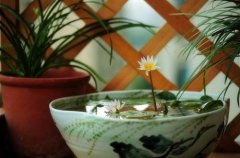
How to Grow Ranunculus asiaticus (Persian Buttercup) and Solutions for Root Rot
Do you like growing ranunculus? Many gardening enthusiasts say that ranunculus is very difficult to grow and prone to root rot. Let's take a look below at how to solve these problems properly. We'll teach you how to become an expert at growing ranunculus. Ranunculus is relatively difficult to grow, and root rot can occur before it even sprouts.
-

What are the latest precautions for planting Persian buttercup (Ranunculus asiaticus)?
Persian buttercup (Ranunculus asiaticus) is a flower with very high ornamental value, widely used for ornamental purposes in major cities across our country, and it is a very common flower in many households. Also, many people in our country grow Persian buttercup on a large scale, but Persian buttercup is not that easy to grow.
-
How to propagate Persian buttercup (Ranunculus asiaticus)? A detailed guide to the latest propagation methods
Persian buttercup (Ranunculus asiaticus) is a perennial herbaceous plant of the Ranunculaceae family. Its leaves are quite similar to celery leaves, so it is also called celery flower. Native to Asia and Europe, Persian buttercup has very high ornamental value. It can not only be used for potted viewing, but can also be used to arrange flower
-
How to grow Ranunculus asiaticus (Persian buttercup)? The latest cultivation methods and precautions
After seeing the title, did fellow flower lovers immediately think of the celery we often eat? But it is not celery. Its leaves look very much like celery, and its flowers look like peonies, so people named it Ranunculus asiaticus (Persian buttercup). There are many varieties of this type of peony-like flower, and the leaf colors vary widely. Today, Shuaishuai will introduce the cultivation methods and precautions for Ranunculus asiaticus to fellow flower lovers. Let's take a look!
-
What to do when Ranunculus asiaticus gets mosaic disease? Symptoms and control methods
Ranunculus asiaticus is a fairly common ornamental flower for flower beds, but improper cultivation can cause mosaic disease in Ranunculus asiaticus. The editor will introduce the symptoms and control methods of mosaic disease in Ranunculus asiaticus for you; flower lovers in need can learn about it.
-
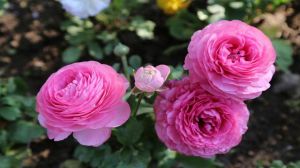
How long does the flowering period of Ranunculus asiaticus (Persian buttercup) generally last?
The flowering period of Ranunculus asiaticus lasts about 30-40 days, and if it is cared for well, this time can be extended. Its specific blooming time is April-May every spring; if its plants are planted in September-October of the previous year, it will be able to bloom during this period.
-
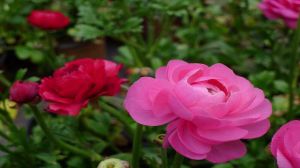
How to water Ranunculus asiaticus? A detailed guide to the correct watering method
Ranunculus asiaticus (Persian buttercup) is fairly drought-tolerant, but it is afraid of waterlogging. Right after planting, water it thoroughly once using the soak method. During the growth stage, control water in the early period, and ensure an adequate water supply during the vigorous period, watering once every day. However, in summer you should control it appropriately and reduce watering, otherwise the roots rot easily; just spray some water. In winter, reduce watering or do not water at all.
-
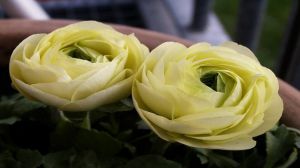
How to grow Ranunculus asiaticus from seed? Detailed sowing method
When growing Ranunculus asiaticus, seed selection is very important; choose plump seeds produced by healthy mother plants. Sowing is best done in autumn, and before sowing, the seeds also need low-temperature stratification to promote germination. Soil is also very important; use loose, fertile, slightly acidic soil. About ten days after seed treatment, you can sow. Scatter them evenly over the soil surface, then just control temperature and humidity.
-
How to grow Ranunculus asiaticus? Growth habits and cultivation methods of this perennial herbaceous flower
Ranunculus asiaticus, also known as celery flower, Persian buttercup, and lotus flower, is a perennial herbaceous plant of the genus Ranunculus in the family Ranunculaceae. It is native to southeastern Europe and southwestern Asia. It has a low, compact form, bright colors, upright flower stems, and beautiful and unique flower shapes. It is suitable for planting under trees or on the north side of buildings, and is very popular with consumers.
-
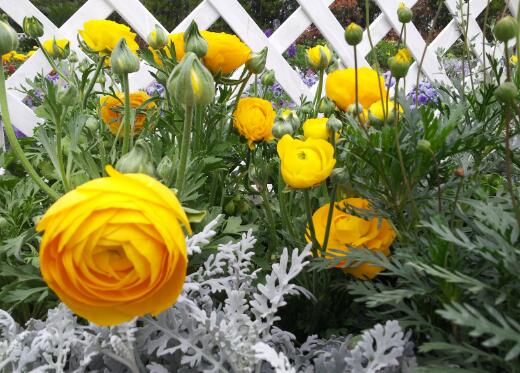
How to propagate Ranunculus asiaticus? Seed propagation and division propagation methods
Ranunculus asiaticus is a fairly common flowering plant in people's daily lives, with high ornamental value, and many people across China grow it. However, as more people grow it, questions about its propagation have also drawn attention. How to propagate Ranunculus asiaticus? What are the propagation methods for Ranunculus asiaticus?
条件筛选