-

What are the key points of Korean pine sowing and seedling-raising techniques?
The method for sowing and raising Korean pine seedlings is as follows: spring sowing is preferable. In Northeast China, mid-April to early June is better. Broadcasting or drilling in rows are both acceptable; in recent years, wide-row sowing is usually used, with a sowing width of 8 to 10 cm. After sowing, firm the soil once first, then cover with soil, with a soil cover thickness of about 2 cm. If timely irrigation is possible, the seedbed does not need to be covered with grass after sowing, and full-light seedling raising can be carried out. To eliminate weeds, after sowing and before seedling emergence, nitrofen at 3 grams per sq m, atrazine at 1 gram, or prometryn at 2 grams can be sprayed on the seedbed surface; do not irrigate within 10 hours after spraying. The sowing rate for Korean pine is 3000 to 37
-
Key points of seedling-raising techniques for Japanese white pine, rhododendron and other seedlings
Seedling raising of Japanese white pine, rhododendron, etc. For Japanese white pine, in autumn mix the seeds with coarse sand at 1:5, put the mixture in a flower pot and bury it outdoors in a sunny, well-drained spot, and sow around Qingming Festival. Broadcast sow on the seedbed, cover with 1 cm of sandy loam, and generally the seedlings can emerge completely in two months. If the quantity of seeds is very small, soak the seeds in warm water in spring; after 2-3 days, carefully break open the outer seed coat, sow in pots at 25°C, and seedlings can emerge in about 10 days. For rhododendron, when propagating wild rhododendrons or breeding new hybrid cultivars, the sowing method is often used to raise seedlings. Rhododendron
-
Ten observations for silkworm disease prevention and control: remember these ten key points when raising silkworms
1. Observe the development of the colony. When the ants are collected, the hatching is uneven, the ant silkworms are uneven in size, with big heads and small tails, spin a lot of silk, and crawl around the rearing seat, indicating a weak constitution. During rearing, touch the silkworm body with your hand or lift the silkworm up; if the silkworm contracts and resists, it is healthy; if it has no reaction, it indicates a weak constitution. In the large silkworm stage, touch the silkworm body flatly with the back of your hand; if it feels cold, it is a healthy silkworm; if it feels damp and hot, it indicates that the constitution is not strong. 2. Observe the posture before and after molting. When a healthy silkworm is about to molt, its head and thorax are raised, and molting is uniform. If it does not enter sleep for a long time, and after entering sleep its head
-
Practical methods for raising water temperature when growing rice with well water
The biggest drawback of growing rice with well water is the low water temperature, which affects the good growth and development of rice, leading to reduced yield and poor quality. Therefore, raising the water temperature for rice grown with well water is crucial. Specific technical measures: 1. Set up a sunning pond to raise the water temperature. Adding a sunning pond is an effective measure for raising the water temperature of rice grown with well water. The area of the sunning pond should be based on actual conditions and adapted to local circumstances. Generally, the area of the sunning pond is 1500-2000 sq m, and it is appropriate for it to reach about 1/20 of the irrigation area of the pump. According to experimental research, a 2000 sq m sunning
-
Key Feeding and Management Points for Raising Pregnant Sows Well in Summer
Pregnant sows are extremely sensitive to external stimuli. The heat stress brought by high temperatures can easily cause miscarriage and stillbirth in sows. The first 20 days of pregnancy and the 30 days before farrowing are the danger periods for stillbirth and miscarriage, so feeding and management must be strengthened to ensure the safe farrowing of pregnant sows. Create a cool environment by thickening the roof with materials such as straw curtains that have good insulation performance, so as to block the sun's heat radiation, which can reduce radiant heat by more than 40%. At noon when the temperature is above 30°C, water can be sprayed on the roof to cool it down. In addition to opening the north and south
-
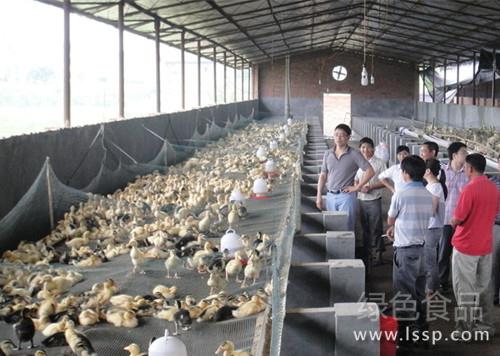
Raising Ducks in Confinement Can Save Labor: Key Management Techniques Explained
Raising Ducks in Confinement Can Save Labor: Key Management Techniques for Confined Ducks
-
What are the advantages of raising Dancong tea seedlings by short-stem cuttings?
Dancong tea has stable quality and is easy to process into high-grade tea; the finished tea is clear, mellow and refreshing with a honey flavor, making it outstanding among oolong teas. This tea has wide adaptability and strong resistance to stress, sprouts early and grows fast, and generally can be harvested 6-7 rounds a year; it has high yield and good economic returns. Short-stem cutting propagation of Dancong tea can maintain the fine characters and characteristics of Dancong tea and helps create and cultivate new tea gardens with relatively pure characters. Moreover, because the material source is wide and the seedling-raising time is short, it can propagate seedlings in large quantities and rapidly, making it a "more, faster, better and more economical" way to solve
-
What are the seed treatment methods for Korean pine before raising seedlings?
Seed treatment methods for Korean pine before raising seedlings: The seed shell of Korean pine is dense and hard, covered with wax, not easily permeable to water and air, and contains germination-inhibiting substances such as tannins, making it difficult for the embryo to germinate. Therefore, before sowing, the seeds must be subjected to germination-promoting treatment. The commonly used stratification methods are as follows: 1. Open-air overwintering burial method: In autumn, first soak the seeds in cold water for 2 to 3 days, remove them, mix with 2 to 3 times their volume of wet sand, stir evenly, and place in an open-air pit. The pit site should be chosen in a high, dry place with good drainage. The pit depth is 1.2 to 1
-
Methods and Technical Key Points for Raising Black Locust Seedlings from Seed
Black locust is a pioneer tree species for afforestation on barren hills, with characteristics such as tolerance to poor soil, tolerance to drought, fast growth, and wide uses. 1. Nursery site selection and land preparation The seedling-raising site should be selected as level ground with good drainage, deep and fertile neutral sandy loam soil, and irrigation conditions. Vegetable plots must absolutely not be chosen, and continuous cropping is even less suitable. After the seedling-raising site is selected, plow it in autumn to a depth of about 30 cm. In early spring, harrow it fine and level, and apply 5000 kg of decomposed barnyard manure per mu. During land preparation, poisonous soil made from phoxim emulsifiable concentrate should be applied to control underground pests.
-
What are the key points for raising spring piglets?
Sows are mated and conceive in October to November, and the piglets born in February to March of the following year are called spring piglets, also known in some places as twelfth-month piglets. Choosing to raise spring piglets can bring relatively good economic returns. This is because sows have a high conception rate when mated in October to November, the outside temperature is relatively low in late pregnancy, the sows have a strong appetite, and the embryos can obtain rich nutrition, so the piglets born are heavy and have a high survival rate. In addition, because the sows have a strong appetite, they produce plenty of milk of good quality, the piglets develop robustly, have a heavy weaning weight, and accordingly gain weight quickly.
条件筛选