-

Diagnosis and Treatment Methods for Cold Medicine Poisoning in Rabbits
In October 2005, 120 young rabbits raised by Liu in Fangzheng County, Heilongjiang Province, developed symptoms similar to the common cold, including runny noses and sneezing, in most of them due to the influence of a cold wave. The rabbit owner ground up "Ganmaotong" (a human medication produced by Zhengzhou Kangli Pharmaceutical Co., Ltd.) at a dose of 1 tablet per 2 young rabbits and mixed it into the feed. The rabbits were fed at 9 AM, and by 10 PM, 55% of the young rabbits showed abnormalities; by the next morning, 7 had died. The owner then came to my clinic for diagnosis and treatment, during which 8 more died successively. After a systematic examination, the diagnosis was "Ganmaotong" poisoning. Because
-
How to prevent and treat ear mange in rabbits? Practical advice is here
Rabbits in breeders' homes showed symptoms such as restlessness and scratching their ears. After follow-up investigation, they were diagnosed with ear mange. Some prevention and treatment suggestions for this disease are now proposed for reference. Affected rabbits mainly show unbearable pain and itching in the ear area, often constantly scratching with their forelimbs and shaking their heads, while also showing symptoms such as lethargy, restlessness, reduced appetite or refusal to eat, and weight loss. Physical signs include redness and swelling of the ear skin, scaling and hair loss, with the affected area gradually expanding, inflammation of the external ear canal, discharge, scabbing, and thickening of the skin. Because the rabbit keeps scratching, it often causes skin infection, making the injury worse and leading to
-
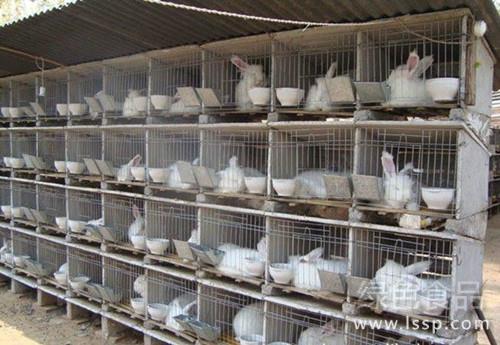
Seven key elements of fattening domestic rabbits, which can effectively improve meat quality and increase output
Fattening can improve meat quality and increase output: the seven key elements of fattening domestic rabbits
-
Why do rabbits eat their own soft droppings?
In the process of raising domestic rabbits, we see that the hard fecal pellets they excrete are formed through a second round of digestion. Domestic rabbits eat grass and feed during the day, and excrete soft droppings at night or before dawn, and as soon as the soft droppings are excreted, they immediately eat them, and only through the second round of digestion and absorption are the residues formed into hard fecal pellets and excreted from the body. When domestic rabbits eat the soft droppings they excrete at night, it is not coprophagia caused by a lack of some nutrient in their body, but a normal physiological phenomenon. This instinct of domestic rabbits has two major benefits: first, it can keep the rabbit hutch and rabbit farm
-
Feeding and Management Methods for Keeping Caged Rabbits Safe Through the Summer
Heat dissipation and temperature control: Plant some vine-type plants such as melons, beans, grapes, and pumpkins around the rabbit hutch to prevent direct sunlight, and you can also apply a layer of lime slurry to the inner and outer walls of the rabbit hutch so that direct sunlight does not reach the rabbit cages; open-air rabbit hutches should have a shade canopy set up, with doors and windows opened to allow air convection; for wool rabbits, the wool should be cut short along with the hair on the head and face, and the rabbit cages should not be too crowded; when the room temperature exceeds 30°C, sprinkle some cool water every 2-3 hours, or use a new brick, soak it in cool water for several minutes, and once it has absorbed enough water (no longer bubbling), place it in the rabbit cage,
-
Special attention must be paid to preventing coccidiosis when raising rabbits in summer
Rabbit coccidiosis is one of the most common and most harmful diseases of domestic rabbits. Rabbit coccidia are single-celled protozoa that parasitize the liver, bile duct epithelial cells, and intestinal epithelial cells of rabbits. When coccidia parasitize the body, the rabbit becomes emaciated, anemic, has rough fur, and its development stalls, ultimately leading to death. This disease has no obvious seasonality and can infect and cause illness throughout the year, but it occurs more frequently in the hot and humid seasons of summer and autumn, and its distribution and prevalence are extremely widespread. To prevent coccidiosis: 1. Maintain the sanitation of the rabbit hutch, frequently disinfect the cages and
-
4 Things to Note When Introducing Pet Rabbits
As the pet rabbit market grows increasingly prosperous, more and more people are introducing pet rabbits, but all kinds of problems have followed. Some people spend a lot of money to buy so-called pet rabbit breeding stock, only to find that when the breeding season arrives, the rabbits do not come into heat. After inquiring carefully, they learn that the rabbits have been sterilized and simply cannot reproduce, so half a year has been wasted for nothing. Some buy rabbits home but the rabbits cannot survive at all, because no breeding techniques were provided, and they just feed them like ordinary rabbits. The result is that the sudden change in living conditions, combined with the abrupt switch in feed, causes the young rabbits to fall ill and die one after another.
-
Why do rabbits eat their own soft feces?
During the raising of domestic rabbits, we see that the hard fecal pellets they excrete are formed through a second round of digestion. Domestic rabbits eat grass and feed during the day, and at night or before dawn they excrete soft feces, and as soon as the soft feces are excreted, they immediately eat them; only through the second round of digestion and absorption do the residues form hard fecal pellets that are excreted from the body. When domestic rabbits eat the soft feces they have excreted at night, it is not a coprophagia habit caused by a lack of some nutrient in their body, but rather a normal physiological phenomenon. This instinct of domestic rabbits has two major benefits: first, it can keep the rabbit hutches and rabbit farms
-
What are the emergency rescue methods for frozen kits (baby rabbits)?
Causes of kits freezing: one is that the due date was not recorded properly or the doe kindled early for some reason, and the kindling box was not put in place in advance; another cause is that the doe's maternal instinct is weak, and she kindled outside the box; a further cause is that after nursing, when the doe jumps out of the kindling box, individual kits that are not getting enough milk clamp onto the teat and will not let go, so they are dragged out and become frostbitten because the weather is relatively cold. Regardless of the cause, a frostbitten kit must not be left too long; if its heart is still beating, emergency measures will generally succeed. The methods are as follows: 1. Immerse the kit
-
Correct Technical Methods for Feeding Rabbits Vegetables
Vegetables have a water content of about 85%, low crude fiber content, and good palatability, so rabbits tend to overeat them. Feeding vegetable leaves to young rabbits under 90 days of age will cause diarrhea in just a few days. If rabbits develop diarrhea after eating vegetables, stop feeding vegetables, increase the feeding of green hay and dry leaves, and mix 2% charcoal powder or 2% medicinal charcoal into the mixed feed or compound feed for treatment. When vegetables are grown in soil heavily fertilized with nitrogen, treated with herbicides, or affected by pests, drought, or insufficient sunlight and turn red, their nitrate content increases. Rabbits overeat vegetable leaves and take in more
条件筛选