-
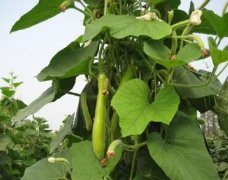
What is Bottle Gourd? How to Pinch and Prune When Growing Bottle Gourd
Bottle gourd is also called hu gua (calabash). Bottle gourd is a very popular vegetable, so do you know how it is grown? Would you like to learn about it? 1. Cultivation season: Although bottle gourd can be cultivated year-round in Taiwan, China, the central and northern parts are best planted in March to April, while the southern part is best planted between December and January of the following year, because at this time the temperature gradually rises, and plant development and reproduction are better than with autumn planting, with higher yields as well.
-
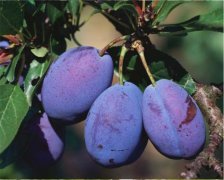
When do prunes ripen in China? Are they a cooling fruit?
Do you know about the prune fruit? Do you confuse prunes with plums? These two fruits are very similar, yet they are indeed two different fruits. Below, let's take a closer look at prunes. Prunes come from California, USA. Prunes are girls'
-
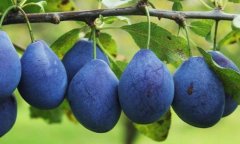
When do prunes ripen in China? Are they cooling or warming in nature, and how many is it good to eat per day
The prune is not a native product of our country; it was introduced from California in the United States. Prunes are fragrant and sweet, with a smooth texture, and are a fine food for the healthy diet of modern people. Prunes can not only be eaten as a snack, but can also be used in cooking. The prune originated in southwestern France, which is the hometown of the prune.
-
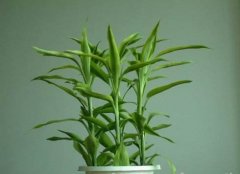
Lucky Bamboo Plant Profile: How to Prune When It Grows Too Tall and Too Large
Lucky bamboo, also known as the ribbon plant, has become a fixture in homes and offices due to its minimal care requirements and low-light needs. This evergreen grows slowly and can reach up to 6 feet, though indoor plants are usually about 2 to 3 feet. It can be grown outdoors in USDA plant hardiness zones 10 to 12.
-
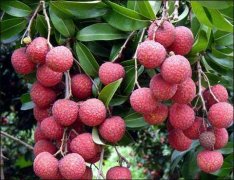
Detailed Guide to Lychee Pruning Techniques: How to Prune and Control Winter Shoot Growth
Lychee Cultivation Techniques: What does the basic framework pruning of a lychee tree look like, and how should it be pruned for better results? Would you like to find out? Then let us take a look together! Basic Framework Pruning. The framework of a lychee tree consists of the trunk, main branches, sub-main branches and lateral branches. At 50 cm above the ground on the trunk, begin to train 3~4 main branches, with the main branches forming an angle of about 80 degrees to the horizontal. On each main branch, train 2~3 sub-main branches; the sub-main branches should be attached at an angle of about 10~20 degrees to the horizontal, and the distance between sub-main branches should preferably be about 50 cm. Sub-main branches on different main branches should not cross each other, and sub-main branches on the same main branch should not be retained in the same direction. On each sub-main branch, train 3 lateral branches.
-
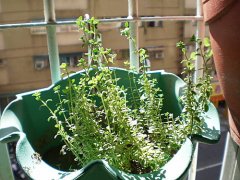
When to Plant Thyme and When to Prune It? A Full Analysis of Its Benefits and Effects
I used to have no idea what thyme was. As someone who loves cooking, I often shopped at baking supply stores, and by chance I came across a whole array of seasoning bottles and jars. I would have felt I was letting myself down if I did not buy them, so all the seasonings I had seen or heard of were packed up and brought home, to be taken out when I wanted to cook.
-

When to Prune the Sichuan Pepper Tree? A Detailed Guide to Pruning Techniques
The Sichuan pepper tree is a widely planted plant that is very drought-tolerant and loves sunlight. Its seeds, Sichuan peppercorns, can not only be used as a seasoning but also as medicine, with effects such as dispelling cold and killing parasites. During the cultivation of Sichuan pepper trees, pruning is often needed to increase yield.
-
How much does a Xinjiang prune tree sapling cost, and how many years does it generally take to bear fruit?
Prune, also called black jujube or European plum, is a fruit with dark purple skin and a sweet-and-sour taste. Fresh prunes are very rich in nutritional value, containing abundant vitamins, fiber, iron and more, making them especially suitable for children to eat. Prunes have demanding requirements for the growing environment
-
How many years does a prune tree generally take to bear fruit after planting?
Prune is a plant of the Rosaceae family and Prunus genus. When the fruit ripens, it turns deep purple, and the flesh is amber-colored. So how many years does a prune tree take to bear fruit? 1. Growth habits of this food Prune is also called California prune, European plum, French black jujube, black jujube, etc., and is native to southwestern France.
-
How many years does it take for a prune tree to bear fruit from planting?
Prune was originally a type of dried plum, shaped like an apricot-plum. It is rich in vitamin A and cellulose, and also contains minerals such as iron and potassium, yet contains no fat or cholesterol. So, how many years does it take for a prune to bear fruit? 1. How many years does it take for a prune to bear fruit? Prunes generally, after planting
条件筛选