-
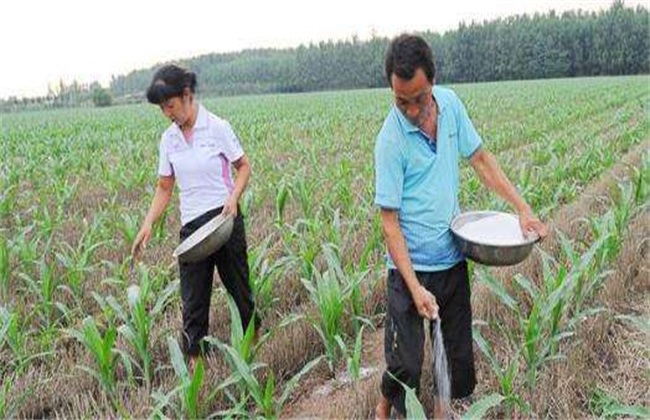
Detailed Explanation of Key Points for Fertilizing Corn: Scientific Fertilization Promotes High Yield
Key Points for Fertilizing Corn
-
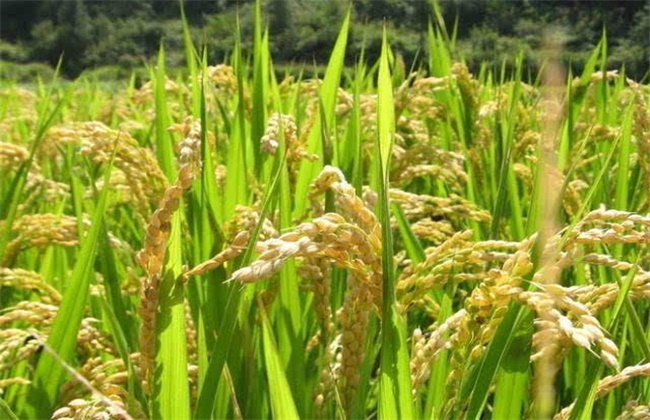
What are the methods to promote early maturity in rice? A full analysis of practical technical points
Methods to promote early maturity in rice
-

Detailed key points for spring management of asparagus; do these well to promote high yield
Key points for spring management of asparagus
-

Rice management aims to nourish the roots, protect the leaves and promote tillering
Wang Shengxuan, associate researcher at the Grain Crops Research Institute of the Provincial Academy of Agricultural Sciences, believes that every year when the rainy season arrives, regional heavy rainfall occurs in the rice-growing areas in both the north and south of the province, and waterlogging causes disasters in some areas, especially for rice planted in lower-lying paddy fields, where some rice seedlings are submerged to the top. After being flooded, the rice root system and leaves are severely damaged, the plant's normal physiological metabolism and stress resistance are severely weakened, and the total number of stems and tiller seedlings drops sharply. If flooded paddy fields do not receive timely and effective management, it will inevitably cause a large reduction in yield, or even a total loss. Therefore, scientific remedial measures must be taken promptly for flooded paddy fields
-
Huizhou promotes 31 high-efficiency rice varieties for farmers to select for planting
On July 10, experts from the National Agricultural Technology Extension and Service Center of the Ministry of Agriculture, accompanied by the person in charge of the Seed Station of the Provincial Department of Agriculture, visited the Municipal Institute of Agricultural Sciences, the unit undertaking the national rice regional trials in our city, to inspect the national rice regional trial work. It is reported that our city has successively completed the regional trial tasks for more than 400 rice varieties assigned by the state. The experts inspected the implementation of the national rice regional trial field experiments undertaken by the Municipal Institute of Agricultural Sciences and highly praised the institute for its solid completion of the national rice regional trial work. According to reports, the Municipal Institute of Agricultural Sciences since
-
No-till potato cultivation technology vigorously promoted in Guangxi
The regional on-site meeting for winter potato industry development was held in Luchuan County. Participants visited the no-till cultivation demonstration site for winter potato with rice straw mulching in Luchuan County, and listened to introductions of typical experiences from units such as Luchuan, Pingnan, Qinbei, Wuming and Inner Mongolia Hulunbuir Hesheng Potato Industry Company. The meeting proposed that in 2007 the winter-planted potato area in our region strive to reach 130,000 hectares, with a total output of 3.2 million tons; demonstrate and promote a batch of new high-quality, high-yield potato varieties, strive for a certified seed coverage rate of over 95%, and promote the application of virus-free
-
What measures promote rice root development?
1. Sow early at the right time. When the temperature stabilizes at 5°C, begin sowing and raising seedlings; do not raise seedlings for the May crop. When the temperature stabilizes at 13°C, begin transplanting; do not transplant for the June crop. Transplant during the high-yield period to gain accumulated temperature, which is beneficial to root development. 2. Prepare the land carefully and create the conditions. Do a good job of plowing and rotary tilling; generally the plowing depth is 20 cm and the rotary tilling depth is 14 cm. Keep the plowing or rotary tilling depth uniform, so that the mud is not exposed even in water an inch deep, creating the conditions for root development. 3. Strengthen management and promote development. First, seedling-field management: control the temperature well, water reasonably, spray fertilizer on the leaves, and prevent
-
Shallow water warming for rice to promote tillering, fertilization with "two preventions" to grow strong seedlings
Due to the impact of unfavorable weather conditions such as low temperatures, frequent rain and insufficient sunlight, rice has been slow to turn green, with yellow leaves, few tillers and delayed growth. For this reason, rice expert Xu Yirong, after an on-site inspection in the Heilongjiang reclamation area, proposed countermeasures such as shallow water warming to promote tillering, fertilization with "two preventions" to grow strong seedlings, and fitness-based disease prevention. First, water layer management must be done well: deep water is a heat-preservation measure, shallow water is a warming measure, and not establishing a water layer is a cooling measure. For plots with deep water formed by rainfall, drainage must be carried out promptly to raise temperature, promote root growth and promote
-
New Mini Sweet Potato Variety Hits Supermarkets: Professor Promotes It on Site
Around noon today, the food section of the Vanguard supermarket in Pujia Xincun was filled with drifting aromas, drawing many customers to stop and look. It turned out that more than 60 fragrant, piping-hot roasted sweet potatoes had just come out of the oven. Serving everyone at the counter was an elegant middle-aged woman who, while helping people choose sweet potatoes, also introduced their nutritional value and cooking tips, making everyone nod in agreement. This woman selling sweet potatoes was none other than the developer of this mini sweet potato - Ji Zhixian, a professor at the Provincial Academy of Agricultural Sciences. Teach
-
Northeast "Strange Rice" succeeds in trial planting in Heilongjiang and begins to be promoted to farmers within the province
Sitting on a pile of plump rice sacks with a beaming smile, Jin Yushi, a farmer from Xiangfang District, Harbin, is very gratified by the bumper harvest of the 8 mu of "Northeast Strange Rice" he planted this year. This year, low temperatures and scant sunshine caused reduced yields in some rice-producing areas of Heilongjiang Province. However, some rice growers who applied new technologies and new varieties still steadily achieved high yields. Among them, rice farmers Jin Yushi, Zhang Zibin and others obtained a good harvest by accepting the suggestions and guidance of scientific and technical personnel, introducing "Northeast Strange Rice" and applying biological technologies such as "three agents and two fertilizers",
条件筛选