-
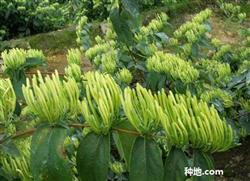
How to prevent and control pests and diseases on honeysuckle? A detailed guide to practical methods
What pests and diseases affect honeysuckle? How do you prevent and control pests and diseases on honeysuckle? We ask knowledgeable readers to help explain. Honeysuckle is one of China's major exported medicinal herbs, and domestic demand is also increasing year by year, but honeysuckle often suffers reduced yields due to brown spot disease, aphids, and the coffee tiger longhorn beetle. The following is compiled by Zhongdiwang...
-

How do you care for mint at home? A few practical methods to teach you
How do you grow mint at home? Here is an introduction. When growing mint at home, you can refer to the following methods for care: Watering: When watering curly mint, note that you should not water if the soil surface is not dry; if it is dry, water thoroughly. The water used can be plain water, and preferably rice-washing water from home, which is both nutritious and saves water....
-
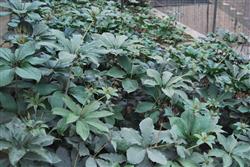
Paris polyphylla cultivation techniques shared, with practical methods explained in detail
Paris polyphylla is a perennial herbaceous plant with a long growth cycle; it takes 8 to 10 years from sowing to harvest. It is one of the main ingredients of state-protected traditional Chinese medicines such as "Yunnan Baiyao" and "Gongxuening". In recent years, with continuously increasing demand, the harvesting rate has far exceeded the rate of natural growth, causing Paris polyphylla resources to become sc...
-
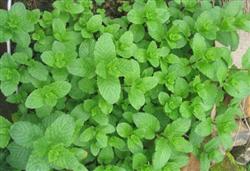
How to Grow Mint Efficiently? A Detailed Guide to Practical Cultivation Techniques
Mint, also known as Su mint or Nan mint, is a plant of the Lamiaceae family, mint. The whole plant is used as medicine, and it has effects such as dispelling wind-heat, clearing the head and eyes, and regulating qi to relieve depression. Mint has strong adaptability. When grown in areas at an altitude of 300 m-1000 m, its oil and menthol content are relatively high. It prefers a warm and humid environment, and the optimal temperature for growth is 20°C...
-
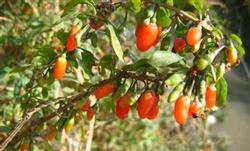
How to prevent and control wolfberry black fruit disease? These methods are very practical
Wolfberry black fruit disease damages the green fruit, flowers and buds of wolfberry, and also damages young shoots and leaves. From the early fruiting stage in early May to the late fruiting stage in mid-October, wolfberry can be infected by this disease. From May to June, when the daily average temperature is above 17°C, the relative humidity is around 60%, and there are 2~3 rainy days per ten-day period, the disease can occur in the field. From July to September, when the daily average temper...
-

How to Grow Scutellaria baicalensis to Increase Yield? A Detailed Guide to Practical Methods
How to Increase the Yield of Scutellaria baicalensis
-
How to prevent and control pests and diseases in Gastrodia elata? A detailed guide to practical control measures
Gastrodia elata prefers to grow in warm, humid sandy (or leaf-mold) soil, and has fairly strict requirements for temperature and humidity. However, the area along the Great Wall in northern Shaanxi lies in the mid-temperate zone, where summers are hot and dry with little rain, which is unfavorable for the growth and development of Gastrodia elata. To achieve a good harvest of Gastrodia elata, the measures that should be taken in summer management include: (1) Build a shade shed. In summer...
-

How to prevent and control grape berry cracking? A detailed guide to practical methods
How to prevent and control grape berry cracking
-

How to Tell Real Ginseng from Fake Ginseng? A Few Practical Identification Methods
How should real and fake ginseng be identified?
-

How to Fertilize Dendrobium Orchids: A Detailed Guide to Practical Methods
Fertilization Methods for Growing Dendrobium Orchids
条件筛选