-
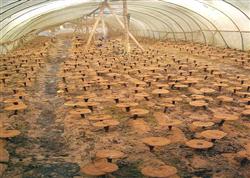
Detailed Explanation of Ganoderma (Reishi) Field Cultivation Technology with Soil Covering in a Wild-Simulated Style
China is rich in Ganoderma (reishi), and its products are exported to Japan, South Korea, Singapore, and Southeast Asian countries and regions. Especially after China's accession to the WTO, domestic product demand and export volume will rise substantially. However, in recent years, wild Ganoderma resources have been declining day by day due to massive logging of timber resources, and large-scale artificial cultivation of Ganoderma has become an urgent matter...
-

Does millennial ginseng really exist? Uncovering the growth years of ginseng
Does millennial ginseng really exist?
-

-

What are the main varieties of Bidens? This article gives you an overview
The main varieties of Bidens
-

Discovery of a Wild Self-Seeding Fertile Pinellia Plant and Analysis of Its Utilization Prospects
Since 1988, we have conducted surveys of wild Pinellia ternata variety resources in the Yimeng Mountain area and research on artificial cultivation techniques. During many years of investigation and study, we discovered a single Pinellia ternata plant that can self-pollinate and set seed under wild conditions. After artificial domestication and cultivation, one 1.5 g Pinellia tuber can produce 40 to 50 seeds in one year, thereby solving the problems of low natural seed-setting rate and the lack of five usable [varieties] in production, and opening a path for improving the propagation rate of Pinellia ternata. 1 Botanical characteristics: the plant is 10 cm tall
-
Overwintering management of Panax notoginseng, Coptis chinensis, Morinda officinalis, and Ligusticum chuanxiong
Panax notoginseng: In winter, when the leaves turn yellow and wither, cut off the above-ground stems and leaves about 3 cm above the ground, collect the dead stems and leaves, remove weeds and diseased plant residues from inside and outside the garden, and burn them all outside the garden to clean the field. Then spray the bed surface with 1:1:200 Bordeaux mixture or 0.2-0.3 degrees Baume lime-sulfur mixture to fully disinfect the soil. If exposed roots are found, add appropriate soil covering. In addition, after cleaning the garden in November, apply 2000 kg of decomposed mixed fertilizer per mu at the plant roots to protect the buds through the winter safely. Before the seedlings emerge
-
How to store Gastrodia elata seeds for safe overwintering
The seeds can be stored in a pit dug inside a cellar. First dig a pit in the cellar; the size of the pit depends on the amount of seeds, and the pit depth is 45-50 cm. The vegetative propagation stems should be removed from the seeds, and they should be air-dried for 1-2 days before being put into the cellar. Sand with a moisture content of 20% should be chosen as the filling material. Sand that is too wet or too dry is harmful to the seeds. After the pit is dug, place a layer (3 cm thick) of sand with grains ranging in size from millet to sorghum at the bottom, lay out one layer of seeds, and arrange 4-5 layers of seeds in total, with the topmost layer covered by 5-6 cm of sand. Each layer of seeds must be laid out singly, with no contact between
-
Key Techniques for Overwintering Management of Panax notoginseng Seedling Fields
Panax notoginseng is a perennial herbaceous plant. Once winter arrives, its above-ground parts all die back. At this time, the above-ground parts should be cut off 3 cm above the ground, and all dead branches, fallen leaves, diseased plants and weeds in the field should be cleared away and burned outside the field. The soil should be thoroughly sprayed and disinfected with 0.2-0.3 degrees Baume lime-sulfur mixture, and then a layer of decomposed farmyard manure should be applied at about 1500 kg per mu to keep warm and prevent freezing. If exposed roots are found, soil should be banked up when the winter fertilizer is applied, and finally a layer of grass should be spread on top to ensure the buds overwinter safely.
-
An overview of the distribution of wild resources and cultivation of Angelica sinensis
Angelica sinensis prefers a cool, humid climate. Its wild resources are found only in the remote high-mountain forests within Zhang County and Zhouqu in Gansu. Angelica sinensis is always a cultivated species, and it is suited to growing in cold, damp mountainous areas at altitudes above 2000 m. All commercial Angelica sinensis comes from cultivated plants, distributed across Gansu, Ningxia, Qinghai, Yunnan, Guizhou, Shaanxi, Hubei and other provinces. It is mainly produced in Min County, Tanchang, Weiyuan, Zhang County, and Wudu, Wen County, Zhuoni, Lin County and other places in Gansu, with a long history of cultivation. Normal annual output is around 10,000 tons, accounting for about
-
Angelica sinensis with shade net coverage: high yield increase and quality improvement benefits
The shade cultivation technique for Angelica sinensis starts from the three-leaf stage of its growth (that is, from mid-May to early August after summer begins, when temperatures are high and light is intense). A shade net with a 50% shading rate is timely placed over Angelica sinensis, providing a suitable micro-environment of moderate temperature, weak light, and moisture that mimics its original ecological growing conditions. By lowering temperature, increasing humidity, and reducing light, it reduces the early bolting rate of Angelica sinensis in dry flatland cultivation to about 30%; moreover, shade cultivation of Angelica sinensis also helps prevent and reduce pest and disease damage, thus improving the quality of Angelica sinensis.
条件筛选