-
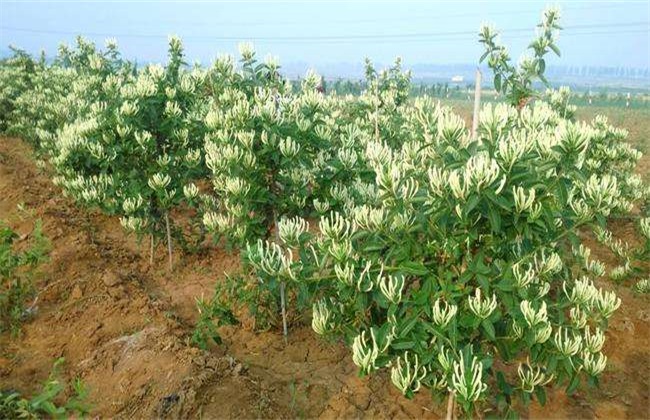
What are the growing conditions for honeysuckle? Understand the growth environment requirements in one article
Growing conditions for honeysuckle
-

What are the key points of field management for yam? A clear explanation of the cultivation techniques in one article
Key points of field management for yam
-

What Are the Precautions for Growing Bletilla striata? Explained Clearly in One Article
Precautions for Growing Bletilla striata
-

What are the key points of field management for Sichuan lovage? Understand it in one article
Key points of field management for Sichuan lovage
-

How to Propagate Akebia? Master Akebia Propagation Methods in One Article
Propagation Methods of Akebia
-

What are the key points of comfrey cultivation and management? Explained in one article
Key points of comfrey cultivation and management
-

What Are the Economic Benefits of Growing Pinellia ternata (Drought Pinellia)? A Detailed Analysis in One Article
Pinellia ternata has a very short growing period: planted in April, it can be harvested in August or September. The growing period is between 130 and 150 days. The yield of Pinellia ternata is 200 kg per mu; calculated at a market price of 40 yuan/kg, the benefit is around 8,000 yuan per mu. In addition, Pinellia ternata prefers a shaded environment and is suitable for intercropping with trees, fruit trees, or grain crops. This intercropping model makes full use of the land and achieves the double benefit of both grain and medicine, both forest and medicine, or both fruit and medicine.
-
What varieties and types of Asarum are there? A detailed guide in one article
Commercial Asarum is mostly divided into two types: Liaoxixin (northeastern Asarum) and Huaxixin (Chinese Asarum). Liaoxixin refers to Asarum heterotropoides var. mandshuricum and Asarum sieboldii var. seoulense produced in Northeast China. The two are similar in characteristics, but there are distinctions between wild and cultivated products. Wild Liaoxixin is usually gathered in small bundles of a dozen or so plants, often rolled into clumps. The rhizome is irregularly cylindrical, 1-10 cm long, with short branches, grayish-brown on the surface, rough with ring-shaped nodes, and the internode spacing is about 2-3 mm. The branch tips have bowl-shaped stem scars. The roots are slender, densely growing on the nodes, about 1 mm in diameter and 10-20 cm long, grayish-yellow on the surface, smooth or with fine longitudinal
-
What are the propagation methods for Panax notoginseng? Explained in one article
Seed propagation is mainly done by raising seedlings and then transplanting them. 1. Seed treatment: generally select seeds set by robust, pest- and disease-free 3-year-old plants. When the fruit ripens in November to December, harvest it, wash off the flesh, and sow promptly, because after the seeds are stored for one week the germination rate drops greatly. Before sowing, disinfect the seeds with 0.2-0.3 degrees Baume lime-sulfur solution for 10 min, or with 200-300 times zineb for 15 min, then sow.
-
What are the key cultivation techniques for Madeira vine? Explained in one article
Madeira vine, also known as Ceylon spinach, belongs to the Basellaceae family and is a perennial climbing plant native to Brazil. It is grown in many regions of China, especially in the south. It is easy to cultivate, has few pest and disease problems, is highly nutritious and good-tasting, and is rich in vitamin A and vitamin C. It has effects such as nourishing the body, strengthening the waist and knees, dissipating phlegm, promoting blood circulation, and protecting the stomach and liver. It is a natural green health food and medicinal food, and is well worth promoting, cultivating and eating.
条件筛选