-

Control Methods for Green Mold Disease in Lingzhi (Reishi Mushroom)
Green mold (Trichoderma viride Pers. ex Fr.) belongs to the class Hyphomycetes, order Moniliales, family Moniliaceae, genus Trichoderma, under the subdivision Deuteromycotina. 1. Morphological characteristics: The hyphae are slender, colorless, septate, and much branched. Conidiophores arise from lateral branches of the hyphae, opposite or alternate, generally with 2-3 branchings; the sterigmata bearing conidia are flask-shaped or cone-shaped. Conidia are mostly spherical, with the spore wall bearing small warty protuberances, green or blue-green. On PDA medium, the colony is initially white and cottony, later becoming dark
-
How should golden pear be managed in summer to improve quality?
In recent years, golden pear has developed rapidly, and the planting area has continued to expand, but the rate of high-quality fruit is not high, mainly because there are too many deformed fruits and russeted fruits. Summer management is the key period for improving fruit quality. The main technical measures for summer management of golden pear are summarized as follows: 1. From mid-June to late August is the fruit expansion period, and golden pear has a relatively high water requirement. Under drought conditions, the pear shrinks and wrinkles during the day and absorbs water at night to replenish itself, so it can recover or grow; otherwise the fruit is small or wrinkled skin forms throughout. In late July
-
Application method of simple temporary holding facilities for fish
At present, there are quite a few flow-through aquaculture farms in Sichuan, mainly culturing cold-water fish species, and most of their culture facilities use concrete ponds. During the earthquake, these concrete ponds were damaged to varying degrees by the destructive force of the earthquake, which may cause pond leakage and so on. If they are not repaired in time, the water in the ponds may be lost, creating a crisis for the survival of the cultured aquatic organisms, and even causing all the water in the ponds to run out, resulting in the death of the cultured aquatic organisms and bringing huge economic losses to the farmers. If
-
Rice cultivation in cold regions requires water-saving irrigation, selection of improved varieties, making the most of accumulated temperature, and growing strong seedlings
Heilongjiang Province is located in a high-cold region, where heat and water resources are relatively scarce, annual atmospheric precipitation is extremely unevenly distributed, spring is windy with little rain, and drought is quite severe. The author discusses how to achieve water-saving, high-quality, and high-yield rice cultivation in cold regions. 1. Selecting excellent varieties is the prerequisite for ensuring high-quality and high-yield rice. The varieties that rice farmers plant directly affect the quality and yield of rice. Therefore, in production, varieties with a suitable maturity period, excellent quality, stable and high yield, and strong stress resistance should be selected. First, select varieties that have passed national approval, been named, and promoted, which can ensure relatively stable rice traits, steady and rising yields, and safe and reliable use; second, introduce varieties with suitable maturity periods according to different accumulated temperature zones, and never introduce varieties across zones; third, pay attention to seed quality, and select first-grade improved seeds with a purity above 98%, a germination rate above 90%, and a moisture content no higher than 14% for production use; fourth, purchase seeds from nationally certified seed companies, research institutes, and agricultural colleges, and eliminate blind planting; fifth, in actual planting, unify varieties as much as possible, plant in contiguous fields, form scale, and achieve industrialized planting.
-
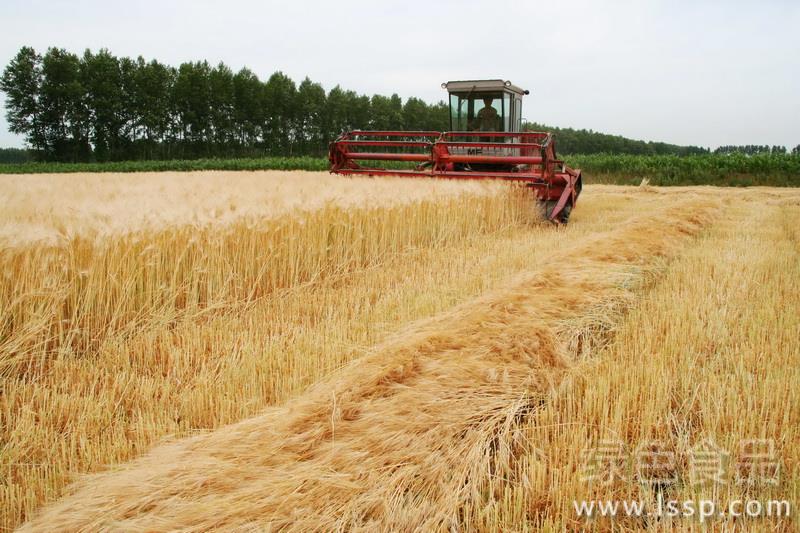
High-yield cultivation techniques for barley with drought resistance, cold tolerance and wide adaptability
High-yield cultivation techniques for barley with drought resistance, cold tolerance and wide adaptability
-
Variety Characteristics and Ornamental Value of the Golden-edged Tulip Tree
Golden-edged Tulip Tree Liriodendron 'Aureomarginatum', Magnoliaceae, Liriodendron. Introduction source: the Netherlands. Deciduous large tree, height can reach over 20 m, a horticultural variety of the North American tulip tree (Liriodendron tulipifera). Spring leaves have golden-yellow margins, gradually turning green by mid-June; flowers pale yellow. Flowering in June, flower shape like a tulip. Sun-loving, not tolerant of waterlogging, suitable for planting in deep soil. Generally grown as a street tree or as a specimen tree.
-
Qing'an's 700,000 mu of rice adopts cold-region dry seedling cultivation and controlled irrigation technology for water saving and high yield
The controlled irrigation, water-saving and high-yield technology for cold-region dry seedling rice has been successfully tested in Qing'an. This year, 700,000 mu of rice in this county are using this technology. According to expert calculations, it saves about 450 cubic meters of water per mu, saves 11.2 yuan in pumping costs, and increases yield by an average of 22 kg per mu. In recent years, through the trinity approach of "engineering water saving, mechanism water saving, and technical water saving," Qing'an has reduced irrigation water per mu from nearly 1,000 cubic meters to 500 cubic meters. Over 10 years, it has expanded the paddy field area from 640,000 mu to 1.17 million mu, accounting for half of the cultivated land area. Last year
-
Detailed introduction to cold-hardy, high-quality pear varieties, suitable for planting in cold regions
Introduction to cold-hardy, high-quality pear varieties. Hongnanguo Pear: bred by the Fushun Academy of Agricultural Sciences, large fruit, average fruit weight 110 g, maximum 429.5 g, sugar content 14-16%, acid content 0.367%. Strong aroma, sweet and sour, tasty. Tolerates low temperatures of -33°C to -35°C, most suitable for cultivation on sloping land. Hongjinqiu: bred by the Mudanjiang Institute of Agricultural Sciences of Heilongjiang Province, average fruit weight 242 g, sugar content 16%, acid content 0.74%, suitable for fresh eating and frozen storage. Tolerates low temperatures of -35°C
-
How to cook golden pomfret so it tastes delicious? The recipe for pan-fried golden pomfret
Ingredients: one golden pomfret, an appropriate amount of salt. Method: 1. Rinse the golden pomfret, cut it crosswise into 6 to 8 pieces, marinate the fish pieces with an appropriate amount of salt for 30 minutes according to personal taste, then let the surface moisture of the fish pieces dry; 2. Put 3 spoonfuls of oil in a flat-bottomed pan, heat over high heat, sear the surface of the fish pieces until golden brown, then turn to low heat and fry slowly for 5 minutes until cooked, then transfer to a plate; 3. When eating, dip in a little light soy sauce or vinegar according to personal taste. Characteristics: the fish is crispy outside and tender inside.
-
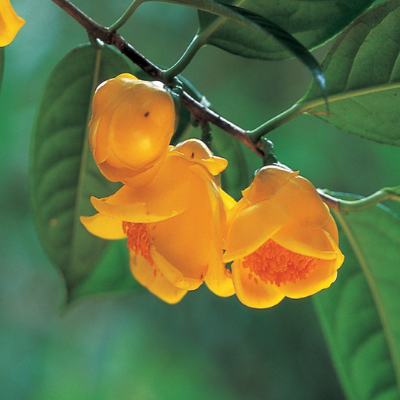
Does Golden Camellia cultivation technology have any side effects?
Golden Camellia, this plant is super beautiful, it is going to bloom, and the bloom is also super beautiful. What is this Golden Camellia cultivation technology like? Does Golden Camellia have side effects: Golden Camellia cultivation technology: 1. Create a suitable environment. Golden Camellia likes to grow in a semi-shaded, semi-cool, and humid environment, and needs regular ventilation.
条件筛选