-
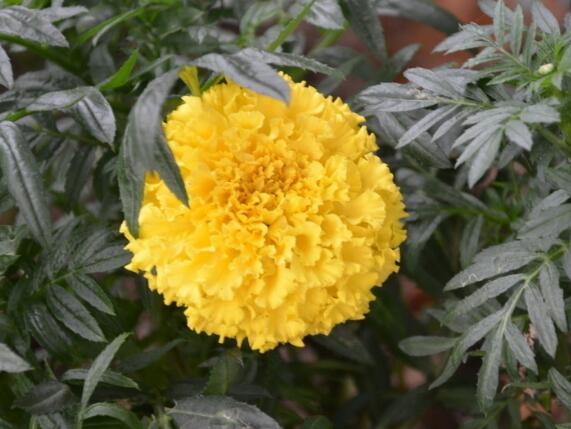
Marigold Fertilizing Methods and Precautions: Dilute Before Fertilizing
Among the effects and benefits of marigolds, their ornamental value is the most familiar to people. However, if you want them to be ornamental, the care process must be careful, and fertilizing is especially important. Fertilizer is the main nutrient during the growth of marigolds, and sufficient fertilizer is needed for marigolds to bloom brilliantly.
-
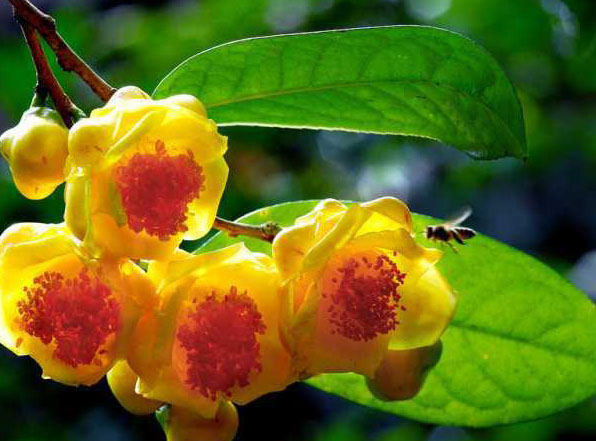
Care methods and precautions for potted Golden Camellia
For potting, it is best to use a growing medium made from leaf mold or peat soil mixed with some garden soil and river sand. To promote rapid growth, it should be planted in a well-ventilated clay pot. When planting, it is best to choose a deep cylindrical pot. Before potting, first place a layer of broken tile pieces at the bottom of the pot to improve drainage
-

Key Cultivation Techniques for Converting a Cold Storage Facility into a Mushroom Farm
Cold storage facilities have good insulation and moisture retention, with easily controlled temperature and humidity and weak light, making them quite suitable for mushroom growth and development conditions. With slight modifications to the existing facilities inside the storage, year-round mushroom production can be achieved, with 3 cultivation cycles possible per year. 1 Cold storage conversion. Cold storage can be divided by temperature into high-temperature storage (fruit cold storage) and low-temperature storage (meat and aquatic product storage); by construction location, it can be divided into above-ground storage and cave storage. These cold storage facilities were originally designed and built for storing fruits and vegetables, and their performance is not quite suitable for mushroom cultivation, therefore
-
What are the propagation methods for Golden Privet (Ligustrum sinense 'Variegatum')?
Golden Privet is generally propagated by softwood cuttings, either in containers or directly in the ground. Container cuttings cost more, so here we mainly introduce the single-bud ground-cutting method under a small bamboo arch shelter. Cutting time: it is best done when new shoot growth is slow, that is, from May to October, and preferably during the rainy season. Site selection and soil preparation: choose a loose, fertile, flat plot with good drainage, apply 125 kg of superphosphate per mu, deep plow 15 cm, then break up the soil and rake it level, make raised beds 1.2 m wide with furrows 20 cm deep. Cutting preparation: first select good mother trees. Cuttings should
-
How to prevent and control brown spot and defoliation disease in golden privet (Ligustrum × vicaryi)
Some years ago, because golden privet (Ligustrum × vicaryi) has advantages such as easy propagation, drought resistance, few pests and diseases, tolerance to pruning, a long golden-leaf period, and good effects in large color-block landscape grouping, it was widely planted, especially for patterned flower-bed shapes and large color blocks, where the landscape effect was particularly good. However, due to excessively high planting density and inadequate maintenance and management, brown spot and defoliation disease occurred every year during the rainy season (August to September in the Luoyang area), causing leaves to fall one after another, new leaves and tender buds to fail to emerge in time, and even entire plants to die in patches, severely damaging the landscape effect. In response to this situation, in 2003 we studied golden
-
Detailed Explanation of the Key Techniques for Propagating Golden Privet (Ligustrum vicaryi) from Cuttings
I. Preparation of the cutting bed. First dig the cutting bed and firm the surrounding edges. Fill the bed with substrate in layers: spread 10 cm of cinder at the bottom layer to aid drainage, spread 10 cm of humus soil in the middle layer, and spread 5 cm of coarse sand on the top layer, then level the bed soil and set it aside. Finally, build an arched shed with bamboo strips and plastic. II. Cutting treatment. Select one-year-old branches cut from greening plots and roadside green belts, cut them into cuttings about 15 cm long, and keep 1-2 leaves at the top of each cutting. Because privet has dense axillary buds and a relatively high survival rate, no chemical solution treatment is needed before insertion. III. Inserting the cuttings.
-
What are the common pests of golden privet (Ligustrum vicaryi)? A detailed guide to control methods
Golden privet (Ligustrum vicaryi) is a semi-evergreen small shrub of the genus Ligustrum in the family Oleaceae. Because its young shoots are golden yellow and it tolerates pruning and drought, it is often combined with red-flowered Loropetalum (Loropetalum chinense var. rubrum), azaleas (Rhododendron) and Chinese juniper (Juniperus chinensis) to decorate flower beds and green belts. High-density planting often makes pest problems more severe, causing new shoots to grow slowly or not sprout at all, weakening the plants and even killing them. The common and most damaging pests of golden privet are: the citrus mealybug (Planococcus citri), the privet leaf-mining flea beetle, and the yellow-ringed silk-fringed pyralid moth. 1 Citrus mealybug adults and nymphs rest on the branches and leaves of golden privet and suck plant sap with their piercing-sucking mouthparts,
-
The golden fruits of the golden-and-silver eggplant are brilliant and particularly endearing.
Golden-and-silver eggplant, also known as ornamental eggplant, is a perennial fruit-ornamental plant of the Solanum genus in the Solanaceae family, cultivated as an annual, suitable for both eating and ornament. The golden-and-silver eggplant is a variation of the edible eggplant, shrub-like, and can be grown in pots or in the ground. Leaves alternate, elliptical. Flowers purple, with five petals and a yellow center, resembling a five-pointed star flower. The plant has a sturdy form, and flowers in all four seasons can set fruit, with 30-50 fruits per plant and a single fruit weight of 30-50 grams. The fruit is elliptical; the berry is white when first formed and gradually turns golden yellow as it matures, bearing abundant fruit and dazzling to the eye, like gold and silver treasures hanging all over the branches, hence the name "gold
-
What kind of pear is the Golden Pear? Introduction to high-quality pear varieties
The Golden Pear was bred by crossing Shin Go with Nijisseiki, introduced to China from South Korea in the 1990s, and is suitable for growing in the middle and lower reaches of the Yangtze River and the Huai River basin. This variety has strong growth vigor and a relatively open tree posture; 1-year-old branches are greenish-brown; the leaves are large and thick, ovate or oblong, with sharp and dense serrations along the leaf margins; the young shoot leaves are yellow-green. The fruit is round and slightly flattened, with yellow-green skin; bagged fruit is golden yellow and appears translucent, with thin skin and large, sparse fruit dots, very attractive; the average single fruit weight is 350 grams; the flesh is fine, tender and crisp, with no or very few stone cells, abundant juice
-
A Bold Exploration of a New Technique for Transplanting Bare-Root Cotton Seedlings
Xinchang Town in Shishou City is located on the north bank of the Yangtze River, bordering Jiangling County. It is the largest town for early melons in Hubei Province and the birthplace of early chili pepper seedling cultivation in Hunan and Hubei. It was once the township in Hubei Province with the largest area, the highest benefits, and the best influence for intercropping cotton with melons and peppers. On this land where melons delight guests and peppers reflect the colors of spring, the year-round cotton planting area is about 24,000 mu. In recent years, under the promotion and guidance of agricultural technical service departments, some cotton farmers have been willing to accept new technologies and have actively and boldly explored new methods of cotton seedling cultivation. On the basis of substrate seedling cultivation and water-floating seedling cultivation in the previous two years, this year they
条件筛选