-
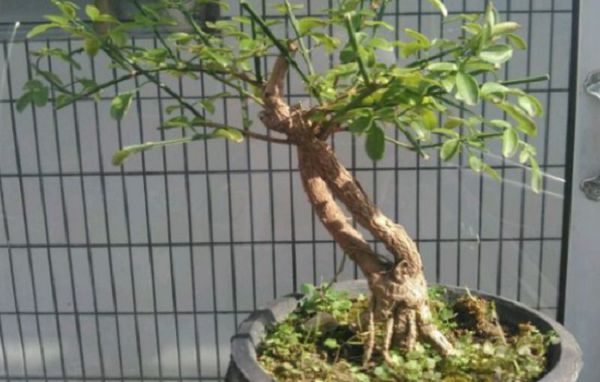
Winter jasmine is highly cold-tolerant, so why is yours struggling to survive the winter?
Everyone says winter jasmine is highly cold-tolerant, so why is yours struggling to survive the winter?
-
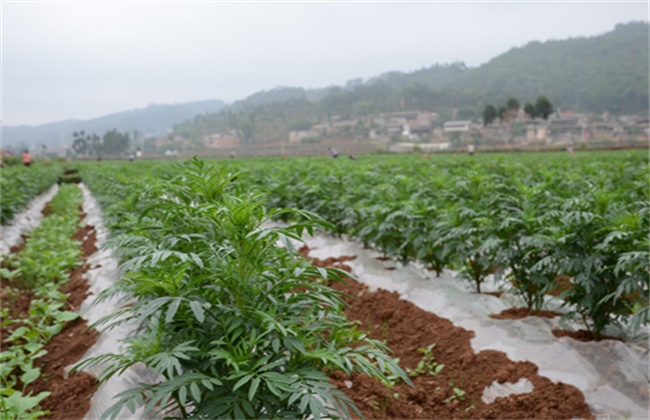
Detailed Guide to Marigold Fertilization Methods and Precautions
Marigold Fertilization Methods and Precautions
-

Planting methods and key cultivation techniques for golden camellia
Planting methods for golden camellia
-

Golden lilies bloom easily, and both planting and care are not difficult
Golden lilies are mostly used as cut flowers and bloom easily. When planting, pay attention to the following points: 1. It is best to cultivate with plump bulbs - the purchased bulbs should be plump and elastic so they will bloom easily in the future; shriveled bulbs, damaged bulbs, or bulbs that have been stored too long will fail to bloom. 2. Do not expose to light in the early stage of planting the bulbs - it is best to plant the "bulbs" in autumn or spring, burying 2/3 in the soil with the tip pointing upward and about 1/3 exposed. Keep the planting soil moist, do not fertilize for the time being, and keep it cool and shaded, exposing it to as little light as possible. This will not only help it root faster, but also use the "dark period"
-
Lily gray mold (Botrytis elliptica Cooke)
Commonly known as lily leaf blight. It mainly damages leaves, but also infects stems, flowers, buds and bulbs. Leaf spots are round or oval, yellow-brown or red-brown, with the center of the spot light yellow or light brown and the edge purplish red or pale red. When the weather is humid, a gray mold layer grows on the diseased part; when dry, the spots become thin and brittle, semi-transparent, and light gray. After the spots expand, the leaves die, and affected buds and flowers look as if scalded by boiling water, turning brown and then rotting. When stems are affected, light brown canker spots form, and they break very easily in the wind. After young plants are infected, the growing point
-
Golden Pumpkin and Lily Soup recipe, sweet and refreshing, nutritious and delicious
Ingredients: 1000 g golden pumpkin, 200 g fresh lilies, 2500 g boiling water. Method: (1) Peel the golden pumpkin, remove the seeds and pulp, and cut into pieces. Add water to a pot, place over heat, add the pumpkin pieces, bring to a boil, then move to low heat and cook for about 15 minutes, then remove and set aside. (2) Strain the pumpkin through fine cheesecloth, blanch the fresh lilies briefly in water and cool them in cold water, then set aside. (3) Put the pumpkin juice back over heat for a second time,
-
Lily gray mold (Botrytis elliptica Cooke)
Commonly known as lily leaf blight. It mainly damages leaves, and also infects stems, flowers, buds and bulbs. Leaf lesions are round or oval, yellowish-brown or reddish-brown, with the center of the lesion pale yellow or light brown and the edge purplish-red or pale red. In humid weather, gray mold grows on the diseased parts; when dry, the lesions become thin and brittle, semi-transparent, light gray. After the lesions expand, the leaves die, and affected buds and flowers look as if scalded by boiling water, turning brown and then rotting. When stems are affected, light brown canker spots form, and they break easily in the wind. After young plants are infected, the growing
-
Characteristics of 1-year-old Taxus wallichiana var. mairei (southern Chinese yew) seedlings and key points of seedling-stage management
For container seedling raising of Taxus wallichiana var. mairei (southern Chinese yew), a container size of 8cm×12cm is appropriate. After sowing, the soil temperature should be in the range of 18-25°C; after about 25d the seeds can break through the soil and germinate, with uniform germination and a high germination rate. If the temperature is below the lower limit, the seeds are difficult to germinate, and the germination rate is low and uneven. After the seeds germinate, from early June to early October, shading with a shade net of about 50% light transmittance is required. The seedlings have strict requirements for water and fertilizer; in the middle and late growth stages, more phosphorus fertilizer should be applied to promote the increase of ground diameter, root system and biomass.
-
What plant is Japanese golden-leaf privet (Ligustrum sinense 'Variegatum', also known as Golden Privet)?
Characteristics: Also known as Howardi privet, it is a plant variety in the genus Ligustrum of the family Oleaceae. It is an evergreen small tree with greenish drooping branches bearing white spots. The leaves are opposite, simple, ovate; the young leaves are golden yellow, and the leaves are thick and leathery with a bright luster, with ornamental value clearly superior to yellow-leaved varieties such as golden-leaf privet and golden-leaf boxwood. It has good resistance, tolerates cold and high temperatures, and has strong adaptability. It bears panicle inflorescences with white flowers. The fruit is dark purple and elliptical. It is suitable for cultivation in East China, South China, Central China and other regions. Suitable for color blocks, hedges and spherical
-
What are the common pests of golden privet (Ligustrum vicaryi)? A detailed guide to control methods
Golden privet (Ligustrum vicaryi) is a semi-evergreen small shrub of the genus Ligustrum in the family Oleaceae. Because its young shoots are golden yellow and it tolerates pruning and drought, it is often combined with red-flowered Loropetalum (Loropetalum chinense var. rubrum), azaleas (Rhododendron) and Chinese juniper (Juniperus chinensis) to decorate flower beds and green belts. High-density planting often makes pest problems more severe, causing new shoots to grow slowly or not sprout at all, weakening the plants and even killing them. The common and most damaging pests of golden privet are: the citrus mealybug (Planococcus citri), the privet leaf-mining flea beetle, and the yellow-ringed silk-fringed pyralid moth. 1 Citrus mealybug adults and nymphs rest on the branches and leaves of golden privet and suck plant sap with their piercing-sucking mouthparts,
条件筛选