-
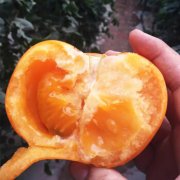
Is the Large Yellow Tomato Thai Golden Lotus the most delicious tomato variety?
Large Yellow Tomato variety Thai Golden Lotus, do you know this tomato variety? Would you like to learn about it? Some people say this tomato is the most delicious tomato variety, is that true? Thai Golden Lotus is a large-fruited tomato with an indeterminate growth habit. During growth
-

How to Deal with Late Spring Cold Snaps During Rice Seedling Raising
What to Do When a Late Spring Cold Snap Hits During Rice Seedling Raising
-

Qing'an's 700,000 mu of rice adopts cold-region dry seedling cultivation and controlled irrigation technology for water saving and high yield
The controlled irrigation, water-saving and high-yield technology for cold-region dry seedling rice has been successfully tested in Qing'an. This year, 700,000 mu of rice in this county are using this technology. According to expert calculations, it saves about 450 cubic meters of water per mu, saves 11.2 yuan in pumping costs, and increases yield by an average of 22 kg per mu. In recent years, through the trinity approach of "engineering water saving, mechanism water saving, and technical water saving," Qing'an has reduced irrigation water per mu from nearly 1,000 cubic meters to 500 cubic meters. Over 10 years, it has expanded the paddy field area from 640,000 mu to 1.17 million mu, accounting for half of the cultivated land area. Last year
-
Rice cultivation in cold regions requires water-saving irrigation, selection of improved varieties, making the most of accumulated temperature, and growing strong seedlings
Heilongjiang Province is located in a high-cold region, where heat and water resources are relatively scarce, annual atmospheric precipitation is extremely unevenly distributed, spring is windy with little rain, and drought is quite severe. The author discusses how to achieve water-saving, high-quality, and high-yield rice cultivation in cold regions. 1. Selecting excellent varieties is the prerequisite for ensuring high-quality and high-yield rice. The varieties that rice farmers plant directly affect the quality and yield of rice. Therefore, in production, varieties with a suitable maturity period, excellent quality, stable and high yield, and strong stress resistance should be selected. First, select varieties that have passed national approval, been named, and promoted, which can ensure relatively stable rice traits, steady and rising yields, and safe and reliable use; second, introduce varieties with suitable maturity periods according to different accumulated temperature zones, and never introduce varieties across zones; third, pay attention to seed quality, and select first-grade improved seeds with a purity above 98%, a germination rate above 90%, and a moisture content no higher than 14% for production use; fourth, purchase seeds from nationally certified seed companies, research institutes, and agricultural colleges, and eliminate blind planting; fifth, in actual planting, unify varieties as much as possible, plant in contiguous fields, form scale, and achieve industrialized planting.
-
How to Prevent Cold Damage in Rice? Detailed Explanation of Fertilization Measures
Fertilization case: In 2006, in rice-growing areas such as Shangzhi City, Heilongjiang Province, during the early stage of rice growth, some rice seedlings encountered low-temperature weather below 17°C, and rice cold damage problems of varying degrees occurred. In the rice-growing areas of Ningxia and Zhangjiakou, Hebei in the northwest region, in autumn during the late stage of rice growth, just at the grain-filling stage, the temperature suddenly dropped below 20°C, causing rice to suffer cold damage, which was very unfavorable for grain filling, and the seed-setting rate decreased by 10-20%, with severe cases decreasing by more than 50%. Expert comments: In northern rice-growing areas, in order to defend against the cold damage problems brought to rice production by low-temperature weather
-
The golden fruits of the golden-and-silver eggplant are brilliant and particularly endearing.
Golden-and-silver eggplant, also known as ornamental eggplant, is a perennial fruit-ornamental plant of the Solanum genus in the Solanaceae family, cultivated as an annual, suitable for both eating and ornament. The golden-and-silver eggplant is a variation of the edible eggplant, shrub-like, and can be grown in pots or in the ground. Leaves alternate, elliptical. Flowers purple, with five petals and a yellow center, resembling a five-pointed star flower. The plant has a sturdy form, and flowers in all four seasons can set fruit, with 30-50 fruits per plant and a single fruit weight of 30-50 grams. The fruit is elliptical; the berry is white when first formed and gradually turns golden yellow as it matures, bearing abundant fruit and dazzling to the eye, like gold and silver treasures hanging all over the branches, hence the name "gold
-

Cultivation Methods and Key Technical Points for Golden Flower Cauliflower
Cultivation Methods for Golden Flower Cauliflower
-
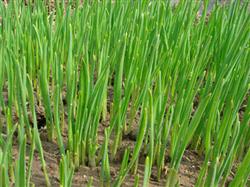
How to prevent and control gray mold in garlic? Garlic farmers, take a look
How can you make garlic sprout earlier when planting it? Please advise. If you want garlic to sprout earlier when planting it, you can refer to the following methods: 1. Water and chemical treatment method: first use 500 grams of quicklime, add it to 50 kg of water, soak the seed for 24 hours, then mix 1 kg of sulfur powder with 50 kg of seed. After the water and chemical treatment, place it in a cool place and cover it with fine sand or loess,...
条件筛选