-
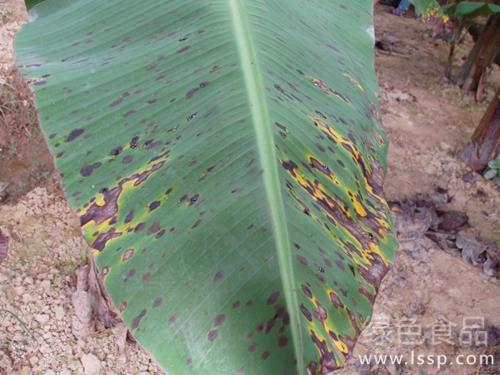
Banana cigar-end rot causes brown oval spots with mold-like growth, how to control it
The spots are oval, brown, with mold-like growth, how to control banana cigar-end rot
-

Household Care and Management Methods for Potted Monstera deliciosa
A reader asked about how to grow potted Monstera deliciosa and its household care and management. Here is a brief introduction: Monstera deliciosa likes warmth and fears cold. Its optimum growing temperature is around 30°C; at 10°C it stops growing and enters dormancy. Monstera deliciosa grows well under moist and semi-moist conditions.
-

What are the common pests and diseases of golden privet (Ligustrum × vicaryi)? A detailed guide to prevention and control methods
Golden privet is widely used in landscaping projects in northern China thanks to its easy propagation, rapid growth and tolerance of pruning and shaping. Hengshui City, Hebei Province, has been growing golden privet for more than ten years, and as the planted area and the years of cultivation have increased, its pests and diseases have become increasingly serious. Based on many years of observation and research,
-
A Detailed Guide to Golden Camellia Planting Techniques and Cultivation Management Points
Golden Camellia belongs to the Theaceae family, Camellia genus, and is a twin sister to tea, camellia, Nanshan camellia, oil tea, and sasanqua. The flowers of Golden Camellia are golden yellow, dazzling and eye-catching, as if coated with a layer of wax, crystal clear and glossy, with a sense of translucence. Golden Camellia flowers are solitary in leaf axils; when in bloom, they are cup-shaped, pot-shaped, or bowl-shaped
-

How to grow Camellia nitidissima (golden camellia)? A complete guide to cultivation and care
Characteristics of Camellia nitidissima: the flowers are golden yellow and dazzling, with beautiful flower forms and high ornamental value. It is much loved in daily life. Recently many friends who love plants and flowers have asked me how to grow Camellia nitidissima. In fact, the method is very simple: just pay attention to soil, water and fertilizer, and flowering-period management.
-

Techniques for Cultivating One-Year-Old Seedlings and Large Seedlings of Photinia × fraseri by Cuttage
Photinia × fraseri is also known as Flame Red, Qiannian Hong, Red Robin, Red Lip, Sour-Leaf Photinia, and Sour-Leaf Tree. It is mainly distributed in the subtropical and temperate regions of southeastern and eastern Asia and North America, and is now cultivated in many parts of our country. Its flowering period is from May to July, and its fruit ripens from September to October.
-

Detailed Explanation of High-Yield and High-Quality Cultivation Methods for Golden Camellia
Golden Camellia is a national first-class protected plant, known as a living fossil of the plant kingdom. Its flowers are yellow, ovate to round in shape, and the flowering period runs from November to March of the following year. Golden Camellia prefers a warm and humid climate and has low soil requirements, so those interested can try growing it.
-

How to Grow Golden Camellia as a Houseplant: Methods and Techniques
How do you grow golden camellia (Camellia petelotii) as a houseplant? Golden camellia is a very ancient plant species with not only medicinal and economic value but also very high ornamental value. Its flowers are a dazzling golden yellow, earning it the praises of "giant panda of the plant world" and "queen of the tea family."
-

Transport, Cultivation, Maintenance and Pruning Methods for Catalpa and Goldenrain Tree Seedlings
Transport, cultivation, maintenance and pruning of catalpa and goldenrain tree all require certain technical knowledge; in particular, transplanting requires understanding the local soil conditions, climate conditions and so on. Below we discuss how to transport, cultivate, maintain and prune catalpa and goldenrain tree seedlings.
-
What are the pest and disease control methods for the golden spider lily?
1. Anthracnose: Before planting the bulbs, soak them in a 0.3% copper sulfate solution for 30 minutes, rinse with water, let them dry, and then plant. 2. Tobacco cutworm: It generally causes damage from late spring to November, and can be controlled with 5% fipronil suspension concentrate at 2500 times dilution or 1000 times dilution of Wanling. Alright
条件筛选