-

Key points to note during the fruiting period of shiitake mushrooms: regulation of temperature and humidity differences
Increase the day-night temperature difference. In late autumn and early winter, daytime temperatures are high and nighttime temperatures are low. Cover with a layer of film during the day so that the temperature inside the mushroom bed is 2°C-3°C higher than outside the film, then open the film after 10 p.m. so the temperature drops rapidly. After several consecutive days, a large number of primordia will emerge on the surface of the mushroom logs and develop into mushroom buds. Control the humidity of the mushroom yard. After color change, initially maintain the relative humidity of the mushroom bed at about 85%. As large numbers of mushroom buds differentiate into caps and stipes, lower the air humidity to about 80%. Create a suitable dry-wet difference. In the early stage of autumn mushrooms, the internal water content of the mushroom logs is relatively sufficient and can safely
-
Detailed Explanation of Points to Note When Mixing Substrate for Substitute-Material Cultivation of Shiitake Mushrooms
Substitute-material cultivation of shiitake mushrooms is another cultivation method following log or round-wood cultivation. Its cultivation forms are diverse, mainly designed according to differences in cultivation conditions, cultivation materials and cultivation containers. It has developed rapidly in recent years and now accounts for more than 95% of the cultivation area. In its medium, materials rich in cellulose, lignin and hemicellulose, such as wood chips, crop straw and wild grasses, are used as the main components of the cultivation material, appropriately supplemented with auxiliary materials such as wheat bran and rice bran rich in organic matter and vitamins, as well as gypsum, calcium carbonate and similar substances containing inorganic salts. The water content is adjusted to around 60%, and after sterilization it is inoculated and cultivated.
-
4 Things to Note When Introducing Pet Rabbits
As the pet rabbit market grows increasingly prosperous, more and more people are introducing pet rabbits, but all kinds of problems have followed. Some people spend a lot of money to buy so-called pet rabbit breeding stock, only to find that when the breeding season arrives, the rabbits do not come into heat. After inquiring carefully, they learn that the rabbits have been sterilized and simply cannot reproduce, so half a year has been wasted for nothing. Some buy rabbits home but the rabbits cannot survive at all, because no breeding techniques were provided, and they just feed them like ordinary rabbits. The result is that the sudden change in living conditions, combined with the abrupt switch in feed, causes the young rabbits to fall ill and die one after another.
-
Several key technical points to note in rural electric goose incubation
Because goose farming can make full use of the abundant pasture resources in rural areas, consumes little concentrated feed, grows quickly, is easy to manage, and yields good rearing benefits, rural goose farming is currently showing a momentum of vigorous development. Correspondingly, the incubation of goslings has gradually developed from the traditional kerosene lamp and beach-bed incubation of the past to electric incubation in household workshop-style incubation rooms. However, because most incubation rooms do not have a good grasp of incubation techniques, the incubation results are not very ideal, and some incubation rooms even have lower hatch rates than traditional incubation methods. In response to this situation, the author specifically proposes the following
-
What issues should be noted when harvesting edible mushrooms
1. Harvest at the right time. When edible mushrooms are 70-80% mature, they look beautiful and taste good. Take shiitake mushrooms (Lentinula edodes) as an example: the sign of 70-80% maturity is that the partial veil has broken, the cap has not yet fully opened and still curls inward slightly, forming a "gong rim"; the gills have fully extended and turned from white to yellowish-brown or dark brown. This is the suitable harvest period for shiitake mushrooms. 2. Pay attention to picking technique. When picking edible mushrooms, all stemmed mushrooms, such as shiitake, straw mushrooms, oyster mushrooms, and bamboo fungus (Phallus indusiatus), must be picked according to the principle of picking the large and leaving the small. When picking, pinch the base of the mushroom stem tightly with your thumb and index finger,
-
Points to note when raising pigs in summer: do not throw cold water on the pigs
In summer, when the temperature is high, pigs often pant loudly from the heat. Some farmers, worried that the pigs will fall ill from the heat, throw cold water on the pigs, hoping to cool them down and make them feel more comfortable, not realizing that this is harmful and does no good. Pigs pant from the heat because their sweating is poor, so the heat in their bodies cannot be released for the time being. If cold water is thrown on a pig at this time, the strong cold stimulation makes the sweat pores all over the pig's body contract sharply, the release of body heat is blocked, and the body temperature instead rises abruptly; in mild cases the pig develops a high fever and inflammation of the lungs, and in severe cases it
-
What are the methods for collecting goose down and feathers, and what points should be noted?
1. Plucking from the carcass means collecting all the goose down and feathers at once after slaughter, and it is further divided into three collection methods: hot-water scalding, steam plucking and dry plucking. The hot-water scalding method is also called the soaking-and-scalding method or the scalding-and-defeathering method. After the goose is slaughtered, collect the goose blood and drain it as completely as possible to ensure the quality of the goose carcass and internal organs, so that the carcass has no residual blood, the body surface is clean and attractive, and the meat quality is good. It is best to pull out the large quills on both wings (tip quills, blade quills, nest quills) before scalding and store and sell them separately. Otherwise, once mixed into the feathers, they not only affect down quality but are also treated as waste and wasted. After slaughter, use
-
Several key points to note when grazing sheep in early spring
1. Choice of grazing land. It should be chosen in sunny slope areas close to the winter grazing land, where grass sprouts earlier, so that when the weather changes suddenly the sheep can be driven back to the pen in time to take shelter. When the amount of green grass is not yet enough for the sheep to eat half their fill, each day the sheep should first be driven to shady slopes with more dry grass, and after the sheep have eaten some dry grass, they should then be driven to the green grass on the sunny slopes. 2. Prevent "running after green". When green grass has just begun to sprout, it looks present from afar but absent up close, and the sheep tend to run around everywhere, commonly known as "running after green". Not only do they fail to eat their fill, but they also use up their strength. They should be grazed on shady slopes with plenty of dry grass, and
-

Can Peperomia be grown hydroponically? Master the hydroponic method and key points to note
For plant lovers who have a passion for hydroponics, they want to try growing everything in water. So, can Peperomia be grown hydroponically? Of course it can. Before talking about hydroponic Peperomia, let's first go over the basic information about Peperomia. Its scientific name is Peperomia obtusifolia, and it is a fairly well-known small foliage houseplant. Peperomia is relatively shade-tolerant.
-
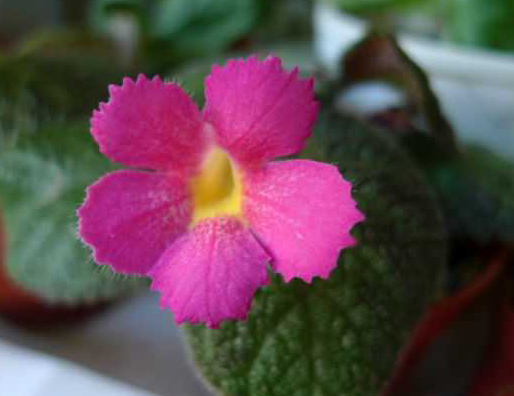
What should be noted when caring for an Episcia?
Episcia is also known as red tongcao. The flowers are solitary in the leaf axils, crimson red, blooming in summer. Common varieties include 'Emerald Queen', with dark green leaves and silver-white midribs; copper-green Episcia, with copper-green leaves and reddish leaf margins; chocolate Episcia, with silver-white main veins, as well as silver-glow Episcia and variegated Episcia, etc.
条件筛选