Can Peperomia be grown hydroponically? Master the hydroponic method and key points to note
For plant lovers who have a passion for hydroponics, they want to try growing everything in water. So, can Peperomia be grown hydroponically? Of course it can. Before talking about hydroponic Peperomia, let's first go over the basic information about Peperomia. Its scientific name is Peperomia obtusifolia, and it is a fairly well-known small foliage houseplant. Peperomia is relatively shade-tolerant and can be placed indoors in a spot with bright indirect light all year round, and in winter it can be given a bit more sunlight. In winter, pay attention to cold protection and keeping warm, and keep the room temperature above 15°C.
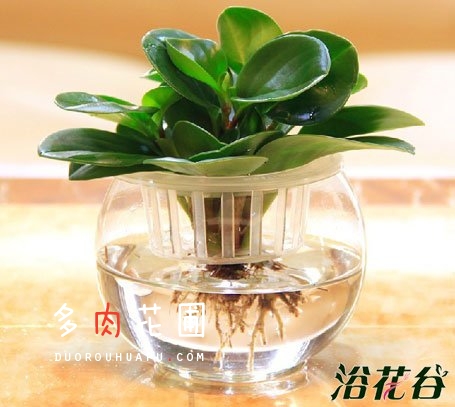
Growing Peperomia without a substrate in water is fairly simple. As with hydroponics for other flowers and plants, there is one fairly important point: do not submerge the entire root and stem in the water, because this will prevent the roots from breathing and then cause root rot. A thousand words are worth less than one picture. The correct hydroponic method is shown in the picture below (leave a bit of the root in contact with the air):
Some plant lovers do not use pure hydroponics, but instead use some substrate and simply keep water in the pot at all times. The specific substrate can be vermiculite:peat:slag at 1:1:1, or perlite:peat:river sand at 1:1:1. When potting, first add a layer of ceramic pellets or coarse sand to the bottom of the pot, place the seedling in the center and hold it upright, then add substrate until the pot is eight-tenths full. Top up with water on ordinary days to keep the substrate moist. During the growing period, it is best to spray the stems and leaves with clean water 1-2 times a day to help keep the leaves green and fresh, which is especially important in dry climates and during the hot summer season.
Can Peperomia be grown hydroponically? How to grow Peperomia hydroponically
Hydroponic plants are very popular among people who grow flowers, after all, they are clean and easy to care for. For plant lovers who have a passion for hydroponics, they want to try growing everything in water. So, can Peperomia be grown hydroponically? Of course it can. Before talking about hydroponic Peperomia, let's first go over the basic information about Peperomia. Its scientific name is Peperomia obtusifolia, and it is a fairly well-known small foliage houseplant. Peperomia is relatively shade-tolerant and can be placed indoors in a spot with bright indirect light all year round, and in winter it can be given a bit more sunlight. In winter, pay attention to cold protection and keeping warm, and keep the room temperature above 15°C.
Growing Peperomia without a substrate in water is fairly simple. As with hydroponics for other flowers and plants, there is one fairly important point: do not submerge the entire root and stem in the water, because this will prevent the roots from breathing and then cause root rot. A thousand words are worth less than one picture. The correct hydroponic method is shown in the picture below (leave a bit of the root in contact with the air):
Some plant lovers do not use pure hydroponics, but instead use some substrate and simply keep water in the pot at all times. The specific substrate can be vermiculite:peat:slag at 1:1:1, or perlite:peat:river sand at 1:1:1. When potting, first add a layer of ceramic pellets or coarse sand to the bottom of the pot, place the seedling in the center and hold it upright, then add substrate until the pot is eight-tenths full. Top up with water on ordinary days to keep the substrate moist. During the growing period, it is best to spray the stems and leaves with clean water 1-2 times a day to help keep the leaves green and fresh, which is especially important in dry climates and during the hot summer season.