-

What are the key points to note for garlic planting in 2010
The garlic planting area in Eryuan County has remained at around 50,000 mu year-round. Thanks to the unique natural climate conditions and cultivation techniques, the garlic produced there bolts early, reaches the market early, and has a high rate of single-clove garlic. Garlic cultivation yields high output value and good returns, and the garlic industry plays a positive role in increasing farmers' income and helping them prosper. In order to promote the healthy and steady development of the garlic industry and effectively protect the interests of the broad community of garlic farmers, in accordance with the provisions of the Seed Law, the Measures for the Administration of Crop Seed Labels, and the Measures for the Supervision and Administration of Quantitatively Packaged Commodities, and in conjunction with Dali Prefecture Agricultural Office Document
-
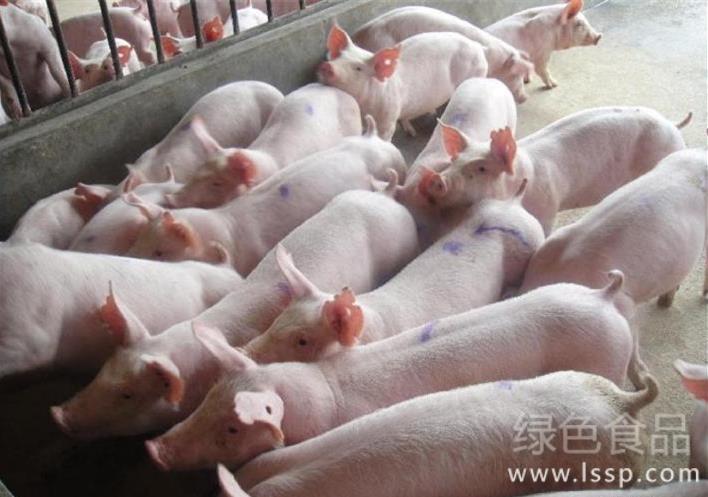
Sweet potatoes are nutritious, but they must be fed to pigs properly: four taboos to note
Though nutritious, sweet potatoes must be fed properly: four taboos when feeding sweet potatoes to pigs
-
What should be noted when advancing the cotton sowing date?
Can the cotton sowing date really be advanced? Based on many years of cotton sowing practice, the lessons in this regard are very profound. It is true that using plastic film mulching for nutrient-pot seedling raising can also allow sowing in mid-to-late March and produce cotton seedlings in early April, and large-scale demonstrations have been carried out in production, but the result is that management is very difficult, and it is also hard to ensure full stands and strong seedlings. First, cold waves are frequent in early to mid-April, temperature fluctuations are large, north winds occur many times, and it is very difficult to judge when to uncover and cover the seedbed film; second, if continuous rainy weather occurs, it is difficult to ventilate the cotton seedlings on the seedbed, which very easily leads to spindly seedlings and causes cotton seedlings to lodge; third, low temperature and rain also easily induce diseases such as damping-off, anthracnose, and seedling blight, causing patches of dead seedlings in the seedbed; fourth, early sowing prolongs the seedling age of cotton seedlings, forcing them to be transplanted into the field too early. When early-transplanted cotton seedlings encounter cold waves, missing plants and broken rows often result from dead seedlings, generally 10%-20% missing plants, and in severe cases 30%-50% missing plants. In recent years, many new varieties have been introduced in cotton production, especially hybrid insect-resistant cotton, which is relatively expensive. If the area of missing plants is too large, it will not only cause economic losses, but also make it difficult to achieve one sowing, one transplanting, and one full stand of cotton. The planned cotton field area often cannot be realized, and it is even harder to ensure that excellent cotton seed is planted to achieve a high and bumper harvest.
-
What issues should be noted when harvesting sweet potatoes?
Sweet potato is a vegetatively propagated vegetative body, with no obvious maturity standard or harvest period, but harvesting too early or too late affects the yield, seed retention, storage, processing and utilization, and crop rotation of sweet potatoes. Harvesting too early will significantly reduce the yield of sweet potatoes; harvesting too late, sweet potatoes are often affected by low-temperature chilling injury, are not resistant to storage, and the drying rate declines. Therefore, sweet potatoes must be harvested at the right time. The suitable harvest period for sweet potatoes should be determined according to climatic conditions, safe storage time, and the arrangement of the following crop. When the ground temperature is around 18°C, the weight increase of sweet potatoes is very small; when the ground temperature is
-
Things to note when potting and repotting azaleas
Azaleas should be potted once the cuttings have taken root. For pots, clay pots with good permeability are best, purple sand pots come second, and glazed pots and porcelain pots are the worst. When potting, pay attention to choosing the size of the pot, and never use a large pot for a small seedling. If the pot is too large, the potting soil stays wet for a long time, aeration will be poor, and at the same time the roots can easily fail to reach the pot wall, affecting the development of the seedlings. Generally, for rooted cuttings you can choose a clay pot with a diameter of about 10 cm, and after one year repot into a flower pot of about 15 cm. When potting, pay attention to making a good drainage layer: first cover the drainage hole with a piece of tile, then put
-
Seven points to note for preventing miscarriage in doe deer
Miscarriage prevention for deer should begin at mating and end at fawning. To ensure rapid fetal development in deer, the following tasks should be done well for miscarriage prevention. 1. Prevent inbreeding. Inbreeding increases the chances of embryo death and the birth of deformed deer. It also easily causes low viability in fawns, leading to reduced productivity. 2. Strengthen the taming of deer, enhance their docility, and prevent mechanical miscarriage. 3. Improve the living environment of doe deer. Promptly clear snow and ice from the deer shed. Prevent deer from slipping and suffering miscarriage.
-
What should be noted when cultivating shiitake mushrooms off-season?
Shiitake mushrooms cultivated off-season can usually fruit in spring; such shiitake mushrooms are of good quality, fetch a high price, and have a good market. To develop shiitake cultivation in the future, the number of off-season crops must be increased, so that supplies are available to the market year-round and economic returns can also be raised. The principles and methods of off-season cultivation are basically the same as those of spring cultivation, but the following four points should be noted: 1. Inoculation season: inoculation should be carried out when the local average temperature is steadily below 10°C. 2. During the spawn-running process, the temperature requirement of 7-13°C should be met as much as possible; spawn running can be carried out in a greenhouse or a single-board machine room (referring to a room with a temperature of 0-13°C).
-
Detailed Explanation of Points to Note When Mixing Substrate for Substitute-Material Cultivation of Shiitake Mushrooms
Substitute-material cultivation of shiitake mushrooms is another cultivation method following log or round-wood cultivation. Its cultivation forms are diverse, mainly designed according to differences in cultivation conditions, cultivation materials and cultivation containers. It has developed rapidly in recent years and now accounts for more than 95% of the cultivation area. In its medium, materials rich in cellulose, lignin and hemicellulose, such as wood chips, crop straw and wild grasses, are used as the main components of the cultivation material, appropriately supplemented with auxiliary materials such as wheat bran and rice bran rich in organic matter and vitamins, as well as gypsum, calcium carbonate and similar substances containing inorganic salts. The water content is adjusted to around 60%, and after sterilization it is inoculated and cultivated.
-
What issues should be noted in the export processing of fresh-keeping shiitake mushrooms?
I. Raw material selection In the processing of fresh-keeping shiitake mushrooms, the first thing to note is the freshness of the raw materials, which is an important factor determining the quality of the finished fresh-keeping shiitake mushrooms. The raw materials must be fresh, and the color must be normal; secondly, the mushroom caps must be complete and round in shape, the stems must be intact, and the mushroom bodies must retain the graceful form of natural growth; the mushroom flesh must be thick, the edges of the caps must be neatly incurred, the partial veil unbroken or slightly open, and not fully opened; the cap diameter must be no less than 38 mm; and there must be no pests or diseases, off-odors, or soil impurities. II. Raw material handling and cold storage First,
-
4 Things to Note When Introducing Pet Rabbits
As the pet rabbit market grows increasingly prosperous, more and more people are introducing pet rabbits, but all kinds of problems have followed. Some people spend a lot of money to buy so-called pet rabbit breeding stock, only to find that when the breeding season arrives, the rabbits do not come into heat. After inquiring carefully, they learn that the rabbits have been sterilized and simply cannot reproduce, so half a year has been wasted for nothing. Some buy rabbits home but the rabbits cannot survive at all, because no breeding techniques were provided, and they just feed them like ordinary rabbits. The result is that the sudden change in living conditions, combined with the abrupt switch in feed, causes the young rabbits to fall ill and die one after another.
条件筛选