-

What technical points should be noted for indoor cultivation of oyster mushrooms?
Oyster mushrooms are welcomed by people for their delicious taste, short production cycle and ease of cultivation. Especially in Northeast China, where the climate is cold in winter and spring and fresh vegetables are scarce, growing oyster mushrooms indoors to supply the market is truly a good way to make money. However, a prominent problem in indoor cultivation of oyster mushrooms is that the air temperature is not easy to control and the surface layer of the substrate dries out easily, affecting oyster mushroom production. After repeated trials, the author believes that casing soil cultivation gives good results. 1. Mushroom house selection. Abandoned or temporarily unused houses can be chosen as the mushroom house (they must be repainted with limewater), and heating and ventilation facilities are required.
-
Three things to note when cultivating oyster mushrooms in winter
Mushroom yard selection The ideal site suitable for winter cultivation is a mushroom yard with warming and insulation conditions, such as an indoor mushroom house equipped with warming conditions, a warmer underground mushroom yard, and a raised-bed mushroom yard using plastic greenhouse cultivation, etc. The temperature of this type of mushroom yard can be controlled above normal temperature, which is beneficial to mycelial growth and can also promote earlier fruiting. Usually, for early winter cultivation, an outdoor mushroom yard can be chosen; for late winter cultivation, an indoor mushroom house should be chosen. Strain selection Winter-cultivated oyster mushrooms can be divided into two types according to the fruiting period arrangement: winter cultivation with winter fruiting and winter cultivation with spring fruiting. For the former, low-temperature type varieties
-
What should be noted when cultivating shiitake mushrooms off-season?
Shiitake mushrooms cultivated off-season can usually fruit in spring; such shiitake mushrooms are of good quality, fetch a high price, and have a good market. To develop shiitake cultivation in the future, the number of off-season crops must be increased, so that supplies are available to the market year-round and economic returns can also be raised. The principles and methods of off-season cultivation are basically the same as those of spring cultivation, but the following four points should be noted: 1. Inoculation season: inoculation should be carried out when the local average temperature is steadily below 10°C. 2. During the spawn-running process, the temperature requirement of 7-13°C should be met as much as possible; spawn running can be carried out in a greenhouse or a single-board machine room (referring to a room with a temperature of 0-13°C).
-
Detailed Explanation of Points to Note When Mixing Substrate for Substitute-Material Cultivation of Shiitake Mushrooms
Substitute-material cultivation of shiitake mushrooms is another cultivation method following log or round-wood cultivation. Its cultivation forms are diverse, mainly designed according to differences in cultivation conditions, cultivation materials and cultivation containers. It has developed rapidly in recent years and now accounts for more than 95% of the cultivation area. In its medium, materials rich in cellulose, lignin and hemicellulose, such as wood chips, crop straw and wild grasses, are used as the main components of the cultivation material, appropriately supplemented with auxiliary materials such as wheat bran and rice bran rich in organic matter and vitamins, as well as gypsum, calcium carbonate and similar substances containing inorganic salts. The water content is adjusted to around 60%, and after sterilization it is inoculated and cultivated.
-
Key points to note during the fruiting period of shiitake mushrooms: regulation of temperature and humidity differences
Increase the day-night temperature difference. In late autumn and early winter, daytime temperatures are high and nighttime temperatures are low. Cover with a layer of film during the day so that the temperature inside the mushroom bed is 2°C-3°C higher than outside the film, then open the film after 10 p.m. so the temperature drops rapidly. After several consecutive days, a large number of primordia will emerge on the surface of the mushroom logs and develop into mushroom buds. Control the humidity of the mushroom yard. After color change, initially maintain the relative humidity of the mushroom bed at about 85%. As large numbers of mushroom buds differentiate into caps and stipes, lower the air humidity to about 80%. Create a suitable dry-wet difference. In the early stage of autumn mushrooms, the internal water content of the mushroom logs is relatively sufficient and can safely
-
What issues should be noted in the export processing of fresh-keeping shiitake mushrooms?
I. Raw material selection In the processing of fresh-keeping shiitake mushrooms, the first thing to note is the freshness of the raw materials, which is an important factor determining the quality of the finished fresh-keeping shiitake mushrooms. The raw materials must be fresh, and the color must be normal; secondly, the mushroom caps must be complete and round in shape, the stems must be intact, and the mushroom bodies must retain the graceful form of natural growth; the mushroom flesh must be thick, the edges of the caps must be neatly incurred, the partial veil unbroken or slightly open, and not fully opened; the cap diameter must be no less than 38 mm; and there must be no pests or diseases, off-odors, or soil impurities. II. Raw material handling and cold storage First,
-
What issues should be noted when harvesting edible mushrooms
1. Harvest at the right time. When edible mushrooms are 70-80% mature, they look beautiful and taste good. Take shiitake mushrooms (Lentinula edodes) as an example: the sign of 70-80% maturity is that the partial veil has broken, the cap has not yet fully opened and still curls inward slightly, forming a "gong rim"; the gills have fully extended and turned from white to yellowish-brown or dark brown. This is the suitable harvest period for shiitake mushrooms. 2. Pay attention to picking technique. When picking edible mushrooms, all stemmed mushrooms, such as shiitake, straw mushrooms, oyster mushrooms, and bamboo fungus (Phallus indusiatus), must be picked according to the principle of picking the large and leaving the small. When picking, pinch the base of the mushroom stem tightly with your thumb and index finger,
-
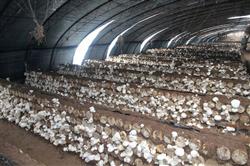
What should be noted when growing White Lingzhi mushrooms (Pleurotus nebrodensis) in soil-covered ground beds?
The White Lingzhi mushroom (Pleurotus nebrodensis) is a culinary mushroom variety with relatively low yields; generally, three-dimensional wall-style cultivation can achieve a biological conversion rate of 30-40%. To increase the yield of White Lingzhi mushrooms, a soil-covered ground bed cultivation model can be adopted; with proper management, this method produces very high yields. According to the author's extensive trials, the biological conversion rate of ground-bed-cultivated White Lingzhi mushrooms can reach 80-100...
-
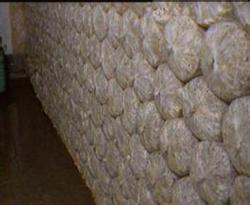
What should be noted for oyster mushroom cultivation in autumn?
1. Temperature difference stimulation: During the stage when oyster mushroom fruiting bodies begin to form, providing a daily temperature difference stimulation of 7°C to 10°C can promote earlier fruiting and more uniform fruiting body development. Method: Cover with film during the day to keep warm, and on sunny evenings or mornings uncover the film to expose the beds, increasing the temperature difference by cooling down, combined with watering at high temperatures to induce fruiting. 2. High temperature stimulation...
-
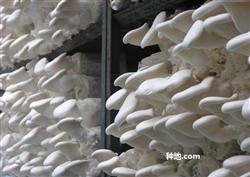
What should be noted when cultivating white king oyster mushrooms? Detailed explanation of key cultivation techniques
What should be noted during the cultivation of white king oyster mushrooms? White king oyster mushrooms, due to their unique edible and medicinal value, have seen a year-on-year increase in spawn input in northern China in recent years, and have shown a promising prospect of both good production and sales. They are one of the preferred mushroom types for novice mushroom growers to develop edible fungus production. At present, in white king oyster mushroom production there exist...
条件筛选