-

Announcement No. 2129 of the Ministry of Agriculture of the People's Republic of China
Pursuant to the provisions of the Animal Husbandry Law of the People's Republic of China and the Measures for the Administration of Licenses for the Production of Livestock Genetic Materials, and upon passing assessment, review and quality testing, Dalian Jinhongji Livestock Breeding Co., Ltd. and the Dairy Cattle Center of Beijing Sunlon Livestock Development Co., Ltd. are approved to engage in the production and operation of frozen bovine
-
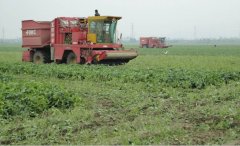
Taiwan's new edamame variety Kaohsiung No. 12, the secret behind high export volume
Edamame exports have returned to glory, but international competition has never been absent. Taiwan's edamame is mainly exported to Japan, and its main competitors are China and Thailand, which adopt a low-price competition strategy. However, these two places also know how to bring in Taiwanese businessmen.
-
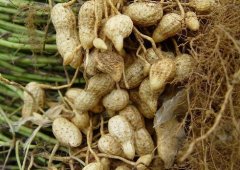
Introduction to the New Taiwan Peanut Variety Tainan No. 12 and the Characteristics and Disease Resistance of Tainan No. 11
Currently, the variety with the largest peanut planting area is "Tainan No. 11". This is not the new rice variety Tainan No. 11, but "Tainan No. 11", which was bred and promoted by the Tainan Station in the 75th year of the Republic of China. It has characteristics such as high yield, large pods and seeds, and being relatively easy to harvest manually. In addition
-
Introduction to the Excellent Greenhouse Common Bean Variety No. 12 Yudou
Green beans, also called common beans or kidney beans, today we are going to introduce a greenhouse common bean cultivar - No. 12 Yudou. No. 12 Yudou was developed through crossbreeding by the Guangzhou Vegetable Research Institute. As early as 1987, the Suizhong County Foundation Seed Farm successfully introduced and trial-planted it. At present, it has become
-
Introduction to the Chu Ye Qi No. 12 tea tree variety
It belongs to the clonal propagation line. It is a national-level improved variety. It was bred by the Hunan Tea Research Institute. It has now been promoted to provinces including Hubei and Anhui. Morphological characteristics: shrub type, medium-leaf, medium-bud variety. The tree posture is semi-open; spring buds germinate in mid-to-late March; the peak period of one bud and three leaves is in early-to-mid April; the weight of 100 buds is 70 grams. The young shoots are green-yellow with abundant fine hairs. It has strong tenderness retention and is suitable for making famous green tea; the appearance is tight and compact, with silvery tips visible, a jade-like moist color, rich aroma and mellow taste. Quality characteristics of fresh leaves of one bud and two leaves: tea polyphenols 36.1%, amino acids 3.
-
Introduction to the Characteristics of the Liaoyan No. 12 Rice Variety
I. Variety Origin: Bred by Panjin North Agricultural Technology Development Co., Ltd. in 1998. This variety is a japonica-type medium-late maturing high-quality rice selected from an M146 mutant. It was approved by Beijing in 2000. II. Characteristics: When transplanted on June 21 in the Beijing region, it heads on August 13, with a whole growth period of 146 days, the same maturity period as Jinzhu No. 1. In Liaoning, the growth period is about 157 days, belonging to a medium-late maturing variety. The seeds have relatively strong germination vigor, the seedlings are relatively strong, the leaves are semi-erect and green, and the root system is well developed; it is tolerant to saline-alkali, drought-resistant, disease-resistant
-
Introduction to the characteristics of the Tongnong No. 12 soybean variety
"Tongnong No. 12" is a new high-protein soybean variety bred by the Crop Institute of the Tonghua Academy of Agricultural Sciences. In March 2000, it was approved by the Jilin Provincial Crop Variety Approval Committee and named "Tongnong No. 12." Its protein content is 44.83%, and its fat content is 19.28%. 1. Characteristics "Tongnong No. 12" plants are 85 cm tall and have a determinate podding habit. Lanceolate leaves, dark green leaf color, gray pubescence. The main stem has 17 nodes, belongs to the multi-branching type, and the plant form is compact. Pods turn dark brown when mature. Seeds are round, with yellow seed coat, yellow hilum, and glossy seeds.
条件筛选