Taiwan's new edamame variety Kaohsiung No. 12, the secret behind high export volume
Edamame exports have returned to glory, but international competition has never been absent. Taiwan's edamame is mainly exported to Japan, and its main competitors are China and Thailand, which adopt a low-price competition strategy. However, these two places also know how to bring in Taiwanese businessmen to provide technical support, making the improvement station constantly worry about how long Taiwan's edamame advantage in the Japanese market can last. To remain undefeated, the secret weapon of the Kaohsiung District Agricultural Improvement Station is varieties. It continuously develops new varieties, keeping competitors struggling to catch up, and also applies for plant variety rights in major export markets to defend intellectual property.
Taiwan's most popular edamame at present is Kaohsiung No. 9, which has endured for a long time, and the newest variety is Kaohsiung No. 12. Zhou Guolong, director of the Qinan Branch of the Kaohsiung District Agricultural Improvement Station of the Council of Agriculture, said that all the edamame varieties bred have applied for plant variety rights. Domestically, seeds are produced through non-exclusive licensing for farmers to grow; in the main market, Japan, plant variety rights have also been applied for.
Explaining the reason for choosing to apply for plant variety rights in the main market, Zhou Guolong said that because everyone exports to Japan, catching infringement in Japan should be the most effective way. However, considering the cost of cross-border litigation, the approach taken by the improvement station is to license to Japanese seed companies and let the Japanese seed companies pursue infringement, saving the cost of fighting infringement lawsuits themselves.
By licensing varieties to Japanese seed companies, the improvement station can receive royalties, but the royalties are very low. It licensed Kaohsiung No. 6, Kaohsiung No. 7, Kaohsiung No. 8, and Kaohsiung No. 9 for a period of 25 years and received only 11 million, which is quite helpless. But Zhou Guolong said that pursuing infringement itself costs even more, so it had no choice but to adopt exclusive licensing to warn foreign manufacturers that steal and plant the improvement station's edamame varieties. If a Japanese seed company wins a lawsuit and obtains infringement compensation, then the company must pay the improvement station derived benefits, calculated by deducting the cost of litigation and then the improvement station taking 30%.
But the problem is that Japanese seed companies never file lawsuits, so the improvement station has never received derived benefits. The reason for not filing lawsuits is that it is time-consuming and drawn-out. After discovering infringement, the seed companies negotiate a settlement with the infringer. The settlement method is to sell edamame seeds to the other party. As a result of selling seeds, the improvement station can only take 2%.
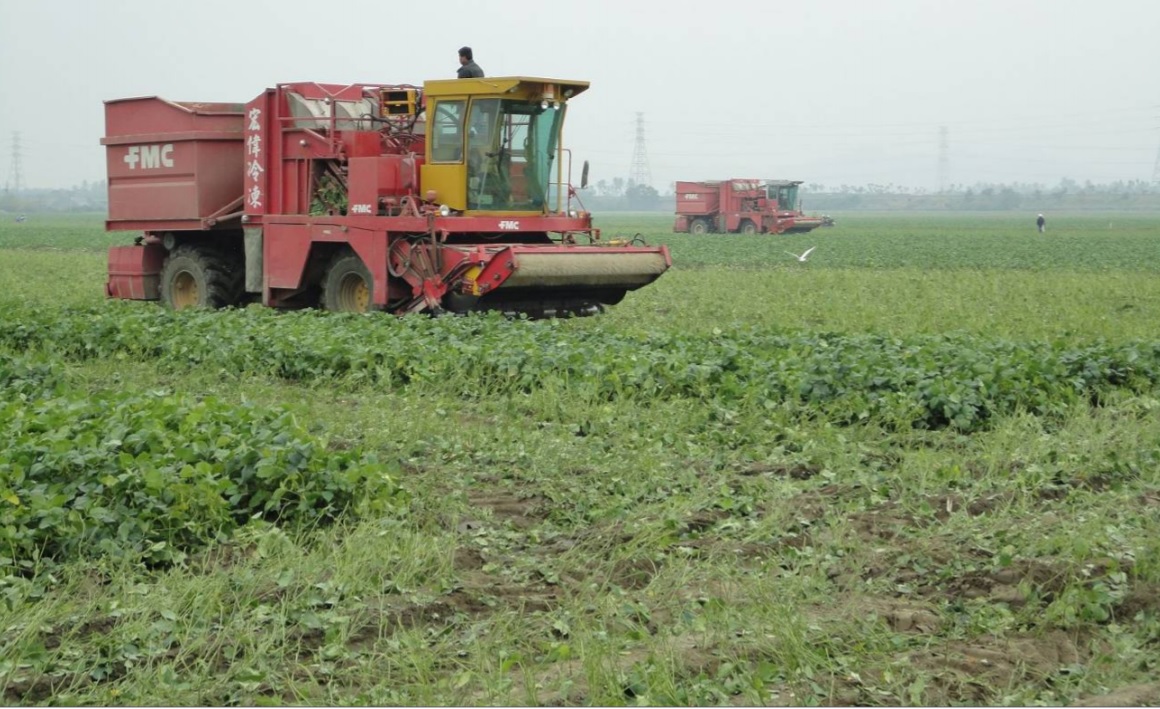
Zhou Guolong said that the quality of exported edamame from China and Thailand has gradually improved, and pesticide residue problems have also gradually improved. Taking stock of Taiwan's current advantages in edamame exports, they include: fully mechanized production, enterprise-based management, and in addition, new edamame varieties provided by the improvement station to support the industry. The improvement station hopes to launch a new edamame variety every 2 to 3 years, continuously providing excellent new products to the market, to help Taiwan's edamame industry remain invincible.