-
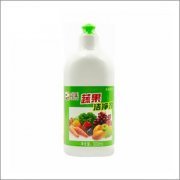
Are fruit and vegetable cleaners useful? This is how to wash them to remove pesticide residues
These days many people have doubts about pesticides, and some manufacturers have launched dedicated fruit and vegetable cleaners, so what is the best way to wash fruits and vegetables? The Taiwan Agricultural Chemicals and Toxic Substances Research Institute suggests that if people wash fruits and vegetables by soaking or rinsing them in running clean water, that is enough; there is no need
-
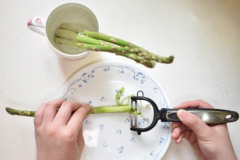
Should asparagus skin be removed? This makes peeling the tough skin quick and easy
Whether imported or domestic asparagus, in any bunch of asparagus there will inevitably be a few spears whose base is somewhat old or fibrous. In addition, Taiwan, China lies in the subtropics, where temperatures are always on the high side. If fresh asparagus is not cooked immediately after harvest and the storage environment is not cold enough, the base of the tender spears will also quickly
-
How do you separate and sift out chaff? It can also be used as fertilizer for growing flowers
Before we get to the definition of chaff, some background on grain crops such as wheat, rice, barley, oats and other components is helpful. Cereal crops consist of the seeds or grains we eat, surrounded by an inedible husk or rice hull. Seeds and grains
-

How do you care for lucky bamboo in winter so it survives the cold safely?
It needs to be moved indoors where the temperature is above 10 degrees, and given plenty of light. If it is grown in water, the lucky bamboo also needs its water changed once every 7-10 days, and the replacement water must be kept at the same temperature as the original water; if it is grown in soil, reduce both the frequency and the amount of watering, and mist water around it when the air is dry.
-
What is the best way to wash fruit to remove pesticide residues?
I believe everyone knows that many fruits today are grown with pesticides, so the fruit you just bought will have a lot of pesticides on it. If you want to eat it, you need to wash the pesticides off the fruit first. So what should you use to wash fruit to remove pesticides?
-
How to Remove Cogongrass Roots? Learn How to Completely Eliminate Cogongrass
Summary There are three methods for removing cogongrass roots: the first is to use a digging tool to remove the cogongrass together with its roots; the second is to apply 10.8% haloxyfop-R-methyl or 15% quizalofop-p-ethyl to the cogongrass; the third is to burn the cogongrass and then dig out its roots. Cogongrass is
-
How to grow jasmine? Cultivation methods and precautions, needs to be moved indoors in winter
Summary Light: Jasmine loves sunlight and needs plenty of light during its growth; provide appropriate shade in summer to avoid direct sun. Soil: It is suited to growing in slightly acidic soil. Watering: After planting, water thoroughly once, known as "settling water"; when jasmine blooms in June, it needs supplemental
-
When planting mangoes, density must be well controlled, with timely weeding in the later stages and scientific fertilization.
Abstract Orchard site: requires a relatively thick soil layer, soil that does not easily become compacted and does not waterlog, and proximity to a water source so that irrigation is possible during spring drought. Density: varies according to climate, soil fertility and cultivar; the commonly used spacings are 4 by 4 m, 4 by 5 m, 5 by 6 m and so on, 3 kinds in total. Planting: best done from June to August.
-
Understanding the Latest Management Practices for Peach Trees in One Article
I. Spring Restoration Pruning 1. Remove dead branches, dead twigs, blind branches left over from winter, and autumn shoots with no leaf buds in the middle. 2. Bud removal: buds on the upper side of extension branches should be removed; for the terminal bud (tiger bud) of extension branches, two should be reduced to one; water sprouts near large wounds should also be removed. 3. Winter pruning
-
Pineapple Cultivation: Methods for Managing Sucker Removal and Retention
(1) Removing the crown bud When the crown bud reaches about 20 cm tall, its upper part opens out and its base narrows. When young roots appear at the leaf base, which is what is called "spreading tail and gripping waist," the crown bud can be twisted off by hand in a clockwise direction to be used as planting material, which fruit growers call "topping." Topping is generally carried out from late May to June.
条件筛选