-

When is the best time to propagate Crown of Thorns by cuttings for a high survival rate? A detailed explanation of its flower meaning
Crown of Thorns (Euphorbia milii) is a sprawling shrub native to Madagascar, Africa, and is now widely cultivated in tropical and temperate regions. Its stems are much branched, with longitudinal ridges, densely covered with hard, sharp, cone-shaped spines. The leaves are alternate, usually clustered on young shoots, obovate or oblong-spatulate. Its flowers are small and brightly colored, commonly red
-

What to Do When Flowers and Plants Get Crown Gall Disease? A Detailed Guide to Prevention and Control Methods
Prevention and Control Methods for Crown Gall Disease in Flowers and Plants
-
What to Do When Crown of Thorns Leaves Turn Yellow and Curl? Detailed Solutions
Crown of thorns, also known as Christ thorn, is a shrub plant native to the tropics. The whole plant is covered with sharp conical spines, and the flowers it produces are very ornamental. Many people like it not because of its noble origins, but because of its unique character. Regarding crown of thorns,
-
What to Do When Crown of Thorns Leaves Turn Yellow and Drop? Causes and Solutions
Crown of Thorns, also called Euphorbia milii, is a sprawling shrub plant with many branches. Crown of Thorns has high ornamental value and is commonly seen in shopping malls, parks and other places across China. Moreover, its roots, stems and leaves have certain medicinal value, and it is loved by many people.
-
What to Do When Crown of Thorns (Christ Thorn) Leaves Turn Yellow and Curl? A Summary of Solutions
Crown of thorns, also known as Christ thorn or iron begonia, is a vine-like plant with spiny edges. Although its edges bear thorns, this does not diminish people's affection for it at all. During the cultivation of crown of thorns, yellowing of the leaves is quite common.
-
When to Plant Crown Daisy? A Detailed Guide to the Specific Planting Process
Crown daisy is a common vegetable that has become popular to eat in recent years. Crown daisy is rich in nutrients and has effects such as harmonizing the spleen and stomach, promoting bowel movements, purifying the blood, nourishing the heart, clearing phlegm and moistening the lungs, aiding weight loss, lowering blood lipids, lowering blood pressure, aiding digestion, and promoting sleep. It is a semi-cold-hardy vegetable and prefers
-
When is the general flowering period of crown of thorns?
Crown of thorns (Euphorbia milii) is a flowering plant whose stems bear thorns but whose flowers are very beautiful, and it also has many varieties with diverse flower colors, so it is very popular among flower enthusiasts. So when is the flowering period of crown of thorns? 1. When is the flowering period of crown of thorns? Crown of thorns can bloom all year round
-
Pineapple Cultivation: Methods for Managing Sucker Removal and Retention
(1) Removing the crown bud When the crown bud reaches about 20 cm tall, its upper part opens out and its base narrows. When young roots appear at the leaf base, which is what is called "spreading tail and gripping waist," the crown bud can be twisted off by hand in a clockwise direction to be used as planting material, which fruit growers call "topping." Topping is generally carried out from late May to June.
-
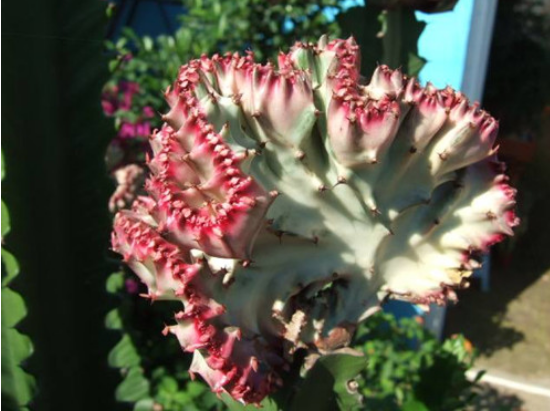
What are the key points to note when growing the crown of thorns (Euphorbia milii)?
1. Note to prune in time. Prune in time the branches that grow too long and too dense to encourage the crown of thorns to branch more. If you do not prune, the plant shape of the crown of thorns will not be attractive and the number of flowers will also decrease. Timely pruning will make the crown of thorns bloom more and branch more. 2. Repot in time. It is best to repot the crown of thorns once every 1-2 years.
-
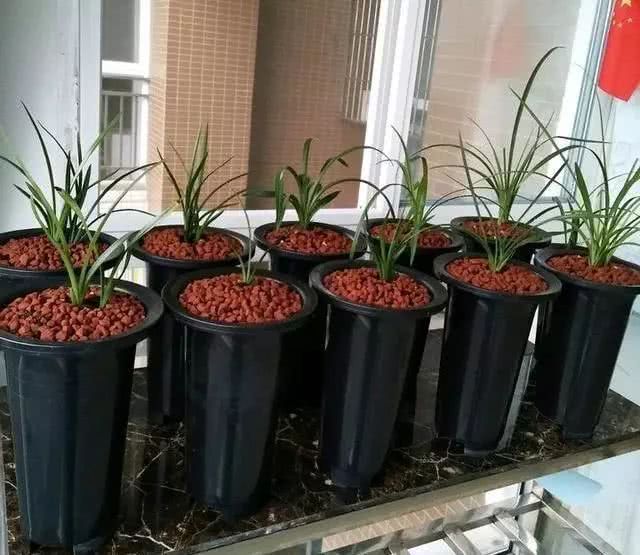
Don't do this when misting orchid leaves - it prevents crown rot and triggers a surge of flower spikes
Can you spray the leaves and crown of an orchid when watering? When we read articles about orchids, we often see advice telling growers not to mist the leaves, and not to spray water into the center or crown of the orchid. The main reason...
条件筛选