-
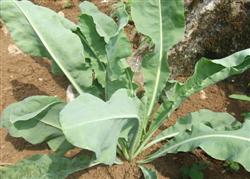
Detailed Explanation of Isatis Root Planting Management Methods and Technical Points
How to manage Isatis root planting? Please introduce the daily management methods. The daily management of Isatis root mainly includes field management and pest and disease control. For detailed methods, please refer to the following: Isatis root field management methods: When the seedlings are 7-10 cm tall, thin them out; when the seedlings are 12 cm tall, set the spacing, with a plant spacing of 7-10...
-

Detailed Introduction to Polygonatum Price and Planting Methods
Polygonatum Price and Planting Methods
-

Polygonatum odoratum seed prices and planting methods explained in detail
Polygonatum odoratum seed prices and planting methods
-
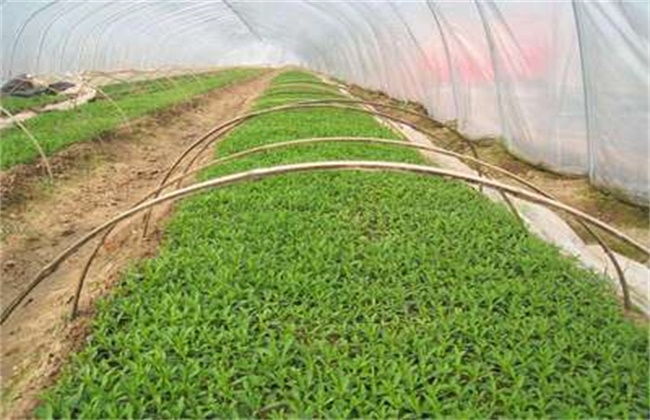
What causes dead seedlings in stevia? A detailed guide to prevention and control methods
Causes of dead seedlings in stevia and prevention and control methods
-

Schisandra Berry Jelly Processing Methods and Technical Key Points
1. Process flow: raw materials → sorting → washing → pulping and seed removal → boiling → filtering → blending → concentration → filling and sealing → sterilization → cooling → inspection → finished product. 2. Technical key points (1) Raw material handling: select fresh Schisandra berries with good maturity, remove impurities and moldy parts, then wash them clean, then crush them with a crusher while removing the seeds; after boiling, filter to remove the pulp portion. The pulp may also be retained, and after blending, homogenization treatment is required, with a homogenization pressure of 50 MPa. (2) Blending: the juice dosage is 25%-
-
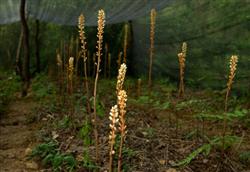
Causes of Gastrodia elata Trait Degradation and Control Methods
Degradation of Gastrodia elata traits often manifests as decreased yield of arrow gastrodia, with individuals becoming smaller and slender; a substantial reduction in the yield of rice gastrodia and white gastrodia, which turn ginger-yellow or light brown, with poor stress resistance, and the original yield and traits cannot be fully expressed. The causes are generally as follows: 1. Multiple generations of asexual reproduction. Generally after 5 to 6 generations of asexual reproduction...
-
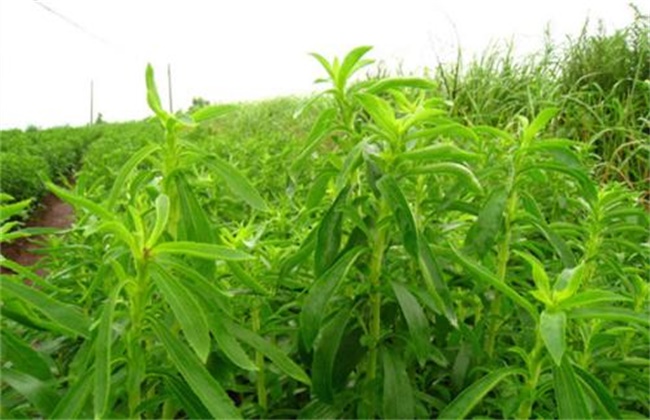
Key Points of Stevia Transplanting Techniques and Field Management Methods
Stevia Transplanting and Field Management
-
Detailed cultivation techniques for Angelica sinensis: master the planting and management methods
Angelica sinensis is propagated by raising seedlings from seed and then transplanting. In lower-altitude areas (1500-1800 m), there is also autumn direct sowing harvested the following year, or spring direct sowing harvested the same year, but the yield and quality are lower. For the seedling bed, choose a cool and moist shaded slope or semi-shaded slope, a hollow or small basin that retains water but does not become waterlogged, rather than a dry, wind-swept ridge. The soil should be loose and fertile, free of stones, either large dark soil or black oil sand; generally, virgin wasteland is chosen for raising seedlings. On the leveled plot, make high beds 1 m wide, and in mid-to-late June, while the soil is moist, spread the seeds
-
Control methods for the Ningxia ground pearl (Porphyrophora ningxiana) pest on licorice
It is distributed in all licorice-producing areas nationwide, generally causing damage from the seedling stage to the mature plant stage. The Ningxia ground pearl has 8 host plant species, all of which are perennial leguminous herbaceous perennials, with licorice suffering the most severe damage, while other hosts are only slightly affected. (1) Damage period and damage symptoms: Overwintering nymphs can move intermittently when the surface soil temperature reaches 6°C, and become frequently active when the daily average temperature exceeds 12°C, in order to search for hosts. Early March is the initial activity stage, mid-to-late April is the peak period for searching hosts, and by mid-May they have basically all settled. From late May to late July
-

Detailed Explanation of the Control Methods for Diseases and Pests of Radix Adenophorae
Control Methods for Diseases and Pests of Radix Adenophorae
条件筛选