-
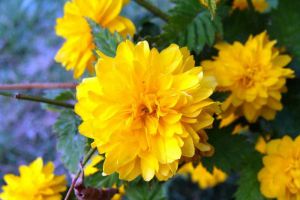
How to water Kerria japonica? Master the correct watering method
Kerria japonica flowers are highly ornamental; when they fully bloom, the color is golden yellow and especially eye-catching. Whether planted in a courtyard or grown in a pot indoors, it is very suitable. Below, the editor will introduce how to water it correctly in daily cultivation.
-
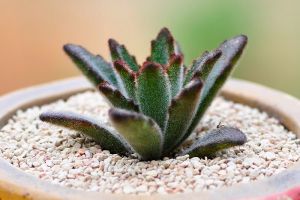
Propagation Methods for Kalanchoe tomentosa 'Black'
Speaking of Kalanchoe tomentosa 'Black', many of you may think of Kalanchoe tomentosa 'Moon Rabbit' - but they are not the same plant, they are actually close siblings. Many of you have asked me before: Can Kalanchoe tomentosa 'Black' be propagated by cuttings? Are there any special requirements for dividing Kalanchoe tomentosa 'Black'? Today I'll answer these questions for you.
-
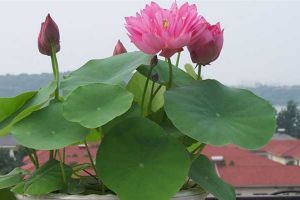
How to grow bowl lotus hydroponically? Detailed explanation of hydroponic methods and care tips
This is a plant that grows in water, but it also needs nutrients from mud to grow. Mud has a drawback: it easily makes potted plants smell bad, so some flower lovers want to grow the plant using only water. So how should this lovely plant be grown in water? Let's take a look.
-
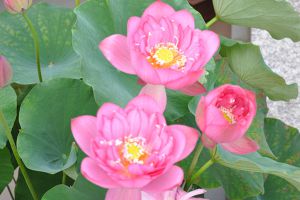
How to plant bowl lotus into mud for establishment? Detailed methods and steps
This is a relatively small variety of lotus. Because of its compact form, it is easy to grow at home, and many people choose to grow a pot of this plant as an ornamental plant in their homes. However, to cultivate this plant at home, you need to plant it into mud for establishment after its seeds sprout, and this step has a huge impact on its flowering. So, how exactly should it be done?
-
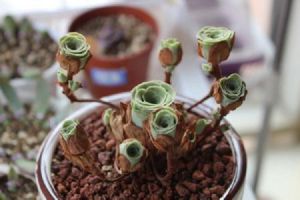
How to root Mountain Rose (Aeonium aureum)? Teach you the correct rooting method
Just hearing its name makes it very appealing. It looks very cute and is perfect for giving as a gift, and many people keep it at home. However, when growing it, improper handling may cause it to die, and at that point, trying to revive it is very difficult, and you can only replant it. We can use its side shoots to propagate it, so what should we do to help it grow roots? Is this easy for it, and are the chances of success high?
-
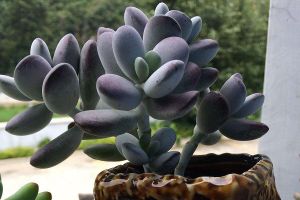
What are the cultivation methods and precautions for Pinguo Funiang?
Pinguo Funiang is also a type of succulent plant. Many friends may not have heard of it, but if you have seen its appearance, you will definitely be attracted by it. Each leaf is plump and fleshy, and there is a layer of white powder covering it, which is very cute. But this is a flower that is very afraid of heat. Below, the editor will introduce its cultivation methods and precautions.
-

Yellowing orchid leaves are related to fertilisation methods
Fertiliser yellow: when too much fertiliser is applied, especially too much nitrogen fertiliser combined with a lack of phosphorus and potassium fertiliser, it easily causes the leaves to turn yellow, showing as new leaves that are thick and fleshy with mostly uneven surfaces, while old leaves gradually turn yellow and drop off; in severe cases the leaf tips dry out and even the entire leaf becomes scorched yellow. When this happens, fertiliser should be applied immediately, the amount of watering increased, and the fertiliser...
-
How to grow orchids? A detailed guide to cultivation methods for beginners
Newcomers to orchid growing, the "orchid friends", naturally have great enthusiasm for growing orchids. But enthusiasm alone is not enough; it is also necessary to master some basic knowledge of orchid cultivation - (1) First, sort out the site and environment for planting orchids. Orchid planting can be divided into courtyard planting and large-scale field planting. Generally, for home orchid growing, you can...
-
Characteristics and Control Methods of Spider Mite Disease in Orchids
Spider mites, also known as mites, come in many species. Take the Schizotetranychus shi species as an example: it is a common type of spider mite that damages orchids and other flowers. Its mouthparts attach to the underside of leaves, piercing through the leaf epidermis and spongy tissue layer into the leaf tissue, sucking the chloroplasts and cell contents of the palisade layer cells. It first damages the lower leaves, then gradually...
-
Symptoms, Characteristics, and Control Methods of Orchid Aphid Infestation
Many aphids (such as the green peach aphid, cotton aphid, etc.) can harm orchids. Aphids mainly damage tender leaves, buds, flower buds, and other young organs, piercing plant tissues with their piercing-sucking mouthparts and absorbing large amounts of sap nutrients, causing nutritional deficiency in the plant. Taking the green peach aphid as an example: it is distributed throughout China. The green peach aphid produces 20 to 30 generations per year, and...
条件筛选