-

Winter pond fish farming has many benefits, and winter is the right time to farm
Guangdong Province is located in the tropical and subtropical zones, with abundant water and heat resources. Taking the Guangzhou area as an example, the annual average temperature is above 23°C, and even in the coldest month, January, the average temperature still reaches around 13°C. This natural advantage is very favorable for carrying out "winter farming" of pond fish. Practice in various places has proven that "winter farming" of pond fish has many benefits: First, when the weather is cold and the water temperature is lower, the organic matter and fertilizer in the pond decompose slowly, the pond water is fresh, and oxygen is sufficient, which is conducive to rapid growth and easy fattening of pond fish; Second, because the weather is colder, bacteria and parasites in the pond are not easy to reproduce and grow, so pond fish
-
Red Pearl Schisandra bears many fruits, with a yield twice as high
Recently, the reporter learned during an interview that Dai Ping, a villager from Fenghuangshan Village, Fengshan Economic Management District, Fengcheng City, has grown high-yield Schisandra. For ordinary varieties, the average fresh fruit yield per plant is usually 2.5-3 kg; while the average fresh fruit yield per plant grown by Dai Ping is 7-8 kg, twice as high as ordinary varieties. This high-yield variety is a Schisandra called "Red Pearl" that Dai Ping purchased from the Institute of Special Animal and Plant Sciences of the Chinese Academy of Agricultural Sciences after consulting several experts. According to Dai Ping, to make Schisandra high quality and high yield, the variety
-
Many holes and black spots on new cotton leaves? Watch out for tarnished plant bug damage
A text message from mobile phone 139****8164: There are many small holes and many small black spots on the new cotton leaves. What is going on? What pesticide should be used? Answer: It is very likely caused by the piercing-sucking damage of the tarnished plant bug. When the tarnished plant bug pierces and sucks at the growing point at the top of the cotton plant, it causes tissue necrosis and forms needle-point-like black spots. Later, as the healthy tissue grows, irregular holes form in the leaves (their edges heal well, which distinguishes them from perforation caused by disease). The tarnished plant bug is a pest that occurs frequently and in large numbers in cotton production in recent years,
-
Artificial Rearing Techniques and Methods for the Many-banded Krait
The many-banded krait, also known as the silver-banded krait or the golden coin krait, has high medicinal and economic value. Its rearing methods are as follows: 1. Build reasonable pools. The snake pool is built of brick and stone, 2 m square and 1.5 m high, and can hold 15-20 snakes; keeping too many snakes makes management difficult. The pool walls are smoothed with cement, and a movable glass cap is added on top of the wall in a T shape to prevent escape. The pool bottom is the snakes' activity area, where weeds should be planted, and then snake dens should be built with sandy soil, wooden boards, bricks and tiles, etc. Inside the pool, build a flowing-water ditch and a feed basin,
-
Feeding pigs dry feed has many benefits; these advantages are something farmers should know
The traditional method of feeding pigs with watery feed is not conducive to the growth and development of pigs. Because adding too much water to the feed will prevent pigs from chewing the feed thoroughly, affect saliva secretion, dilute gastric juice, be unfavorable for digestion, and cause frequent urination, creating an extra physiological burden and consuming nutrients. According to measurements, when pigs eat 200 grams of dry feed, they secrete 335 milliliters of saliva; if 200 grams of water is added, saliva secretion drops to 196 milliliters; when 600 grams of water is added, saliva secretion is only 115 milliliters. Therefore, when pigs eat watery feed, it will seriously affect digestion and absorption, leading to dry feces
-
Adding fat to rabbits' feed in winter has many benefits
In winter, the weather is cold and temperatures are low. If 2%-3% fat (rendered lard is best, vegetable oil is second best) is added to the rabbit diet, feeding it to rabbits not only improves palatability and promotes healthy growth, but also increases body fat and fat reserves, thereby improving the rabbits' resistance to winter cold. According to many years of practice at the author's rabbit industry base: adding fat to the feed of pregnant does can increase the survival rate of kits by about 10%; adding fat to the diet of does during lactation can significantly increase the weaning survival rate of kits; adding fat to the diet of meat rabbits
-
Many cotton varieties, and this is what the national approval says (final part)
Characteristics: A transgenic insect-resistant hybrid first-generation variety, grown as spring cotton in the Yellow River Basin cotton region, with a full growth period of 136 days. The plant is tower-shaped and relatively loose, with a plant height of 93.7 cm, many stem hairs, medium-sized dark green leaves with obvious wrinkles, the first fruiting branch node at 6.5 nodes, 13.2 fruiting branches per plant, and 15.8 bolls per plant; the boll is oval with a relatively blunt tip, single boll weight 5.6 g, easy boll opening, seed index 10.4 g, lint percentage 40.6%, and pre-frost flower rate 90.5%. Highly resistant to Fusarium wilt, tolerant to Verticillium wilt, highly
-
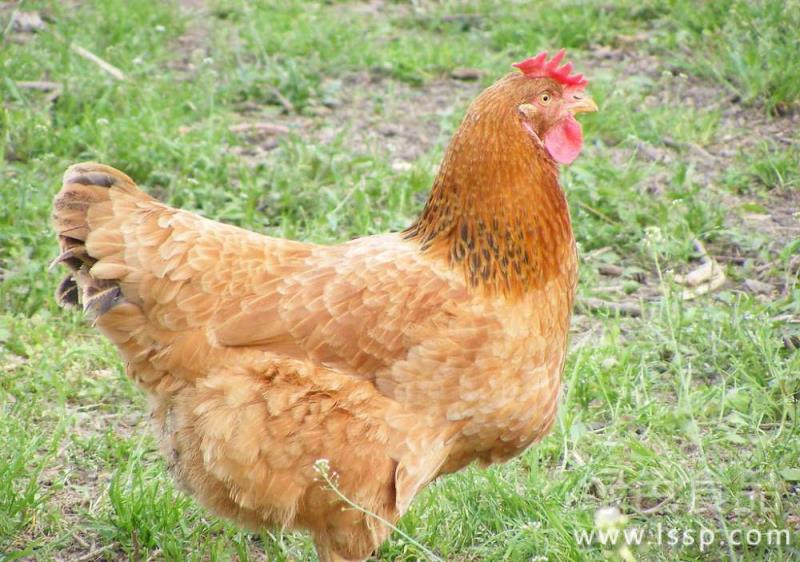
Chicken proventriculitis has many complications and a high mortality rate. How can it be comprehensively prevented and treated?
Proventriculitis has many complications and causes high mortality. Comprehensive prevention and treatment methods for chicken proventriculitis.
-
Drying ponds in winter has many benefits, and farmers should pay attention to this management practice
During a recent visit to rural areas of Xingyang in our province, the author found that many fishermen friends rush to disinfect and remove debris from their fish ponds right after selling their marketable fish, and then stock fingerlings in matching proportions. They believe this allows the fingerlings to adapt to the pond environment sooner, so they can start feeding and growing earlier in spring. Actually, this is not the case. It would be better to use the winter to expose and dry the fish pond, especially aged ponds, through alternate freezing and sun-drying. In aged fish ponds, fertilizer and feed residues, fish feces, sediment and impurities accumulate over time, and various pathogenic microorganisms multiply in large numbers, causing the ponds to age further and directly affecting
-
The 11 most precious crabs in the country, how many do you know?
Yangcheng Lake hairy crab: This crab is produced in Yangcheng Lake in the Suzhou area of Jiangsu, and is a famous Chinese specialty known both domestically and abroad. Yangcheng Lake hairy crabs are large and plump, generally 3 crabs weighing 500 grams, with the larger ones weighing over 250 grams each, and the largest can reach 500 grams, with a blue-green back, white belly, golden claws and yellow hair, ten vigorous legs, and plump, nutritious crab meat. Since ancient times, Yangcheng Lake hairy crabs have captivated countless diners. Zhang Taiyan's wife, Ms. Tang Guoli, wrote in a poem: "If not for the good taste of Yangcheng crabs, why would one live in Suzhou in this life!" Tianjin purple crab: This is a
条件筛选