-

Six key points to master for summer management of lilies
1. Fertilize according to seedling growth. After lilies are planted, they begin to emerge when the soil temperature reaches 14-16°C. Because lilies take a long time to emerge and consume a lot of nutrients, seedling fertilizer should be applied heavily. Apply 1000 kg of fully decomposed human and livestock manure or 20 kg of urea as a drench per 667 sq m. In early June, when lilies enter the early flowering stage, their underground bulbs grow faster. This period is critical for lily yield formation, and the fertilizer demand is large and concentrated, so a leaf-strengthening fertilizer should be applied as a top dressing. Apply 15 kg of urea per 667 sq m. Lilies have a preference for phosphorus
-
Pit Viper Breeding Techniques: Site Construction and Management Methods
1. Construction of the Breeding Facility The viper breeding facility should be built in a location far from residential housing, quiet, sheltered from the wind and facing the sun, on higher ground, with a water source and convenient transportation. The area of the snake facility depends on the number of snakes being raised. A wall should be built around the perimeter, with a height of 2-2.5 m, and the corners of the wall should be built in a rounded arc shape. The base of the wall should extend 1.5 m underground, and the 1.5 m deep soil layer should be firmly built with lime-sand-clay mixture to prevent rats from burrowing and to prevent the snakes from escaping. Within the snake facility, a ditch with an area of 4 sq m and a depth of 30 cm should be set up, with fresh water quality, to provide
-
Detailed Explanation of the Key Cultivation and Management Techniques for Pear Seedlings
If you want to prosper, plant fruit trees; if you want to prosper, learn the techniques. Pear trees have wide adaptability, are easy to bring to high yield, have a broad market, and offer a long income period, making them a fruit tree that various regions are competing to develop. However, to ensure that every area developed succeeds, management in the planting year is crucial. In the year the seedlings are planted, two things must be done well: first, ensure a high survival rate; second, promote rapid growth. To achieve the above two points, the following must be done. 1. Trenching to improve the soil. Digging continuous trenches is advocated, with a trench depth of 80-100 cm or more and a width of 80-100 cm or more. When digging the trenches, place the upper
-
Post-harvest management of peach trees must be done promptly, and sooner is better than later
Pruning to promote balance. Peach trees grow multiple times a year, which easily makes the canopy dense, with poor ventilation and light penetration, affecting flower bud formation. Therefore, after harvesting peaches, the crossing branches, overlapping branches, diseased and pest-infested branches within the canopy, and the vigorous water sprouts in crowded areas should be thinned out. For bare and empty areas, ringing (girdling) should be done to promote new shoots to fill the space and increase next year's yield. Thorough orchard cleaning and emphasis on prevention. Combined with shaping and pruning, clean up the peach orchard, remove the pruned branches from the orchard, and at the same time spray once with Jinlishi 6000x solution, 40% Guolong 12000x solution, and amino acid 3
-
Don't relax post-harvest management of apricots; these key points are essential
There is still a fairly long period from apricot harvest to leaf fall. Strengthening management during this period plays an important role in reducing the occurrence of pests and diseases, restoring tree vigor, and increasing the number and quality of flower buds. Appropriate pruning for mature fruiting trees mainly involves adjusting the density of branches and removing diseased and pest-infested branches, crossing branches, overlapping branches, weak slender branches, and water sprouts within the canopy, so as to reduce tree consumption, increase the accumulation of photosynthetic products, and promote flower bud formation. Fertilizer and water management: After apricot harvest, fertilizer should be applied in a timely manner, especially for trees with weak vigor and
-
How to carry out mid-season cultivation management of rice? Detailed technical measures for Eryuan County
From last autumn to June this year, Eryuan County experienced continuous drought and high-temperature weather, causing varying degrees of loss to small spring crops and preventing some large spring crops from being sown normally. The county agriculture bureau adopted various scientific and technological measures to actively respond to natural disasters such as the severe drought, striving to "compensate small spring losses with large spring gains" and achieve the annual production target. In rice production, it grasped key measures such as good seeds and good methods, dry seedling raising with sparse planting and shallow transplanting, soil testing and formula fertilization technology, precision quantitative cultivation technology, and high-yield creation. Scientific and technical personnel went deep into the front line of agricultural production, firmly grasped technical
-
Key Technical Points and Daily Management Methods for Breeding Turtle Parent Stock
Female turtles over 0.5 kg and male turtles over 0.15 kg, at an age of 5 years or older, are suitable as parent stock. Stocking ratio: female-to-male ratio of 3:1, density of 0.6 turtles per sq m. Parent turtle feed should contain about 40% crude protein, plus 20% live feed. In South China, turtles reach sexual maturity at 5 summer years of age; first-time laying females produce 1 clutch per year, with 1 to 4 eggs per clutch. 8-year-old females lay an average of 3.2 clutches per year, with an average of 5.5 eggs per clutch, averaging 16 to 20 eggs per female per year; 10-year-old females lay 4.5 clutches per year,
-
Several Considerations for Fine Management of Nursery Pigs
In today's large-scale farms, most use excellent breeds and lines with high production performance, and sows have relatively high litter sizes and survival rates. So what is the key stage that determines whether farming succeeds? Practice shows it is the nursery stage of piglets. The nursery stage is a transfer station, generally starting 7-10 days after weaning and ending at a body weight of 30 kg. This is the key stage affecting the profitability of the entire farm. This stage is a turning point in the pig's physiology and individual changes, a process of gradual growth from small to large. This stage both
-
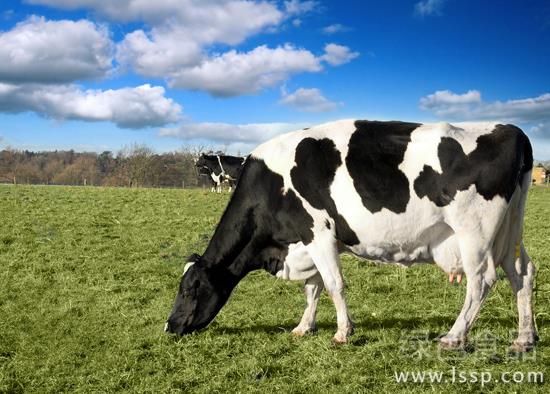
How to do a good job in daily dairy cattle management? Three measures to ensure the healthy growth of dairy cattle
How to ensure the healthy growth of dairy cattle: three measures for daily dairy cattle management
-

Cultivation Techniques and Field Management Methods for Digupi (Chinese Wolfberry Root Bark)
Cultivation Techniques for Digupi
条件筛选