-

Latest Detailed Guide to Making Broadleaf Mahonia Bonsai
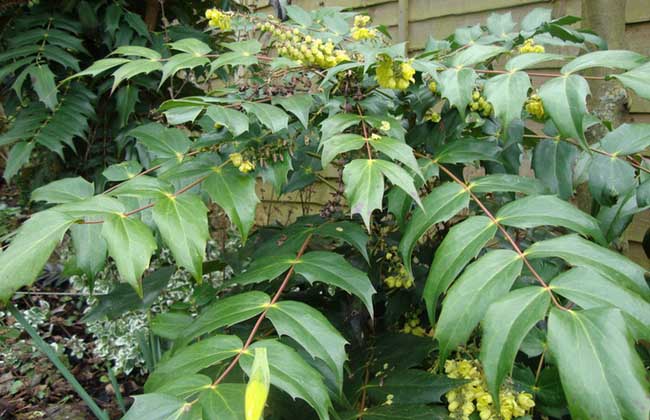
There are many varieties of broadleaf Mahonia (Mahonia bealei). Common ones include the densely spined broadleaf Mahonia, whose leaf margins have denser spines, and the spineless broadleaf Mahonia, whose leaf margins have no spines; these varieties are also often used to make bonsai. Mahonia has clustered stems, spreading branches and foliage, and variable leaf shapes, and stays evergreen all year round.
-
The Latest Cultivation Techniques and Methods Tutorial for Mahonia
Mahonia, also known as Chinese holly grape, cat-spine leaf, Huangtianzhu, etc., is a shrub plant of the genus Mahonia in the family Berberidaceae. It can be grown as a potted plant and is often used for landscaping and medicinal purposes. As a medicine, it has the effects of clearing heat and detoxifying, reducing swelling, and stopping diarrhea, and is mainly used to treat diarrhea, dysentery, and jaundice
-
How to Propagate Leatherleaf Mahonia? Three Propagation Methods Explained
Leatherleaf Mahonia (Mahonia bealei) is a plant valued for its foliage, flowers and fruit. It has a long history of cultivation, and every part of the plant can be used medicinally, which makes it a very popular plant among the public. On the market, Leatherleaf Mahonia also has very good prospects. Xiaobing will now introduce three propagation methods for Leatherleaf Mahonia.
-
-
A Detailed Guide to Growing Mahonia anhweiensis
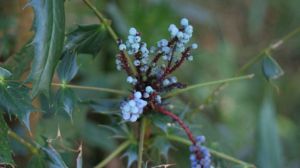
Soil: a loose, well-drained, fertile medium, with base fertilizer applied. Water: keep the soil moist but not waterlogged. Light: it tolerates shade, so provide shade promptly during high temperatures. Temperature: summer temperatures must not be too high; in winter, grow it indoors in a spot with ample sunlight. Fertilizing: apply fertilizer once every 20 days during the growing season, preferably diluted decomposed cake fertilizer water; hoe weeds 3-5 times a year.
-
A Detailed Guide to the Cultivation Methods of Mahonia fortunei 'Anping'
Soil: a loose, well-drained, fertile substrate, with base fertilizer applied. Water: keep the soil moist but not waterlogged. Light: it is shade-tolerant, so provide shade promptly during high temperatures. Temperature: the summer temperature must not be too high, and in winter grow it indoors in a spot with ample sunlight. Fertilizing: fertilize once every 20 days during the growing season, preferably with diluted decomposed cake fertilizer water; hoe weeds 3-5 times a year.
-
What does the name "broad-bracteate Mahonia" mean?
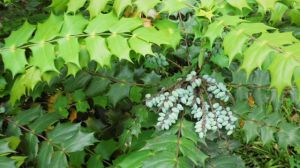
It is an evergreen shrub or small tree of the genus Mahonia. Because it can be used as medicine to treat diseases, and because people traditionally favor the auspicious meaning of perfection in all things, it was named "Mahonia" (shí dà gōng láo, "ten great merits"), though its medicinal effects number more than ten. Its main difference from the original subspecies lies in the size of the stems and leaves. Besides its medicinal effects, it also has high ornamental value.
-
What does the name Broad-bracted Mahonia mean?
It is an evergreen shrub or small tree of the genus Mahonia. Because it can be used as medicine to treat diseases, and because people traditionally favor the auspicious meaning of perfection in all things, it was named "Mahonia" (ten merits), yet its benefits number more than ten. Its main difference from the original subspecies lies in the size of the stems and leaves. Besides its medicinal benefits, it also has high ornamental value.
-
What are the effects and benefits of Mahonia stem? A detailed guide
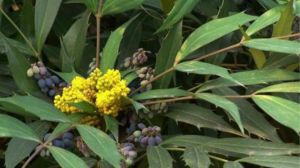
Antibacterial: Mahonia stem can inhibit various bacteria in the body such as E. coli and Staphylococcus, reducing the chance of illness caused by bacterial infection. Calming the nerves: It can regulate people's nerves and lower nerve excitability. Lowering blood pressure: It has a clear blood pressure-lowering effect, with a very noticeable action on human blood vessels. Clearing heat and detoxifying: It can relieve cough symptoms caused by lung heat.
-
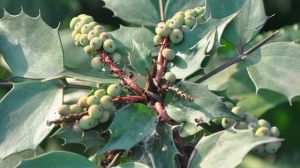
What is the difference between Mahonia bealei and Mahonia fortunei
Leaves: The former has narrowly obovate to oblong leaves, grayish-green on the upper surface, with a white bloom on the underside, sometimes pale yellow-green or glaucous. The latter has obovate to obovate-lanceolate leaves, dark green to deep green above, pale yellow beneath, rarely glaucous. Fruit: The former is ovoid and deep blue. The latter is spherical and purple-black.
条件筛选