-
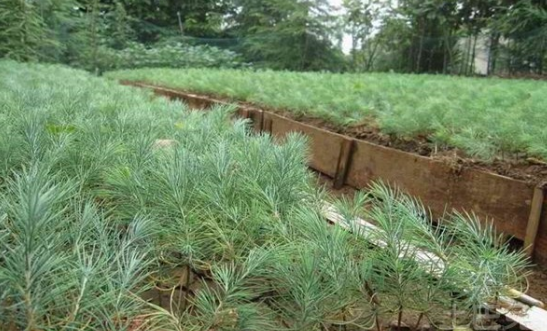
What Does a Cedar Look Like? Appreciation of Seedling and Bonsai Pictures
1. What does a cedar look like? A cedar looks like a pyramid. 2. It looks like a white-haired old man, waiting to welcome the children coming out of school. It looks like an umbrella of alternating white and green, holding up a pure stretch of sky for passersby. Tall cedars look like proudly standing warriors.
-
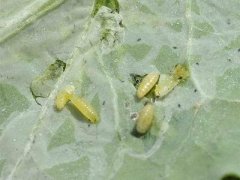
Damage symptoms of flower leafminer flies and identification of larval morphology
What are the damaging habits of the Liriomyza leafminer, and what does it look like? Do you know? Would you like to learn about it? Let's take a look together. Damaging habits: Adults lay eggs inside the leaf mesophyll, and the larvae first mine and feed beneath the epidermis on the light-facing side of the leaf, creating grayish-white feeding marks on the leaf.
-
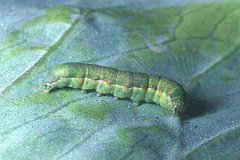
What do beet armyworm larvae and adults look like? A detailed breakdown of their morphological features
We know that the beet armyworm is a pest, but do you understand its ecological habits and morphology? Let's take a look together. Ecological habits: The adult beet armyworm hides by day and comes out at night, resting on the undersides of leaves or in dark places during the day, and beginning activity and mating after sunset.
-
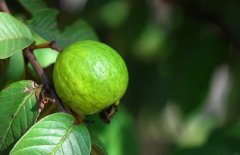
What does scab disease look like on guava fruit, and what medicine is used for guava scab disease
What do the symptoms of guava scab disease look like, and how should it be treated, do you know? Let us take a look together. Symptoms: When initially infected, the lesions are round and slightly raised, and the surface of the lesions is rough with cracks, like scab, brown, with the edges a light brown or earthy yellow color, large
-

What does Polygonatum look like? A detailed introduction to the morphological characteristics of Polygonatum
Polygonatum is a perennial herb. The rhizome is horizontal, fleshy, and pale yellow, sometimes with a protruding tip resembling a chicken's head. The stem is erect, 50-90 cm tall. The leaves are whorled, 4-6 per whorl, linear-lanceolate, 8-15 cm long and 04-1.6 cm wide, with curled tips. The flowers are axillary, usually in 2-4 small flowers, drooping, with the peduncle 1-2 cm long; the perianth is tubular, white to pale yellow, 0.9-1.2 cm long, with 6 shallow lobes at the tip, 6 stamens, the filaments relatively short, 0.5-1 mm long, and the style length
-
Cotton production outlook not optimistic, experts recommend focusing on four management measures
Reporters learned from the province-wide cotton production and high-yield creation work conference held on August 26 that this year's cotton production situation in our province is extremely unoptimistic. In response to the current realities of cotton production, attending experts recommended that cotton farmers focus on four measures. This year's cotton production in our province is characterized by reduced area, lower per-unit yield, and decreased total output. According to incomplete statistics, the province's actual harvested cotton area is around 11 million mu, a decrease of more than one million mu compared to last year. Cotton per-unit yield is expected to be 70-75 kg, with total output of 75-80 million tons, a decrease of 10
-
How to tell if rice is deficient in zinc? Look for these typical symptoms
Zinc deficiency in rice generally occurs at the seedling stage. The symptoms are chlorosis and whitening at the base of new leaves, small and narrow leaf blades, sometimes whitening of the central leaf as well, chlorotic yellowing or whitening stripes on old leaves, and brown streaks on both sides of the midrib. Plants are stunted, the distance between leaf collars is shortened, tillering is reduced or delayed until no tillering occurs, the root system is weak with few white roots, the rate of floret sterility increases, heading is delayed or does not occur at all, and maturity is postponed.
-
Detailed Explanation of Key Points for Fish Fry Stocking: Do Not Overlook These Critical Points
For newly built ponds, soak in water for 1~2 days, then disinfect. Old ponds must be drained, thoroughly cleared of sludge and weeds, and treated by tilling, sun exposure, and rinsing to promote the oxidation, decomposition, and removal of organic matter, followed by disinfection. Commonly used disinfectants include quicklime, bleaching powder, and sodium dichloroisocyanurate. The disinfection method generally involves first filling the culture pond with 10~30 cm of water, dissolving the disinfectant in water, and splashing it into the pond. Cement ponds should be rinsed multiple times with the medicated solution, then rinsed with clean water. For example, one enterprise culturing whiteleg shrimp (Litopenaeus vannamei) performs disinfection 15
-
Four things to note when harvesting rice, don't overlook these details
The following four points should be noted before and after rice harvest. 1. Drain early. Drain the water in the paddy field as much as possible; if necessary, dig ditches to drain the water in low-lying areas early and dry the field. 2. Harvest at proper maturity. For manual harvesting, do it when more than 95% of the rice husks in the field have turned yellow, the grains have hardened, and the rice grains are translucent. Mechanical harvesting can be a few days later. 3. Mind the method. Manual cutting and drying can increase the 1000-grain weight and raise yield, while the rice grain has good market quality and a high germination rate. When using a combine harvester, it is best
-
Introduction of new giant winter peach varieties, a first look at new peach varieties
The "Giant Winter Peach", king of Chinese peaches, is a newly bred superior winter peach variety from the Zhengzhou Fruit Research Institute of the Chinese Academy of Agricultural Sciences. Its outstanding characteristics are as follows: exceptionally large fruit. The average single fruit weight reaches over 400 grams, with the largest single fruit reaching 1200 grams. The fruit is nearly round, making it one of the largest peach varieties currently available in China. Beautiful appearance and excellent quality. After ripening, the fruit fuzz falls off naturally. The background color of the fruit surface is creamy yellow, and the fruit surface is bright red, very gorgeous, matching international popular colors; the flesh is milky white, dense in texture, tender and firm, with a sweet and delicate fragrance, and a sugar content of 17%-19%
条件筛选