What Does a Cedar Look Like? Appreciation of Seedling and Bonsai Pictures
1. What does a cedar look like
1. A cedar looks like a pyramid
2. It looks like a white-haired old man, waiting to welcome the children coming out of school. It looks like an umbrella of alternating white and green, holding up a pure stretch of sky for passersby.
3. Tall cedars look like proudly standing warriors
4. A cedar in the flowerbed looks like a soldier standing guard in the wind and snow.
5. The cedars in the garden are like swords just drawn from their scabbards, sworn to split open the heavens and do battle with the world.
6. Poems about cedars
Chen Yi
Heavy snow presses down on the green pine,
The green pine stands tall and straight.
To know the pine's lofty purity,
Wait until the snow melts.
Pool Crane, by Bai Juyi
Among cranes, this crane in the pool is rare; I fear it is old Lingwei of Liaodong.
With snow-laden pine branches it lifts its knees and shins, with flower-like water-chestnut petals adorning its plumage.
It lingers low, lodging for now among the cages, but with a burst of speed it must at last fly beyond the sky.
If you ask where its old nest is, its master loves it so much it has been unable to return.
Visiting Xie's Mountain Pavilion, by Li Bai
In old age I lie amid rivers and seas, rejoicing again that heaven and earth are clear. Long idle in illness and loneliness, the seasons' things bloom and flourish in vain.
I borrow your West Pool for a stroll, just to disperse my feelings. Sweeping snow, I walk down among the pines, parting vines along the stone path.
Above Lord Xie's pond, spring grass has already sprung up rustling. Flowering branches brush against people, mountain birds call out to me.
The farmer's house has fine wine; with the setting sun I pour it out. Drunk, I play with the returning moon, and from afar delight that my young children come to welcome me.
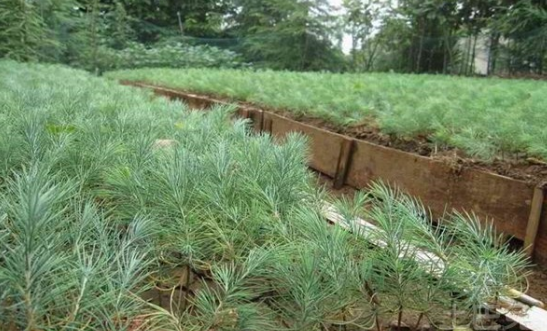
2. Cedar Seedling and Bonsai Pictures
How to Make a Small Cedar Bonsai: What Is the Price of a Bonsai
Cedar, also called tower pine, fragrant cypress, pagoda pine, foreign cypress, and Himalayan cedar. Cedar is relatively suited to growing in a mild climate, and its cold tolerance is not strong; it likes ample light and is fairly shade-tolerant. The soil should be well-draining and acidic. Cedar is not tolerant of waterlogging and not tolerant of pollution, and is easily harmed by environmental pollution. Cedar originates from the Himalayan region, and its distribution range is fairly wide.
1. How to Make a Small Cedar Bonsai
1. Choosing a pot
For cedar, a purple clay ceramic pot is suitable, and a glazed ceramic pot may also be used. For large bonsai, a deep round pot can be used, and various carved stone pots can also be used, but the base of the roots must be fixed with metal wire. For medium bonsai, a crabapple-shaped or manger-shaped pot is suitable; for a forest-style planting of combined seedlings, a shallow carved stone pot such as white alum stone or marble can be used.
2. Soil
For cedar, a loose, well-draining, slightly acidic sandy loam soil can be used. For pot cultivation, aged garden soil or leaf mold mixed with sand is commonly used.
3. Planting
Spring, March to April, is preferable, and after autumn is also acceptable. Cedar seedlings dug up from the ground must retain their original soil to help them survive. Also thin out and cut the dead roots, spread out the fibrous roots, cover with fine soil, gently shake the pot, and press firm with a bamboo stick so that the potting soil fits tightly against the root system. For the planting position, the main trunk should preferably lean to one side at the 1B3 spot.
4. Shaping
The shaping and styling of a cedar bonsai is mainly done by binding and training, combined with pruning as a supplement. Binding and training is best done in winter and spring, mostly using palm fiber for the binding. The cedar's main trunk stands upright and its side branches spread out flat, so the side branches are mostly bent into an S shape, while the main trunk is generally not bent, naturally growing upward into a large-tree form, with an extremely plain and beautiful posture. You can also take 5-7 current-year seedlings, arranged at varying heights, and plant them together in a forest style, with branches and leaves swaying gracefully, possessing a distinctive charm.
5. Tree form
The cedar tree body is tall and upright, with side branches hanging flat and spreading. When making a bonsai, its natural form must be used, and the tree forms of straight trunk, double trunk, slanting trunk, and forest style are best. Through binding and pruning, the branches and leaves can be made into layered or cloud-like shapes, and after years of care, they can become fine bonsai works that combine strength and softness with an elegant posture.
2. What Is the Price of a Cedar Bonsai
The price of cedar is generally judged by its height, size, that is, the meter diameter, ground diameter, crown width, and height, to determine the value of a cedar, but generally the price of smaller cedars is between 150-1000, and then taller and better ones reach over a thousand, even tens of thousands.
The above prices are all online reference prices; for actual prices, please consult your local market.
Cedar Bonsai Cultivation Methods and Cedar Bonsai Making Methods
Cedar, also known as Himalayan pine, is an evergreen tree, and its crown is spire-shaped, with high ornamental value, so many people cultivate cedar bonsai. Below, we introduce the cedar bonsai cultivation methods and cedar bonsai making methods.
Cedar Bonsai Cultivation Methods
I. Water and fertilizer
Cedar has a certain drought resistance and fears waterlogging, so keeping the soil in the pot moist is enough. Observe the potting soil often; if it is dry, water it, watering thoroughly but not allowing water to accumulate in the pot (so it is best to use one with holes in the bottom, and to cushion it with crushed stones). After rain, drain promptly (especially in summer rainstorms and autumn plum rains; the potted plant can be moved indoors to a spot with light); if not handled promptly, it may cause cedar root rot.
For fertilizing cedar, fermented and decomposed human manure fertilizer and cake fertilizer are suitable, and for pot cultivation, cake fertilizer is the main choice. The fertilizing time is best controlled in April to May, and note that the fertilizer water should not be too concentrated; it can be applied in 2-3 separate applications.
II. Repotting
It is suitable to repot once every 2-3 years, preferably before budding in spring, March to April. When repotting, replace half with loose, fertile new soil and cut off rotten roots. After just repotting, first place it in a shaded spot for half a month, then move to normal management.
III. Pruning
During management of cedar, attention must be paid to shaping and changing the leader. Cedars have heavy branches, and the leader will be damaged or become weak, so a strong side branch must be pulled up and tied well, afterward becoming the central dominant one; this process is changing the leader.
The pruning method is mainly to comb out overly dense branches and leggy branches, and cut off dead branches and diseased and pest-infested branches, with the tree form based mainly on personal preference. To prevent the cedar from growing too tall, the terminal bud needs to be removed to eliminate apical dominance, so that the cedar can sprout more side branches.
Cedar Bonsai Making Methods
I. Choosing a pot
For cedar, a purple clay ceramic pot is suitable, and a glazed ceramic pot may also be used. For large bonsai, a deep round pot can be used, and various carved stone pots can also be used, but the base of the roots must be fixed with metal wire. For medium bonsai, a crabapple-shaped or manger-shaped pot is suitable; for a forest-style planting of combined seedlings, a shallow carved stone pot such as white alum stone or marble can be used.
II. Soil
For cedar, a loose, well-draining, slightly acidic sandy loam soil can be used. For pot cultivation, aged garden soil or leaf mold mixed with sand is commonly used.
III. Planting
Spring, March to April, is preferable, and after autumn is also acceptable. Cedar seedlings dug up from the ground must retain their original soil to help them survive. Also thin out and cut the dead roots, spread out the fibrous roots, cover with fine soil, gently shake the pot, and press firm with a bamboo stick so that the potting soil fits tightly against the root system. For the planting position, the main trunk should preferably lean to one side at the 1B3 spot.
IV. Shaping
The shaping and styling of a cedar bonsai is mainly done by binding and training, combined with pruning as a supplement. Binding and training is best done in winter and spring, mostly using palm fiber for the binding. The cedar's main trunk stands upright and its side branches spread out flat, so the side branches are mostly bent into an S shape, while the main trunk is generally not bent, naturally growing upward into a large-tree form, with an extremely plain and beautiful posture. You can also take 5-7 current-year seedlings, arranged at varying heights, and plant them together in a forest style, with branches and leaves swaying gracefully, possessing a distinctive charm.
V. Tree form
The cedar tree body is tall and upright, with side branches hanging flat and spreading. When making a bonsai, its natural form must be used, and the tree forms of straight trunk, double trunk, slanting trunk, and forest style are best. Through binding and pruning, the branches and leaves can be made into layered or cloud-like shapes, and after years of care, they can become fine bonsai works that combine strength and softness with an elegant posture.
The above is the relevant knowledge about cedar bonsai introduced for everyone; we hope it can help you. For more home knowledge, please stay tuned.