-
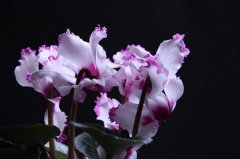
Control Methods for Phytophthora Blight, a Disease of Cyclamen Pests and Diseases
An introduction to the symptoms and control methods of Phytophthora blight, a disease of cyclamen pests and diseases. Symptoms: the heart bud and the base of the plant are affected. In the early stage of infection, the plant's leaves droop, the petiole and peduncle tissue near the tuber fade and become constricted, and the leaves and flowers wilt and fall over. The heart bud turns brown and withers. The underground tuber
-

Introduction to the Symptoms and Control Methods of Seedling Blight in Calla Lilies
What do the symptoms of seedling blight in calla lilies look like, what are the transmission routes, and how do we go about controlling this disease? Let's take a look together. Symptoms: It causes rot of the bulb sprouts, browning of seedling leaves, and shriveling and curling. When the sprouts are not damaged, they can still grow normally; if the affected leaves dry up and wrap around the terminal bud, it causes stunting or poor stem emergence. Besides damaging the leaves, this fungus can also harm the base of the stem, causing browning symptoms at the sprouting sites and forming wounds that facilitate further damage by bacterial soft rot.
-

Control Methods for the Common Guava Disease Southern Blight
What should you do when guava develops southern blight, how should you control it, and what do the symptoms look like? Let's take a look together. Symptoms: After guava varieties are harmed by the southern blight pathogen, besides differences in resistance, the symptoms also vary slightly. Generally, after infection with southern blight,
-
Hangzhi No.1, a new sesame variety, is the only variety in China developed through spaceflight technology.
Variety origin: "Hangzhi No.1" originated from the key project "Ninth Five-Year Plan Crop Spaceflight Technology Breeding" supported by the Ministry of Agriculture. In 1996, parent sesame seeds provided by the Oil Crops Research Institute of the Chinese Academy of Agricultural Sciences were carried aboard China's 17th recoverable satellite, stayed in space for 15 days and then returned to Earth. Since 1997, continuous multi-year ground selection was carried out. Through comparative trials on genetic stability, yield, quality and resistance, it was significantly superior to the control. From 2001 to 2002, it was advanced to the national sesame
-
How to prevent and treat tulip leaf blight? A few practical methods to teach you
Symptoms: Infected leaf buds develop poorly, appearing deformed and curled; once young buds are affected, the leaves that grow from them become curled. If the environment is humid, a large number of gray mold-like conidia are produced on the diseased tissue, spreading to nearby healthy plants and causing leaf infection, so bulb growth is greatly affected. After flowers are affected, white or light yellowish-brown lesions first appear, then rapidly expand and cause the flowers to wither and drop, or turn brown and dry up. Ring-like bands also appear on the flower stalk, sometimes with a layer of conidia on them. At every stage of the disease
-
Symptoms and control methods of tulip southern blight
Symptoms: The whole plant wilts, with white mycelial strands or rapeseed-like tan-brown small sclerotia wrapped around the stem base, and the affected parts turn brown, rot and decay. Large amounts of white mycelial strands and tan-brown fungal bodies are visible on the soil surface. Pathogen: Sclerotium rolfsii Sacc., called southern blight, belongs to the Deuteromycotina fungi. The hyphae are white and silky, spreading in a fan-like or radial pattern, then gathering into mycelial strands or tangling into sclerotia. The sclerotia resemble rapeseeds, initially white to yellowish-white, later turning tan-brown, round, with a smooth surface. In addition, it has been reported that Corticium rolfsii
-
Rice physiological red blight can be controlled with raw gypsum powder
Rice physiological red blight often occurs in cold-waterlogged mountain valley fields and in paddy fields where organic green manure has not fully decomposed. This disease mostly occurs at the tillering stage of rice, showing as very little tillering, leaves turning yellow-brown, and tea-brown irregular spots on the first and second leaves from the base; some mistake it for leaf blast. When the rice hills are pulled up, the root system is yellow-brown, and in severe cases black; the seedlings do not grow, commonly called "fa qiu". There are three main causes of physiological red blight: first, toxic substances such as hydrogen sulfide produced during the decomposition of green manure; second, some cold-waterlogged
-
What are the methods to prevent mushroom blight?
Mushroom death is the phenomenon in which small mushrooms on the mushroom bed shrink, turn yellow, and die. When mushroom blight occurs in patches or batches, it can severely affect yield. 1. Causes of mushroom death: 1. Temperatures too high in late autumn (exceeding 23°C), or rising temperatures during the spring fruiting period (temperatures above 21°C for several consecutive days), causing small mushroom seedlings to shrink and die from lack of nutrients. 2. Poor ventilation in the mushroom house, insufficient oxygen, and excessively high carbon dioxide concentration mean that the heat generated during metabolism cannot dissipate quickly, causing small mushroom seedlings to die from insufficient oxygen or
-
Winter cherry blossoms are light and delicate, a brilliant sight in winter
Winter cherry blossom (Cerasus cerasoides), also known as Gaopen cherry and winter begonia, belongs to the Rosaceae family. It blooms in autumn and winter, with pink flowers; when in full bloom, the whole tree is covered in a profusion of blossoms, dazzling and eye-catching; after flowering, purple-red young leaves continue to grow, which can enrich the color changes of winter garden plants, adding a gorgeous natural landscape to the flower-scarce winter, and is of great significance to the winter landscape of cities in subtropical regions. Winter cherry blossom is a deciduous tree, reaching 3-10 m tall. Leaves alternate, ovate-lanceolate or oblong,
-
Control Methods and Technical Key Points for Soybean Bacterial Blight
Soybean bacterial blight is a disease that occurs commonly in soybean-growing regions, reducing the percentage of fully filled seeds, lowering the 100-seed weight, and decreasing both quality and yield. Leaf lesions are initially round, brown to dark brown; as the lesions enlarge, the center turns black, the lesions do not appear raised, and diseased leaves drop easily. Lesions on stems and pods are brown and round, later becoming spindle-shaped. The seed surface is coated with a layer of bacterial slime, often appearing at one end of the seed, and its shape closely resembles a "frog eye." Diseased seeds are shrunken, and the pathogen overwinters on diseased leaves, stems, pods and seeds.
条件筛选