-

Yangtze finless porpoise calf successfully born inside the enclosure, the first such case in China
China's first finless porpoise calf successfully born in an enclosure
-
Principal Yang Lifeng works tirelessly for the future of rural education
Principal Yang Lifeng: For the future of rural education
-
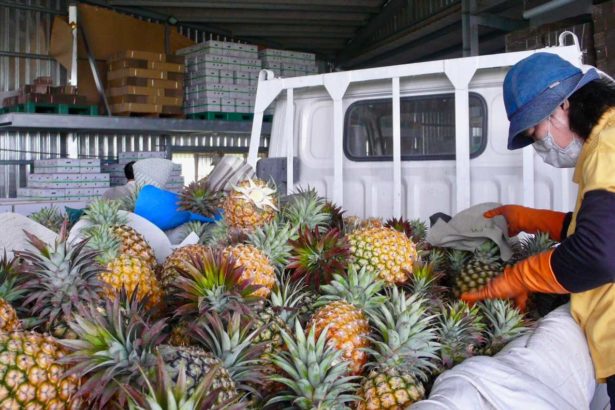
Over 90% of Taiwan's pineapple exports depend on China; is a threefold surge in sales a blessing or a curse?
2019 Agricultural Political Trade War 03"Over 90% of Taiwan's pineapple exports depend on China; is a threefold surge in sales a blessing or a curse?
-
To raise the per-unit yield of double-season rice in Jiangxi, the key lies in changing the "six mores and six lesses" phenomenon
Rice is the most important food crop in Jiangxi, and increasing the per-unit yield of double-season rice is an important way to ensure Jiangxi's position as a major grain-producing region and to ensure that Jiangxi makes a greater contribution to the country's food security. In recent years, although the per-unit yield of double-season rice in Jiangxi has risen steadily, the phenomenon of a relatively low per-unit yield level has still not improved much. Compared with neighbouring Hunan, it is 50-60 kg lower per 667 sq m. Analysis shows that the "six mores and six lesses" phenomenon is the main reason for Jiangxi's low rice per-unit yield. 1. More seeding rate, less seed used. Cultivating
-
Detailed Explanation of the Production Method and Key Technical Points for Odorless Allicin
Garlic is a rather unique vegetable and seasoning, and in particular the allicin it contains can break down the proteins in fish, meat and eggs, making those proteins that are difficult for the human body to absorb become easy for the human body to absorb and utilize, helping digestion and promoting nutrient absorption. However, the odor of allicin is unpleasant. A method for producing odorless allicin stock solution is described below: I. Room-temperature method 1. Process flow: fresh garlic → sorting → crushing → drying → grinding into powder → soaking for deodorization → separation → finished product. 2. Operating method: (1) Material selection. Select mature
-
Introduction to the Polyploid Giant Odorless Garlic Variety
This variety is a polyploid transgenic giant garlic developed by transferring genes from Welsh onion and bitter melon into ordinary garlic. Its bulbs weigh 250-600 g each, with the largest reaching 900 g. Its garlic sprouts grow 60-160 cm tall, with leaves 35 cm long and 8 cm wide, and 8 leaves. Per mu (1 mu = 667 sq m, the same below), it yields more than 2,000 kg of bulbs and more than 300 kg of garlic scapes, with a single scape weighing 50 g. It can be grown as seed for many consecutive years without degeneration, and it has also successfully eliminated the unpleasant bad breath that ordinary garlic causes after eating.
-
Detailed Explanation of Key Points of Soilless Cultivation Techniques for Lilies
Lily Propagation Methods To produce high-quality lily cut flowers, the primary requirement is vigorous, disease-free bulbs. Lily propagation (also called "bulb production") can generally be divided into post-flowering bulb nurturing, bulblet propagation, scale cuttings, bulbil propagation, seed sowing, and tissue culture. Several main propagation methods are introduced here. (1) Post-flowering bulb nurturing, also called large bulb propagation method. When lilies begin to flower, the new underground bulb has already formed, but has not yet developed into a mature "large bulb." Therefore, when harvesting cut flowers, while ensuring flower stem
-
How is the TP stainless steel garlic peeling machine?
Before using the machine, the garlic roots must first be removed (if the roots are not removed, the time will be longer), and the de-rooted garlic should be soaked in water. When peeling, pour about 30 kg of garlic into the machine at one time; after it runs for about 5 minutes, open the discharge outlet and the garlic cloves will come out on their own. After the garlic cloves have been fully discharged, close the discharge outlet, then repeat the above process and pour the garlic into the machine. The feature of this machine is that it has the function of breaking apart garlic bulbs and can be used continuously without stopping. If it is not peeled clean the first time, it can be put through the machine a second time to peel it clean.
-
Soilless Propagation Methods and Key Management Techniques for Azaleas
Propagation Methods Azaleas can be propagated by cuttings, grafting, layering and sowing, among which cuttings and grafting are more commonly used and can maintain the excellent characteristics of the variety. The sowing method is mainly used for cross-breeding and selecting superior individual plants. Cuttings mostly use semi-lignified branches and can be carried out from May to August. River sand, perlite plus peat are often used as the substrate. After inserting, cover the flower pot with a plastic bag and place it in a semi-shaded spot. Within 1 week, spray water once each morning and evening, and thereafter keep the potting soil moist regularly. At a temperature of 20-25°C, most varieties take about 4
-
Soilless Cultivation Methods and Key Technical Points for Azaleas
The characteristic of soilless cultivation is the replacement of soil with an artificially made substrate. Summer azaleas grown soilless have a compact crown structure and abundant flowering; large flower diameter and few pests and diseases. It not only improves flower quality but also greatly reduces heavy physical labor, making it a cultivation method worth vigorously promoting. 1. Preparation of the substrate. Azalea roots are very fine, requiring a loose substrate to facilitate aeration and drainage. Use 1 part vermiculite, 1 part perlite, 1 part river sand, and 1 part coal cinder mixed in proportion. After mixing the substrate, use 0.1% car
条件筛选