-

Experimental Demonstration and Application of Factory-Based Soilless Seedling Raising of Cotton in the Dongtai Area
Factory-based soilless seedling raising of cotton is a seedling revolution in the history of cotton cultivation. It breaks the decades-old cultivation system of raising seedlings in nutrient pots and transplanting them, making cotton seedling raising and transplanting a simple, rapid, time-saving, labor-saving and cost-saving cultivation method, and opening up a new path for cotton cultivation. In 2003, Dongtai City introduced factory-based soilless seedling raising and transplanting trials. In 2004 and 2005, this technology was introduced successively in Tangyang and Luegang for soilless seedling raising and large-area transplanting trials and demonstrations. The details are summarized as
-
Soilless Cultivation Methods and Techniques for Miniature Ficus Bonsai
Ficus is native to China, India and other places, and is commonly cultivated in Guangdong, Fujian and other areas of China. Ficus is very easy to propagate by cuttings. During the growing season, in combination with shaping, cut off a portion of a branch, disinfect it with plant ash, and after the sap has drained, insert the cutting into sand; after one and a half months it will survive and take root. Once the root system grows normally, it can be potted for cultivation and care. After potting, with careful management, after one year of growth the tree shape will be full with luxuriant branches and leaves. In the spring of the second year, soilless cultivation can be carried out to cultivate a miniature bonsai. First, the soil
-
What are the advantages of soilless cultivation for bonsai
Bonsai, especially trunk bonsai, are living sculptural works of art. Only through years of care and management can they achieve deep green leaves, branches full of flowers and fruit, elegant posture and charm, and full vitality, and only then can their ideal ornamental and decorative effect be realized and maintained. If care and management cannot keep up, or are done poorly, even the best trunk bonsai will wither and die due to mistakes in care and management, and their artistic life will come to an end. Therefore, care and management are a long-term and complicated task in the process of creating and maintaining trunk bonsai. Traditional bonsai plants usually
-
The plane tree fluff problem is expected to be solved: Huazhong Agricultural University has cultivated hairless plane trees
It was learned from Huazhong Agricultural University that the university has cultivated hairless plane trees, which is expected to solve the problem of plane tree fluff pollution. The scientific name of the French plane tree is "Platanus", and it has advantages such as fast growth and a large, dense canopy, and is known as one of the "world's five major street trees." But from April to June each year, the seed balls of Platanus scatter and the pappus flies about, not only polluting the environment but also affecting people's health. For this flying fluff pollution, chemical pruning is mostly used in China, that is, spraying chemical agents to promote early shedding of the seed balls. But this method is labor-intensive and time-consuming, and is not easy to promote on a large scale.
-
Golden Blessing Mushroom has good market prospects and great development potential
On the morning of July 31, the Hangzhou Academy of Agricultural Sciences, the Municipal Agriculture Bureau and the Hangtou Town Government held an on-site exchange meeting on new varieties and new technologies of rare edible fungi at the Huangmugang vegetable base in Hangtou Town. Leaders and experts from the Hangzhou Academy of Agricultural Sciences, the Agriculture Bureau, the Science and Technology Bureau and the Association for Science and Technology, as well as agricultural science and technology personnel from the counties, cities and districts of the Hangzhou area, inspected the experimental greenhouse for the rare edible fungus Golden Blessing Mushroom at the vegetable base. According to Zhou Zufa, head of the Hangzhou Edible Fungus Spawn Station, the Golden Blessing Mushroom is a high-temperature mushroom that can fruit at temperatures of 28°C to 35°C
-
How to case Golden Blessing mushroom for high yields? Practical techniques explained in detail
After the Golden Blessing mushroom spawn has fully colonized the bags, they can be buried in soil for fruiting after 3-5 days. Cut away the entire spawn bag or cut off a section about 10 cm wide across the cross-section, bury 5-8 cm deep, place the bags horizontally, facing each other in pairs, with 5 cm between bags, 4 bags per row, 40 per group, then apply casing soil, covering the bags with 3 cm of soil. The casing soil should be granular, not too fine. The day before casing, it is best to adjust the soil to semi-dry and semi-moist. Adjust the moisture of the casing soil over two days, moistening all the soil thoroughly, and carry out the watering under ventilated conditions in the mushroom house. Do not spray water with the house closed. Casing soil moisture adjustment
-
Detailed Explanation of Key Techniques for Growing Fuzzless Peaches
Peach varieties are deeply loved by consumers for their large size, small pits, abundant juice and sweet flavor. In recent years, with the development of nectarine varieties, the development of peach varieties has been somewhat affected because the fuzz on the fruit skin detracts from their external quality. To overcome this shortcoming in the external quality of peaches, we conducted multiple trials on peach varieties such as Yuhualu, Huangjintao, Okubo, Diaozhibai and Qiufengmi, and summarized a set of cultivation and management techniques that reduce the fuzz on the surface of peach skin, thereby improving the external quality of the fruit.
-
What to do when poinsettia leaves turn yellow and drop? Raise the temperature, fertilize frequently, water less
Because the poinsettia's flowers are very beautiful, and its fiery red flower color looks very festive, many flower lovers choose to grow one after seeing it. However, during the growing process, due to improper care or long-term neglect, the poinsettia will get sick, and what follows is yellowing leaves
-
How do you thicken the roots of a honeysuckle bonsai? Prune the thin branches, keep the main trunk, apply extra fertilizer and water less
Honeysuckle is a common potted plant in daily life. Honeysuckle is very easy to grow, but if you want honeysuckle to bloom all over the branches, you must find a way to thicken the roots. How do you thicken the roots of a honeysuckle bonsai? This is related to the usual cultivation methods and pruning. Before the honeysuckle grows tall, you can prune the thin branches of the honeysuckle
-
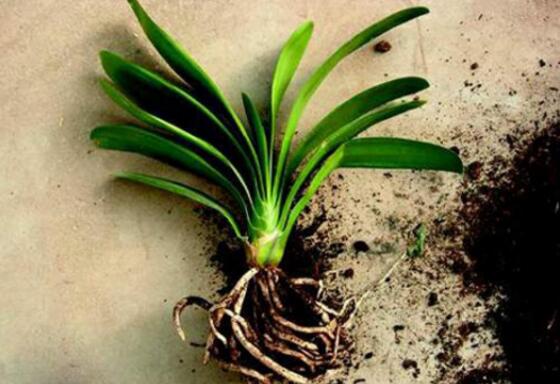
How to prune the leaves of a clivia? Don't prune unless they turn yellow
In daily life, many growers like to keep a small pair of scissors handy, for no other reason than to snip leaves when they have some spare time and cultivate a bit of inner calm. But clivia leaves are quite large, so during cultivation, can clivia leaves be pruned? If so, how should clivia be pruned? On this point
条件筛选