-

Detailed Explanation of the Large Icefish Processing Technology Series (Part One)
Large icefish, also known as noodlefish, was originally widely distributed in the main stream and affiliated lakes of the middle and lower reaches of the Yangtze River. Its flesh is tender and delicious, rich in nutrients, and eating it carries a special fresh cucumber aroma. Large icefish generally has a body length of about 20 cm, with no bones or spines. It is a small, precious fish species with high economic value and is highly popular in domestic and international markets. Two processing methods for large icefish are introduced here: I. Processing of quick-frozen large icefish. 1. Preservation and transportation of raw fish. Large icefish has a small body and thin skin, making it extremely prone to spoilage.
-
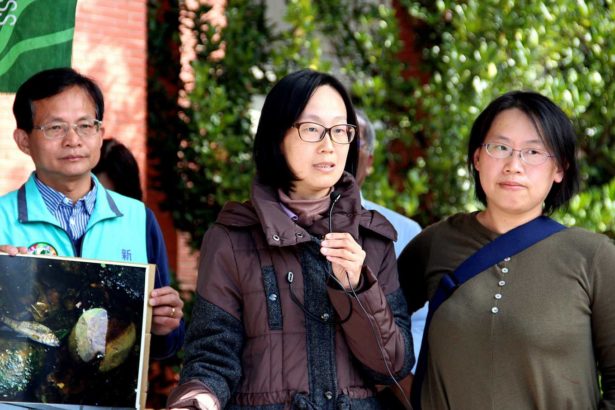
Witnessing the pollution scene! Large numbers of dragonfly nymphs and stream fish die downstream of the factory; the alliance calls on TSMC to keep its partners in line
Witnessing the pollution scene! Large numbers of dragonfly nymphs and stream fish die downstream of the factory; the alliance calls on TSMC to keep its partners in line
-
Using the large-plow furrowing method for clear-cut regeneration of black locust
1. Preparatory work. Large-plow furrowing means using a tractor to pull a large plow to furrow in a clear-cut black locust (Robinia pseudoacacia) site. A tractor with relatively high horsepower must be used. An ordinary iron plow for plowing farmland is sufficient, but a single plow is required. First clear branches and large stones from the site. 2. Plot selection. Large-plow furrowing requires concentrated, contiguous plots, a slope of less than 25 degrees, and a soil layer of more than 30 cm. 3. Technical requirements. The black locust root system is relatively shallow, the main root is not obvious, and the lateral roots are well developed. The main lateral roots are mostly distributed in the surface layer at a soil depth of 20-30 cm.
-
What tree is the large-leaf red-flowered black locust? An introduction to its cultivar characteristics
The large-leaf red-flowered black locust is a multi-purpose black locust cultivar bred in Germany. In 1999, Professor Yang Minsheng of Hebei Agricultural University introduced it to China from the Institute of Forest Genetics and Forest Tree Breeding in Germany. After nearly 5 years of introduction trials and demonstration planting, it was proven that the large-leaf red-flowered black locust has strong adaptability, can grow normally in the suitable areas for black locust in North China, and has shown very high economic value. The large-leaf red-flowered black locust has a fast growth rate, with a diameter at breast height reaching 9.5 cm at 3 years old; a large leaf yield, with pinnate leaves 45-60 cm long, longer than tetraploid black locust
-
How to grow a large-leaf boxwood bonsai? Detailed explanation of shaping and care key points
Large-leaf boxwood is an evergreen shrub or small tree of the genus Euonymus in the family Celastraceae, also known as Zhengmu and evergreen euonymus. Because its leaves stay green all year round, it is also called "evergreen" or "large-leaf evergreen". Large-leaf boxwood can be processed into different bonsai forms such as straight-trunk style, slanting-trunk style, curved-trunk style, and double-trunk style according to the shape of the stump. The branches of young seedlings are soft and can be shaped from a young age. First wire the main trunk, then the main branches and side branches, and pay attention to promptly pruning excess branches. Because its leaves are relatively large, the crowns of small and medium-sized bonsai mostly use an elegant natural
-
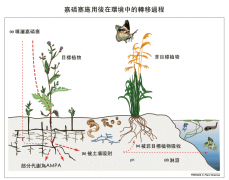
Taiwan, China's pesticide use hits a 17-year high; is China's use large?
Do you know how large pesticide use is? Taiwan, China's pesticide use has hit a 17-year high; come and see what the figures are. A US court ordered a sky-high payout over glyphosate, and chlorpyrifos was banned to protect infants; will Taiwan, China follow suit? China's pesticide use per unit area is at the
-
Technique for Rapidly Cultivating Ball-and-Stem Shaped Nursery Stock of Large-leaf Euonymus through Long-branch Cuttings
Large-leaf euonymus, also known as evergreen euonymus, is an evergreen shrub or small tree of the Celastraceae family. It generally grows 60-90 cm tall, and can reach up to 3 m. Large-leaf euonymus has dense branches and leaves, glossy young foliage, stays green through all four seasons, and is fresh and elegant, making it much loved as a common foliage ornamental plant. Large-leaf euonymus is native to Japan, and is now widely cultivated across the northern and southern provinces of China. It likes light and tolerates shade, and is suited to growing in warm, humid climates and loose, fertile sandy loam; it is also fairly cold-tolerant, and except for non-lignified new shoots sometimes suffering frost damage in winter, it can generally overwinter safely even when planted in the open in northern regions.
-
What are the new perspectives on disease prevention in large-scale rabbit farms? Worth reading
Play down treatment and optimize the rabbit herd. Traditional rabbit farming emphasizes treatment over prevention, often turning a rabbit farm into a sanatorium for sick rabbits. To change this situation, some experts have proposed the "five no-treatment" rule for sick rabbits: do not treat rabbits that cannot be cured, do not treat rabbits whose treatment cost is high, do not treat rabbits whose treatment is time-consuming and labor-intensive, do not treat rabbits whose economic value after recovery is not high, and do not treat rabbits that are highly contagious and harmful. Practice has proved that after rabbit farms implemented this system, the health status of the rabbit herd improved markedly, virulent infectious diseases were effectively controlled, and medical costs
-
Why is Taoyuan Large-leaf Tea so popular among tea farmers?
At the Hunan Provincial Tea Work Conference held on March 26-27, participants frequently mentioned a distinctive tea variety - Taoyuan Large-leaf. It is understood that "Taoyuan Large-leaf" evolved from wild large-leaf tea in the deep mountains of Lujiachong, Taipingpu Township, Taoyuan County. In 1969, senior agronomist Lu Wanjun and others carried out selection, breeding and experimental demonstration of wild large-leaf tea. The selected variety passed scientific and technological achievement appraisal in 1989 and passed the approval of the Hunan Provincial Crop Variety Approval Committee in 1992.
-
What are the techniques for large-scale production of export white bunching onions in the Chongming area?
1 Variety selection Select varieties such as Changbao, Changyue and Chunwei according to the export specifications and timing requirements for white bunching onions. For example, Changyue bolts late and has strong tolerance to heat and cold; it can be planted densely, planted from March to May, and harvested from November to January of the following year. 2 Raising seedlings 2.1 Preparation of the seedbed Seedbed preparation procedure: prepare the field (deep ploughing 350m, freeze the soil clods) -> apply base fertilizer -> plough twice (25cm) -> make beds (bed surface specification 1.5m x 30m). Applying base fertilizer: about 20 days before sowing, apply biological
条件筛选