Detailed Explanation of Large-Scale Rose Planting Techniques
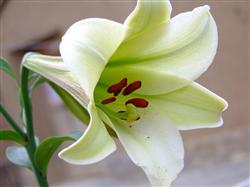
Many netizens have planted lilies or given lilies to family and friends. Today I will introduce the symbolic meaning and characteristics of lilies: The lily is a world-famous flower loved by people from ancient times to the present. Origin and distribution: temperate regions such as China, Japan, North America and Europe. The lily is a perennial herbaceous plant...
 I. Field Cultivation
1. Plot selection: Although soil does not affect the quality of rose oil, it has an enormous impact on the growth and development of the plants, the formation of flowers and the oil content, and directly affects the economic benefits of the grower. Therefore, one should choose soil that is deep, of medium to high fertility, capable of both drainage and irrigation, and neutral or alkaline (slightly acidic is also acceptable). Shady, damp, low-lying land, waterlogged land, and land under tree shade cannot be planted.
2. Rose seedling planting: In the Huang-Huai region, roses have a high survival rate when planted in early winter (November) and early spring (March); transplanting in other seasons is unlikely to survive. Before planting, the land must be carefully prepared, with sufficient farmyard manure applied, and deep plowing and fine harrowing so that the soil is fine and firm. The planting row spacing is generally 2-2.2 cm, and the planting furrow can be opened with an agricultural reverse plow, with a depth of 20-30 cm (depending on the size of the seedlings), and a plant spacing of 0.5 cm is suitable, to ensure they survive the winter safely. After the beginning of spring the following year, the soil should be dug away in stages to help the seedlings sprout and grow. When planting, different varieties must be planted in separate plots; this not only facilitates harvesting and processing by variety, but also avoids confusion of the aroma types of the products, which would affect market sales. This threshold must be strictly controlled, otherwise it will cause endless trouble.
II. Field Management
1. Weeding: Since the seedlings are small, weeds grow very easily, so weeding must be done in a timely manner, ensuring that the seedlings are not damaged while no weeds remain.
2. Water and fertilizer management: Water is the key to ensuring the survival of the seedlings. The soil must have moisture but must not become waterlogged, so watering should be done at the right time to keep soil moisture at around 80%. Fertilizer is the guarantee of seedling growth, so sufficient base fertilizer must be applied before planting, with no less than 2500 kg of farmyard manure per mu. After the branches and leaves grow out, to promote plant growth and development, urea or compound fertilizer combined with micro-fertilizers (phosphorus, potassium, boron, etc.) can be applied once as a top dressing. During the winter dormancy season, farmyard manure or chemical fertilizer can be applied once as a top dressing. In short, the fertilizer needed by the seedlings should be applied in a timely manner according to the fertility of the land and the growth of the seedlings. When fertilizing, applying fertilizer in the planting furrow is beneficial for the plants to absorb it; it must not be too close to the plants or applied directly on the plants.
3. Pest and disease control: (1) Aphids and noctuids: they harm the young shoots and leaves of the plants; spray with 40% omethoate 2000-fold solution or methamidophos diluted with water. (2) Scarab beetles and cutworms: they harm the roots of the plants; poison bait can be used to trap and kill them. (3) Rust disease: there are rust-yellow spore masses on the undersides of leaves and on leaf stems; spray with 50% dithane-stain 1000-fold solution.
III. Harvesting of Roses
Roses planted (counting from November) can have their flower buds harvested after 17 months, and enter full bloom in the third year. The flowering period is from the end of April to late May, with early May being the full bloom period. When picking flowers, the receptacle, petals and calyx all contain oil, with the petals containing the most oil. The oil from different parts has different aromas, and the oil content is highest and the oil quality best at the half-open stage. After fully opening, the oil volatilizes, the content decreases, and the quality declines. The speed at which flowers go from half-open to fully open is greatly affected by temperature. Generally, picking with dew should be finished before 10 a.m.; otherwise, as the temperature rises, fully open flowers cause the oil to volatilize, reducing oil quality and oil yield. Bud picking: the best period is when the tips of the calyx are slightly open, the tips of the buds are turning red, and the buds are about to bloom. After the fresh flowers or flower buds are harvested, they should be held in bamboo baskets or bamboo crates and immediately sent to the local purchasing station for sale or dried. Storing them for too long will cause rot and deterioration, resulting in unnecessary economic losses.
IV. Rose Cultivation Techniques
1. Land leveling: Choose a plot with deep soil, loose structure and good drainage to establish a rose garden, dig holes at a plant spacing of 50 cm and a row spacing of 150-200 cm, with a hole depth of 50 cm, and apply 10 kg of farmyard manure or biological organic fertilizer to each hole.
2. Selecting good seedlings: Vigorous rose seedlings should be selected. Seedlings grown from sprouts should have 2-3 branches; grafted seedlings require a well-developed root system of the rootstock, a stem diameter of 3-4 mm, and a plant height of 30 cm. They should be planted as soon as they are dug up, and seedlings transported elsewhere should be coated with slurry and packaged.
3. Reasonable close planting: As required, about 700 rose seedlings are needed per mu. Because there are fewer seedlings that year, to save land, 1500-2000 can be densely planted per mu; in the second year, the seedlings can be transplanted or sold. Spring planting is carried out in early spring before the roses begin to sprout; autumn planting is carried out from October to December; summer planting is carried out during continuous rainy weather in the rainy season.
4. Scientific management: Carry out intertillage and weeding to keep the soil loose. Fertilization is mainly organic fertilizer. Generally, top dressing is applied four times a year. Around Qingming Festival, human and livestock manure water is applied for the first time, called the sprouting fertilizer, and watering should be done in a timely manner; in late April, when buds are forming or before flower picking, human and livestock manure water is applied for the second time to promote more and fuller flower buds; in May, biological organic fertilizer is applied as a top dressing; in late autumn and early winter, wintering fertilizer is applied to ensure the seedlings survive the winter safely. After flowering in June and during the winter dormancy period, remove senescent branches, diseased and pest-damaged branches, and weak branches to encourage new branch growth. Attention must be paid to pest and disease control during every stage of field management.