-

Lishui, Zhejiang edible fungi exports to South Korea hit a cold spell
It is reported that in 2015, Lishui City, Zhejiang exported 233 batches of edible fungi and vegetables to South Korea after inspection and quarantine, with a value of 14.4 million USD, a year-on-year decrease of 56% in value, and the export value has shrunk by more than half compared with 32.78 million USD in the same period last year. At present, South Korea's exports of edible fungi to our country have achieved
-
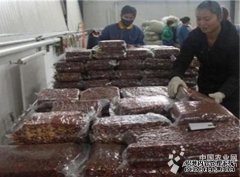
Xinjiang Shawan chili peppers exported to the South Korean market
Now, the chili powder, chili segments, crushed chili and other products produced by Xinjiang Anji Agricultural Development Co., Ltd. have already been exported to South Korea. The business is thriving more and more, local chili growers can sell their products well, surplus labor can work as blue-collar workers in the company,
-
Is the garlic return a normal occurrence or an isolated incident? A review of China-South Korea trade frictions
Since the establishment of diplomatic relations between China and South Korea in 1992, the economic and trade cooperation between the two countries has developed rapidly. By the 20th anniversary of the establishment of diplomatic relations, bilateral trade between China and South Korea had grown from 5 billion USD to 256.3 billion USD in 2012, an increase of 50 times. At present, China has become South Korea's largest trading partner, largest export market and largest source of imports, while South Korea is China's third-largest trading partner and fifth-largest source of foreign investment. South Korean President Park Geun-hye said that China-South Korea trade volume could reach 300 billion USD in 2015. On November 10 last year, Chinese President Xi Jinping and South Korean President Park Geun-hye held a meeting in Beijing, and the two sides jointly confirmed the conclusion of substantive negotiations on the China-South Korea Free Trade Area, meaning that China-South Korea trade is about to open a new chapter.
-
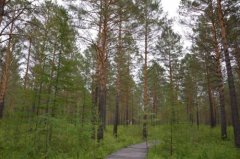
Is Korean Larch the same as Larch? Is Korean Larch timber expensive? How much is Korean Larch per cubic meter?
Korean Larch is a plant in the Pinaceae family, genus Larix. It is distributed in Korea, Russia, and China's Laoyeling mountain area, the Changbai Mountain area of Northeast China, and other places, growing at altitudes of 500 m to 1,800 m, mostly on mountain slopes, moist slopes and swamps, and has not yet
-
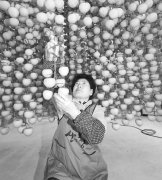
The Origin Story of Korean Dried Persimmons and the Flavor Characteristics of Fuping Dried Persimmons
Whether among the Hakka people or Koreans, the persimmon tree grows very easily, but the ripe fruit does not keep well, and so dried persimmons came into being. The fiery red persimmons hanging all over the branches are a common autumn sight in Korea, and persimmons are also a relatively cheap fruit in Korea. New
-
Is Azalea the National Flower of North Korea? A Detailed Guide to Pot Cultivation Key Points
North Korea is the abbreviated name of the Democratic People's Republic of Korea, a country in eastern Asia, located in the northern part of the Korean Peninsula. North Korea is surrounded by sea on three sides, and mountainous areas account for eighty percent of its total area. Every country has a representative national flower, so North Korea's
-
Is the hibiscus the national flower of South Korea? Tips for growing it successfully in pots
The hibiscus, also known as the plum hibiscus, malaria flower, palm tree flower, morning glory, flower that opens in the morning and falls at dusk, white hibiscus and desert rose, comes in many colors and large blooms, and is a flower commonly used in horticultural varieties, with high ornamental value. The hibiscus represents tenacity and eternal beauty, and has
-
How many years after grafting does a Korean pine bear fruit?
The pine tree is a common sapling in daily life. After a few years of planting, it will grow fruits, which are very delicious and rather expensive, but very popular among people. So how many years after grafting does a Korean pine bear fruit? 1. How many years after grafting does a Korean pine bear fruit? A grafted Korean pine generally grows for 12 years and can then bear
-
How many years does it take before a Korean pine begins to bear fruit?
The Korean pine is an evergreen tree of the Pinaceae family, reaching up to 40 m tall, with bark on mature trees that is grayish-brown or gray with rectangular scaly plates, needle-like leaves, and egg-shaped conical cones. So, how many years does the Korean pine take to bear fruit? 1. How many years does the Korean pine take to bear fruit? The Korean pine bears fruit very late; under natural forest conditions
-
How to Grow Mugwort (Wormwood)? A Detailed Guide to the Planting Method
Mugwort is distributed in Mongolia, Korea, Russia and China. Its whole plant is used as medicine, with effects such as warming the meridians, removing dampness, dispelling cold and calming the fetus. It can also be used as a natural plant dye. So how do you grow mugwort? 1. Site selection and land preparation Choose a neutral soil with deep soil layers, good permeability and rich organic matter. Both sloping land and flat land can be used for planting, and it can also be planted in front of and behind houses or on marginal field corners. First carry out deep plowing, with a plowing depth of more than 30 cm.
条件筛选