-
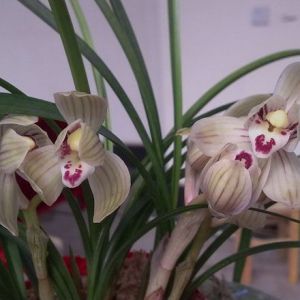
Dianhe Cymbidium (Lianhoumei) Variety Introduction
Dianhe, also known as Lianhoumei. A premium lotus-petal variety of Cymbidium tortisepalum. Leaves are about 0.6-1 cm wide and about 40 cm long, with relatively deep grooves and thick, hard texture. The flower scape is about 15 cm tall. The flower form is dignified and substantial, with vivid colors and stable blooming.
-
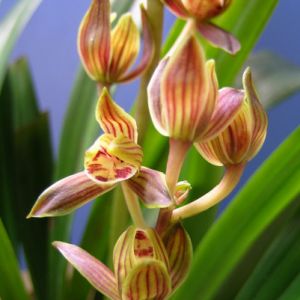
Introduction to the Cymbidium sinense 'Shiba Jiao' Variety and Key Care Points
Cymbidium sinense 'Shiba Jiao': The flowers have lotus-shaped narcissus petals, triangular shoulders, mussel-shell-shaped cupped centers, and a large round lip edged with purple-red spots; the flower color is purple-red. The leaves are upright in posture, broad and long.
-
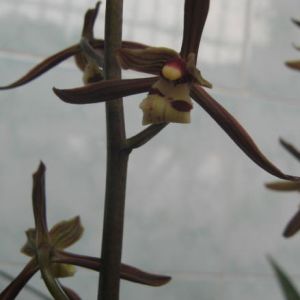
Golden-tipped Cymbidium sinense: An Introduction to the Cymbidium sinense Variety with Golden Leaf Tips
Golden-tipped Cymbidium sinense is a variety of Cymbidium sinense (Chinese orchid), named for the golden-yellow color at the tips of its leaves. It is a perennial herb. It has 4-5 leaves, clustered on oval pseudobulbs, with sword-shaped, dark green leaf blades. The flower stems are upright, rising above the leaves, and bear 7-17 flowers.
-
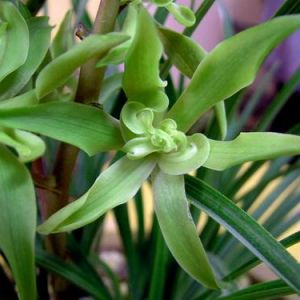
Cymbidium faberi 'Su Shiba' (Jushuixuan) Variety Introduction
History: Originating in the Wudang Mountains, it was purchased by Dai Xianqin, Shen Xinbao, and others from Shanghai in 1996, and Wu Yingxiang was asked to name it. Jushuixuan (also known as Su Shiba) has large flowers, each bloom identical to the next, a very good fragrance, and a very beautiful plant form.
-
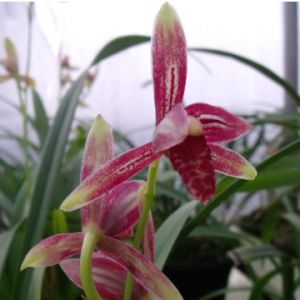
Detailed Introduction to the Characteristics of the Qingshen Red Cymbidium Variety
Qingshen Red - the flowers are extremely vivid and eye-catching, and the actual flowers look even more beautiful. Qingshen Red is a top-grade color-changing red flower with green stems, green flower buds, a lotus-type shape, red pseudobulbs, and bright red young shoots.
-
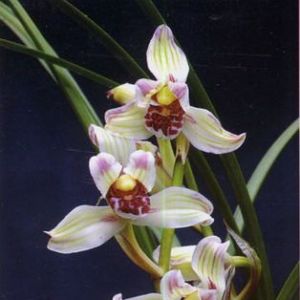
An Introduction to the Variety Characteristics of Qiongjue Cymbidium tortisepalum
The discoverer of Qiongjue was Wu Yingkun, a native of Dujiangyan who had grown orchids for many years and was quite active among the older generation of orchid enthusiasts in Dujiangyan. In March 1990, Wu Yingkun collected a plant from the mountains; its leaves were relatively broad, its flowers were jade-colored, the outer petals were dotted with peach-pink colored patches, and the petals were like cat ears, with extremely distinctive features. After obtaining this plant, Wu Yingkun carefully...
-
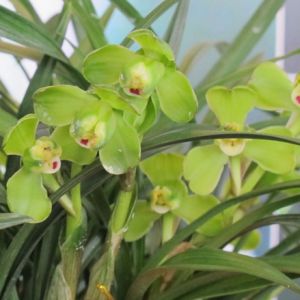
Introduction to the Tingmei Chunlan Variety and Key Care Points
Lotus-type plum-petal flower, with thick petals and thick, substantial leaves in a semi-upright form. The leaf surface has a "left-right. The three outer petals are short and round, the petal flesh is thick, the petal tips have recessed nooks, and the two lateral sepals extend horizontally, forming a "straight shoulder," full of vigor. Silkworm-moth-style hold, split head and joined back, the lip is a liu hai tongue, and the tongue surface has pale red spots. The flower form is dignified. The leaf color is emerald green and glossy...
-
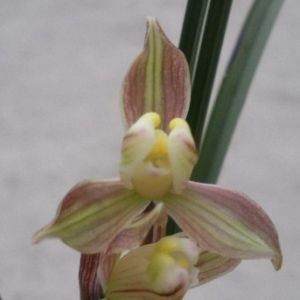
Introduction to the Spring Sword Orchid Piaomen Hongmei Variety
A new Spring Sword Orchid (Cymbidium goeringii var. longibracteatum) variety, Piaomen Hongmei: large flowers, fine fragrance, five petals neatly separated, the lip does not droop, the petals have leech-vein texture, and the color is beautiful~
-
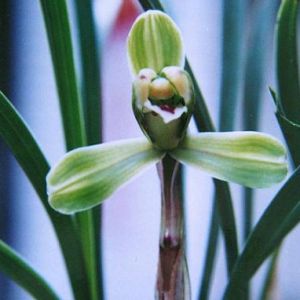
Introduction and Appreciation of the Chunlan 'Yuanji Mei' Variety
Also known as Zhangshan Mei. Selected in 1916 by Chen Yuanji in Lanxi, Zhejiang; formerly called Xintianxing in Yuyao. Called Yuanji Mei in Hangzhou. Leaves semi-arching, leaves of medium width. Leaf tips slightly pointed, leaf flesh thick, glossy; new shoots purplish-red, flower buds purplish-red. The three outer sepals are round-headed, with a slender base, level shoulders, tightly edged, with pale-colored vein lines (leech veins). Prone to wavy curling...
-
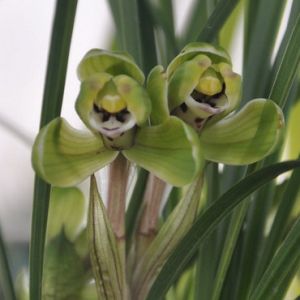
What kind of orchid is Jialong Chunlan? A brief introduction to its variety characteristics
Also known as Jiaolong, selected in 1920 by orchid enthusiasts in Kunshan, Jiangsu. Tight rim and thick flesh, excellent holding petals and tongue, and its structural strength is no less than that of Wangzi. Occasionally plants open with long legs, and the flowers are inferior. The leaf posture is semi-arching, the leaf groove is shallow, the leaf surface is relatively flat, the leaf color is light green, the leaf base is slender, the leaf tip is slender and pointed, the leaf margin serration is extremely fine, the leaf texture is soft and thin, the leaf edge has wavy ridges, and the leaves of new shoots are upright...
条件筛选