-

An Introduction to a New Rapid Drying Method for Edible Mushrooms
A new rapid drying method for edible mushrooms is introduced below. It can greatly shorten the drying time while ensuring product quality. This method takes only 15 minutes to turn fresh edible mushrooms into dried products, with no loss or change in the nutrition and flavor of the edible mushrooms. It is worth adopting in the edible mushroom processing industry. The new rapid drying method uses a high-pressure room-temperature drying system. Fresh edible mushrooms are placed in a sealed dryer, and a high-pressure dry air stream is immediately introduced, causing the air to circulate within the dryer. Due to the flow of the gas, the moisture in the fresh edible mushrooms
-
How to increase the yield of edible mushrooms? Introduction to practical methods
1. Scratching method: When the mycelium has covered the surface of the substrate, gently sweep a clean bamboo broom back and forth over the substrate surface to remove or break up the spindly surface mycelium and old mycelium. After new mycelium is exposed, spray water and cover with plastic film to retain moisture and warmth; primordia will appear and mushrooms will fruit in about 7 days, generally increasing the yield by about 10%. 2. Startling method: After the substrate is fully covered with mycelium, press and pat the substrate surface with flexible wooden slats to vibrate it. When doing this, apply force evenly, do not leave deep marks, and do not damage the substrate surface. This can promote accelerated mycelial growth and rapid differentiation of fruiting bodies. This method is suitable for shiitake (Lentinula edodes), oyster mushroom (Pleurotus ostreatus), phoenix mushroom
-
How to prevent and control green mold in edible mushrooms? A detailed introduction to practical methods
Green mold disease is a major enemy in edible mushroom cultivation. It is prone to occur in large amounts when raw materials are not fresh, raw material handling is improper, sterilization is incomplete, inoculation is not strict, and the spawning environment is not clean, especially combined with acidic, high-temperature, and high-humidity conditions. Its spores spread quickly through the air and reproduce rapidly. If prevention is inadequate or control is not timely, serious consequences will result. 1. Select fresh raw materials and auxiliary materials that have not been rained on and are not moldy. Raw material handling and fermentation sites must be clean and hygienic. 2. During cooked-material cultivation, sterilization standards must be met and sterilization must be thorough; during fermented cultivation
-
Introduction to the New Hericium erinaceus Variety Houza 19
Houza 19 (Suhou 19) was developed by the Institute of Vegetable Crops, Jiangsu Academy of Agricultural Sciences, and passed national certification in 2007. It is suitable for cultivation in the main Hericium erinaceus production areas of China. This variety produces solitary fruiting bodies that are medium in size, 10-25 cm in diameter, round and uniform, head-shaped or clump-shaped, firm, with short spines, milky white, stemless, and densely textured. They can be stored at 4°C for 10-20 days and have a tender, smooth texture with a delicate fragrance. The optimum temperature for mycelial growth is 22-26°C, and the optimum pH is 4-5. The mycelial growth phase lasts 30 days, followed by a maturation
-
Detailed introduction to the H08 variety of lion's mane mushroom (Hericium erinaceus)
H08 lion's mane mushroom. (1) Characteristics: medium-temperature type, large-fruited strain, white or round white, regular round mushroom shape, medium-length spines, strong resistance to contamination and disease, adaptable to cultivation on substrates such as cottonseed hulls or sawdust, suitable for commercial base production. (2) Suitable temperatures: 5-35°C for mycelial growth, 12-26°C for fruiting.
-
Introduction to the Saiwai Pleurotus cornucopiae No. 8 Variety and Its Main Characteristics
Saiwai Pleurotus cornucopiae No. 8: After 5 years of effort and joint research, the scientific and technical personnel of Luzheng Group Company have now bred a new variety of Pleurotus cornucopiae suitable for field cultivation in northern regions - Saiwai Pleurotus cornucopiae No. 8. This marks another new step forward for Luzheng Group in edible mushroom breeding. This variety is now available to the public, priced at 100 yuan per unit.
-
What to Do If Blue Mushrooms Appear? Introduction to the Correct Handling Method
The symptom of blue mushrooms is that when the mushroom body grows, a blue halo forms at the edge of the cap. In severe cases, the entire mushroom body looks as if blue ink has been splashed on it, and it does not disappear even after the mushroom body is harvested. The main causes of blue mushrooms are: (1) Heating the mushroom shed with coal, firewood and other fuels causes carbon monoxide and carbon dioxide poisoning in the mushroom body, stimulating changes in the components within the mushroom body and producing a discoloration reaction. (2) Using poor-quality new plastic film as covering material: due to the temperature difference between the inside and outside of the film and the relatively high humidity inside the film, it is very easy for the film to
-
What are the main varieties of arrowhead? Introduction to common varieties
(1) Shagu is a local variety of Guangdong. The plant height is 70-80 cm, and the spread is 60-70 cm. The corm is oval, 5 cm high, and 4 cm in transverse diameter; both skin and flesh are yellowish white. Each one weighs 40-60 g. It contains a lot of starch, has only slight bitterness, and tastes good. It does not store or transport well. From planting to first harvest is 110-120 days. In February, corms are used for raising seedlings; in July-August they are planted; from December to February of the following year they are harvested. The yield per mu is 1000 kg. (2) Bairou Cigu has a plant height of 70-75 cm and a spread of 80 cm.
-
What are the premium local mushrooms? A detailed introduction to 10 species
Eastern Fujian lies in the northeast of Fujian, backed by mountains and facing the sea, with a typical mid-subtropical maritime monsoon climate. With abundant rainfall and complex, diverse topography and landforms, it is extremely suitable for the growth of various wild mushrooms, and its fungal resources are quite rich. Here we introduce 10 species of premium mushrooms with relatively high economic value. 1. Boletus edulis (porcini) is an extremely delicious wild mushroom that is being domesticated. Its exports reach countries in Europe and America, and it is especially favored by the French and Italians. This mushroom has a thick, fleshy body and is commonly known as the big-foot mushroom. In rainy seasons in spring and autumn each year it grows under broadleaf forest, forming mycorrhizae. Artificial cultivation is very difficult, and current production relies on collecting wild resources, so efforts should be organized to tackle and develop it. It is most abundant in Pingnan County and Fu'an City of Ningde City. At present, artificial domestication mainly relies on artificial promotion techniques.
-
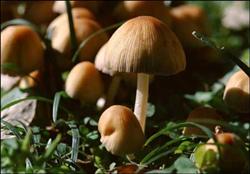
How to prevent red mushroom disease in straw mushrooms? Introduction to practical methods
"Red mushroom disease" may be brown rot, also known as blister disease, wet bubble disease, etc. It mainly affects button mushrooms, straw mushrooms, oyster mushrooms, etc. The disease is caused by a pathogen called Mycogone perniciosa. The main symptoms are: the conidia and chlamydospores of Mycogone perniciosa only infect the fruiting bodies, not the mycelium. When the fruiting body is lightly infected, ...
条件筛选