-
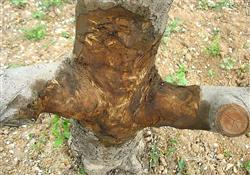
How to prevent and control apple canker in summer? These methods must be mastered
How to prevent and control apple canker in summer? Please introduce the methods. In the prevention and control of apple tree canker, for many years attention has been paid to spring control while summer and autumn control has been neglected, resulting in a high recurrence rate of the disease and making it impossible to eradicate completely. However, according to the occurrence pattern of canker, changing the single spring scraping and chemical treatment to mainly summer and autumn control, combined with spring control...
-
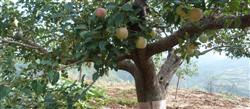
What are the key technical points for summer management of apple trees
How should apple trees be managed in summer? Please explain the methods. In summer, apple trees can be managed by referring to the following methods: 1. Disease and pest prevention. Entering summer, with high temperatures and high humidity, various pathogens and pests are most likely to breed and multiply, so doing a good job of disease and pest prevention is particularly important. Its preventive measures include: comprehensive chemical control, manual prevention...
-
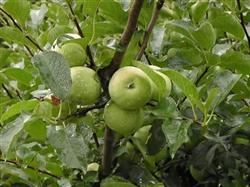
What are the main summer management measures for apple trees?
What are the main management tasks for apple trees in summer? Please guide. The main summer management tasks for apple trees include the following: 1. Fertilizer management. To meet the nutrient needs of apple trees in summer, topdressing should be done in time. Generally, in hot and rainy seasons, fertilizer should be applied in small amounts but multiple times. In summer, topdressing is also needed in the late stage of fruit growth. For young fruit trees, apply Dimijia fertilizer 0.2-0.5 kg per tree; for trees in full fruit stage, apply Dimijia fertilizer 1-1.5 kg per tree.
-
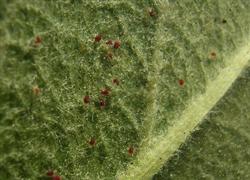
What are the methods for controlling summer mites on apple trees?
How to control mites on apple trees in summer? Please learn about the damage caused by summer mites on apple trees: I. Damage symptoms 1. Hawthorn spider mite. Also known as the hawthorn red spider, it mainly damages the leaves, tender buds and young fruit of apple trees. When leaves are damaged, the red spiders gather on the underside of the leaves, spin silk and form webs, with fine soil particles and eggs sticking to the webs, and many pale white spots appear on the upper surface of the leaves. When the damage is severe, rust-colored symptoms appear on the underside of the leaves, followed by dehydration and hardening, and the whole leaf turns yellow-brown and scorched, resembling being burned by fire. In severely affected orchards, most leaves may drop between June and July, causing a second round of flowering and budding, and severely damaged buds cannot continue to grow and die.
-
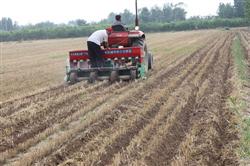
How is the sowing time for summer corn determined? Mastering these methods is enough
How is the sowing time for summer corn determined? Please give guidance. Because the period available for corn growth in summer corn regions is limited, in order to obtain enough heat, allow the corn to fully mature, harvest it in time, obtain a relatively high yield, and not delay the normal sowing of the following wheat crop, the sowing time for summer-sown corn should be as early as possible. That is, winter wheat...
-
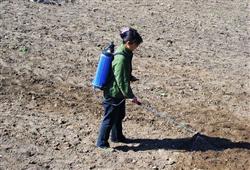
How can weeds be controlled effectively after sowing summer corn?
What is the best way to control weeds after sowing summer corn? Please give an introduction. Summer corn is generally sown in early June. During this period, temperatures are relatively high, and weeds grow quickly. Generally, 10 days after sowing, the peak of emergence is reached, and after 15 days, the number of emerged weeds can reach 90% of the total. Because corn plants are small during the seedling stage, they are vulnerable to weed damage. If not controlled in time, it can very easily...
-
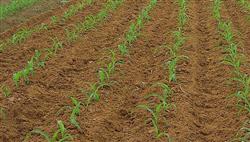
What are the precautions for sowing summer corn?
What should be noted when sowing summer corn? Please give some guidance. When sowing summer corn, note the following: 1. Delay sowing appropriately. The best sowing period for summer corn is from June 20 to 30, which avoids high temperatures during tasseling and helps achieve high yields. Corn should not be planted in successive cropping. After sowing, use one bottle of Yunongsi per mu, diluted in 100 jin of water, and spray to kill weeds. ...
-
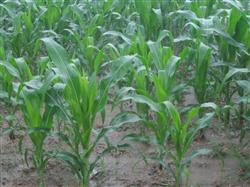
What should be noted when applying herbicides to summer corn?
What should be noted when applying herbicides to summer corn? Please explain. Under no-till direct seeding conditions, weed control in summer corn fields becomes more difficult. First, the shading of wheat straw and wheat stubble reduces the control effect of herbicides; second, weeds left over from the wheat field make the one-time "pre-emergence" effect unsatisfactory. In fields with wheat stubble...
-
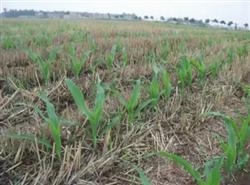
What are the methods for controlling pests and diseases in summer corn at the seedling stage
Which pests and diseases need to be controlled in summer corn at the seedling stage? Please introduce the control methods. The following pests and diseases need to be controlled in summer corn at the seedling stage: 1. Seedling-stage pest control. The main pests at the corn seedling stage are: armyworm, cotton bollworm, small brown planthopper, thrips, Swedish fly, etc. To control armyworm and cotton bollworm, 5% beta-cypermethrin or 2.5% cyhalothrin 50-75 g/mu can be used, sprayed with 30 kg of water. For the control of Swedish fly, when corn has just emerged (i.e. one leaf and one heart), spray 15% beta-cypermethrin·chlorpyrifos emulsifiable concentrate 50 mL per mu. If damaged plants appear in the field, those with severe damage should be pulled out promptly, and for lightly damaged ring-shaped plants, the tip of the plant should be cut off. To control the grain mealybug, use 50% phoxim emulsifiable concentrate 500-1000 mL/mu or 48% Lesiben emulsifiable concentrate 200-400 mL/mu for root drenching.
-
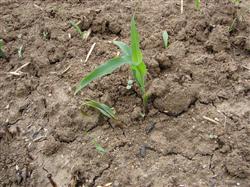
What are the key points for summer corn seedling-stage management
What should be paid attention to during the summer corn seedling stage? Please give an introduction. During the summer corn seedling stage, the following points should be done: 1. Check seedlings and fill gaps to prevent missing seedlings and broken rows. To ensure full stands, seedlings should be checked and gaps filled in time. Use early-maturing varieties after sprouting for reseeding, or before the seedlings reach the 4-5 leaf stage, transplant seedlings with soil in the afternoon or on cloudy days to fill gaps. When corn has 3-...
条件筛选