-
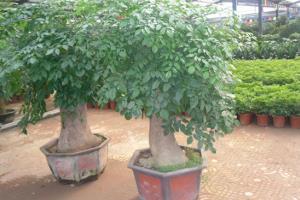
Money Tree Growing Methods and Precautions: Temperature, Humidity, Light, and Water Are Indispensable
Temperature, Humidity, Light, and Water Are All Essential: Money Tree Growing Methods and Precautions
-
For winter indoor gardening, choose these 5 potted plants: natural humidifiers that also purify the air
In the past few days, friends in the north have been turning on their heating one after another, and once the heating is on, the home becomes even drier. The editor has also had badly chapped lips recently. In fact, potted green plants...
-

What are the precautions for aquaculture in hot and humid weather?
Entering July, various regions will often experience hot, humid and rainy weather, which has brought adverse effects on the aquaculture industry in this region, so scientific management of aquaculture should be strengthened in a timely manner....
-
What are the temperature and humidity requirements for gosling rearing?
Temperature requirements for gosling rearing: Geese are warm-blooded animals, but goslings are small in size, have sparse down, and their thermoregulatory function is not fully developed, so they are very poorly adapted to low temperatures and sudden temperature changes.
-

How to prevent and control sesame diseases in hot and humid weather
Recently, some farmers have reported that some sesame plants show leaves curling upward and wilting, some report that sesame leaves wilt rapidly from the top downward, and others report that sesame leaves wither from the bottom upward. What diseases are these exactly? The farmers cannot figure it out either, and they are all asking agricultural technicians for technical guidance, telling them how to prevent and control these diseases. From the current climate factors, high temperatures accompanied by humidity easily trigger sesame diseases, especially in sesame fields with poor drainage, low-lying terrain, or continuous cropping, which are more susceptible to disease. From the sesame symptoms reported by farmers in various places
-
How to Cope with Low Temperature and High Humidity During the Late Silkworm Stage
When low temperature and high humidity occur during the late silkworm stage, heating should be the main measure, raising the temperature to lower the humidity in the silkworm rearing room. The specific methods are as follows: 1. Heat the silkworm rearing room, and after the temperature rises, open the doors and windows appropriately to ventilate and remove moisture. 2. Prevent the silkworms from eating tender leaves, wet leaves, and immature mulberry leaves; appropriately reduce the amount of mulberry given each time, and do not let leftover leaves accumulate, so as to prevent the silkworm bed from becoming cold and damp. 3. Use more moisture-absorbing and drying materials such as lime to keep the silkworm bed dry. 4. During cold, rainy seasons, after the mulberry leaves are picked, store them for a certain
-
What are the suitable temperature and humidity for pear storage?
The optimal storage temperature for 'Huangjin' and 'Fengshui' pears is 0°C ± 1°C. During storage, the storage temperature should be kept stable, with temperature fluctuations not exceeding ± 1°C. 'Huangjin' and 'Fengshui' pears should be stored at 90%-95% relative humidity; when stored for more than 4 months, the relative humidity should be maintained at 95% throughout. Appendix A-1 Annual Pear Pest and Disease Control Calendar Period Control Target Control Measures Mid-February Spider mites, fruit borers, pear bud moths, yellow whiteflies, scab, globular scale insects After annual or biennial pruning, scrape the coarse bark from the trunk, main branches and scaffold branches, and the rotten bark at diseased scars; the debris
-
High temperatures and high humidity: be on guard against Haemophilus parasuis disease
As temperatures rise and humidity increases, the incidence of bacterial diseases in pig herds will rise, and there is all the more need to be on guard against Haemophilus parasuis infection. Haemophilus parasuis infects only pigs and can affect young pigs from 2 weeks to 4 months of age, mainly causing disease around weaning and during the nursery stage, usually seen in pigs of 5 to 8 weeks of age, with an incidence rate of 10% to 15%, and in severe cases the mortality rate can reach 50%. Acute cases often first occur in pigs in good body condition. Affected pigs have fever (40.5 to 42°C), depression, reduced appetite, difficulty breathing, abdominal breathing
-
What is the most suitable temperature and humidity inside a snake enclosure?
Snakes are ectothermic animals, and changes in temperature greatly affect their growth and activity. Therefore, controlling the temperature and humidity inside a snake enclosure within the range suitable for snake growth and activity is another key issue in artificial snake farming. Generally, a temperature of 20-30°C is most suitable for the growth and reproduction of snakes. If it falls below 10-13°C, snakes curl up and become inactive; if in an environment above 40°C or below 0°C, weak and thin snakes will die in large numbers. So, in the process of artificially raising snakes, special attention must be paid to the outside
-
How to prevent rice sheath blight? Beware of high temperature and high humidity weather
Sheath blight, also known as banded leaf blight, has a great impact on the growth and development of rice. It not only weakens the absorption capacity of the root system, but also affects the photosynthesis of leaves, resulting in an increase in empty and shriveled grains, a decrease in 1000-grain weight and a decline in yield. Therefore, attention should be paid to the prevention and control of sheath blight in production. The following introduces the main symptoms, occurrence characteristics and control methods of this disease for reference. Main symptoms When rice leaf sheaths are infected, small dark green water-soaked spots with blurred edges appear near the water surface, later expanding into oval or cloud-like shapes, with the center grayish green
条件筛选