-
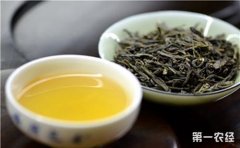
Tea has high nutritional value, so it is too wasteful to throw it away after brewing; the research station promotes healthy tea leaf powder drinks
Is it wasteful to throw away tea after brewing when it still has nutritional value? The Tea Research and Extension Station promotes healthy tea leaf powder drinks. Isn't this better? You can take a good look at it.
-
Organic commitment: Healthy Times founder's 36 years of unwavering dedication
No one knows exactly when it started, but when people go out shopping these days, besides checking whether something is fresh, they also pay attention to whether it is organic. The reason is that modern people care more about health and pursue pure, natural, uncontaminated food. This is especially true for food given to babies, and mothers place even more importance on organic options.
-

Healthy Package technology can reduce fertilizer and pesticide use in facility agriculture
In recent years, China's use of chemical fertilizers and pesticides has shown a double-growth trend. As an agriculture-related high-tech enterprise, Liaoning Weike Biological Engineering Co., Ltd. upholds the concept of building a green ecological civilization for the benefit of future generations, and has formed a team led by American biological pesticide expert Li Shifu
-
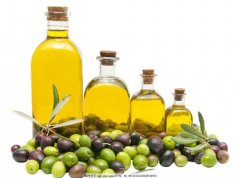
How should you eat olive oil to make it healthy and suitable?
Which kind of oil do you buy? Do you always buy very expensive oil? Actually, you do not need to. Let us take a look at this article below and see that some oils are expensive yet not worth the price. Choosing expensive olive oil to cook food is not necessarily healthier, beware of improper
-
Cotton Target Price Reform Will Promote Healthy Industry Development
Since 2004, China's cotton price adjustment system, built around measures such as the temporary purchase and storage policy, the agricultural subsidy system, and import and export regulation, has achieved the goals of increasing farmers' efficiency and raising agricultural workers' incomes, and to a certain extent has
-
Sustained and healthy development of leisure agriculture requires building a long-term mechanism
Leisure agriculture is a new type of consumer business and an important livelihood industry that has emerged in China in recent years. It has made positive contributions to increasing agricultural value and efficiency, raising farmers' employment and income, promoting rural prosperity and stability, and supporting sustained economic and social development. Facing new circumstances and new tasks, we need to adapt to the situation
-
Healthy urbanization must hold the bottom line and avoid mistakes
To achieve healthy urbanization, we must grasp the key bottom lines, and these bottom lines are determined by decision-making errors with two types of characteristics. That is, rigid errors and vicious circles. Urbanization is an incomparably complex mega-system, involving society, economy, ecology, the present
-
A healthy grain market cannot function without policy reform
This year's domestic grain harvest was bumper, but farmers are hardly pleased, because the sharp drop in grain prices could cause their incomes to fall steeply. Since early autumn, prices of corn and wheat in major grain-producing areas have all declined to varying degrees. The drop in corn prices has been pronounced, with farm-gate prices
-
Quality and safety of veterinary drugs receive high attention, promoting healthy industry development
On August 26, the National Symposium of Key Veterinary Drug Enterprises was held in Qingdao. Vice Minister of Agriculture Yu Kangzhen emphasized at the meeting that the quality and safety of veterinary drugs concerns the healthy development of the breeding industry and the quality and safety of livestock products, and enterprises must establish a correct development philosophy and continuously improve the quality of veterinary drugs
-
How can the rural property rights transfer and trading market develop in a healthy way?
The rural property rights transfer and trading market includes both an intangible market and a tangible market. The former began to develop and grow after farmers' contracted land use rights were allowed to be transferred in the mid-1980s, especially after the restructuring of township and village enterprises in the mid-1990s. At present, the widely existing transfer of contracted land in rural areas is mainly carried out through the intangible market.
条件筛选