-
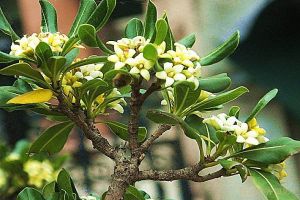
How to Propagate Pittosporum? A Detailed Guide to Common Pittosporum Propagation Methods
Pittosporum comes in many varieties, and it has an extremely strong adaptability to climate and many benefits of its own. Besides being ornamental, it can also absorb sulfur dioxide, and on top of that it can stop bleeding and disperse blood stasis, so it can be said to combine multiple functions in one, which is why people now tend to plant it in their gardens. Generally speaking, pittosporum is extremely easy to propagate. So if you have the idea of growing it, you can also start raising it from its youth. Below we will explain exactly what the specific methods look like.
-
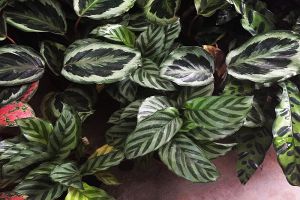
What are the common varieties of prayer plants? A detailed guide
They are herbaceous green plants with an endless variety of shapes and numerous cultivars. Their leaves generally have bright, dazzling, beautifully patterned surfaces, and they are mostly placed indoors for viewing, making them a highly ornamental group of plants. Let us take a look at the many different kinds of them together.
-
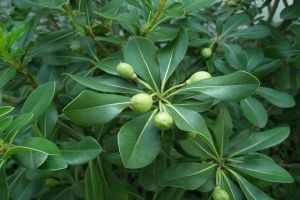
How to Grow Pittosporum tobira? Detailed Guide to Cultivation Methods and Precautions
Pittosporum tobira is a shrub-type plant with a very wide distribution, and with the advancement of landscaping techniques, more and more people have started growing this plant at home. Many people are particularly fond of it, but sometimes, due to their own carelessness or a lack of landscaping knowledge, they don't understand how to grow it or what to pay attention to. So today let's talk about these points.
-
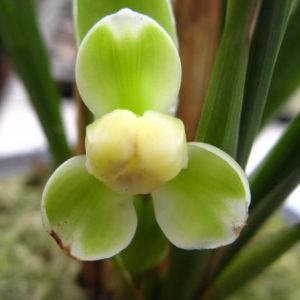
Cymbidium goeringii 'Sanyuan Baimai' cultivar characteristics and care guide
A new Cymbidium goeringii cultivar from Mount Emei, Sichuan, with intensely fragrant flowers, three outer petals shaped like a ping-pong paddle, a rounded (guotou) head, thick and waxy petal texture, a beautiful center, and a Ruyi tongue.
-
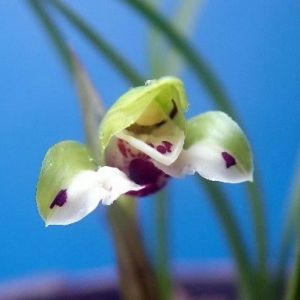
Detailed Guide to the Characteristics of the Snow Butterfly Cymbidium goeringii Variety and Its Planting and Care Methods
Snow Butterfly was discovered by teacher Sun Xuejin in Shanghai in the spring of 1983. This flower has three short, round, neat petals, with the main petal forming a cap, three red blocks in a straight line, green coloration on the flesh-hugging bud sheath, and an elegant plant form. It is a rare treasure among the lotus-petal butterfly forms of Cymbidium goeringii. In 2013, it bloomed for the third time at Ye Renjie's place. At present, very few survive, making it extremely precious.
-
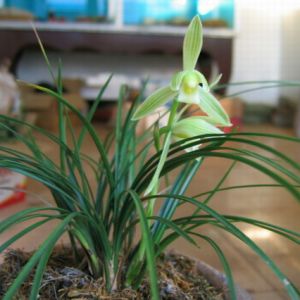
What are the eight traditional varieties of Chinese Cymbidium (Chunlan)? A detailed guide to the classic famous cultivars
The leaves are small and slender like pine needles, hence the name Songmao Su. This flower is easy to grow, has a high sprouting rate, and is not expensive. The plant stands less than a chi tall, small and exquisite, with pure white flowers, elegant and delicately fragrant. It is excellent for a desk display.
-

-
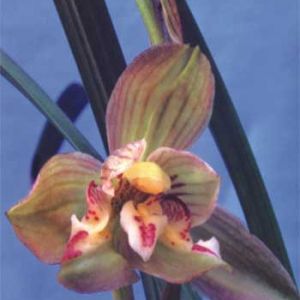
How to grow orchids? A beginner's guide to the basics
Each growth has 4-6 leaves; leaves upright, dark green, 1.1-1.6 cm wide, up to 55 cm long, leaf margins finely toothed, leaf surface occasionally mottled, leaf tips acuminate or acute.
-
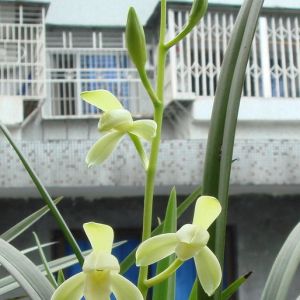
Characteristics and Care Guide of the Wuyue Su Jianlan Variety
Discovered in the 1990s somewhere in Fujian near Lishui. A Jianlan (Cymbidium ensifolium) su (plain-color) variety cultivated by the orchid enthusiast Wuyue. The leaves are relatively upright. The flower holds very well; because the leaves are upright, the scape at most rises slightly above the foliage. The flower form of this variety is not stable enough: in hot weather the form is good and the flower holds exceptionally well, while in cool weather the form is somewhat poorer and the petals may even curl.
-
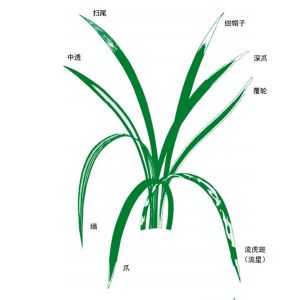
A Guide to Appreciating Orchid Leaf Variegation and Leaf Shapes
The white or yellow patches and patterns that appear on the leaves of Chinese orchids (Cymbidium) are called "yi" (variegation), and orchids cultivated for the changing patterns on their leaves are called "yi orchids" (variegated orchids). According to the standards of Japan and Taiwan, China, there are as many as 35 types of variegation patterns. Each type of pattern is called 1 yi; those with multiple patterns and spots are called "comprehensive yi," but on the same leaf...
条件筛选