-
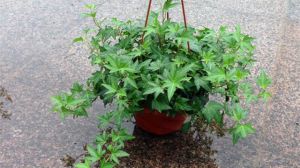
A Detailed Guide to Growing English Ivy in Water
For growing English ivy in water, it is best to use young shoots with aerial roots and place them in a transparent container to root. Change the water every 2-3 days, and the water must be clean enough; let it receive diffused light and avoid the strong midday sun. During the growing period, change the nutrient solution every 2-3 weeks. Just be careful that when changing the water or nutrient solution, you must not touch the plant's roots.
-
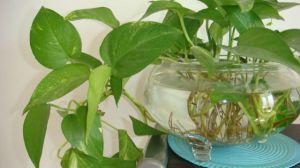
How do you grow pothos in water so it grows fast? A detailed guide to care techniques
If you want water-cultured pothos to grow fast, pay attention to four aspects: first, change the water promptly; after roots develop, change the water once a week, and after new leaves sprout, change it once every 10 days. Second, provide indirect light: let it receive 10 hours of scattered light, and it must not be exposed to strong direct sunlight. Third, mist appropriately, spraying water on the leaves often to raise humidity. In addition, promptly prune old roots and rotten roots.
-
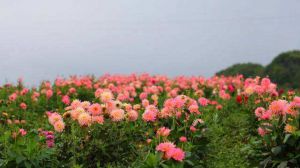
A Detailed Guide to Dahlia Planting Methods and Cultivation Techniques
There are three ways to plant dahlias. Division propagation: choose healthy tuberous roots, cut the tuberous roots with buds apart, and then plant them; cuttings: choose plants in good condition, cut stems as cuttings, and insert them into growing medium to cultivate; growing from seed: after treating the seeds, place them in a seeding tray, and once they grow into seedlings, transplant them.
-
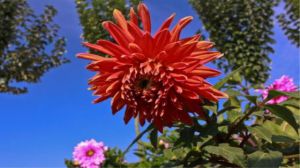
When to plant dahlias? A detailed guide to the best planting time
In fact, dahlias do not have a fixed planting time, but spring is usually the best time to plant them. When planting, it is best to keep the temperature between 10-25°C and use loose, well-drained sandy soil.
-
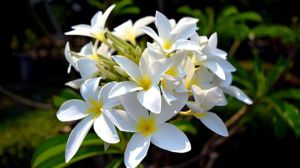
How to care for lilies after the flowering period? A detailed guide to post-bloom care
After flowering, first shape and prune the lily, preferably in the morning or evening; then reduce watering to prevent root rot; next, pause fertilizing - do not fertilize after flowering; finally, keep it warm in winter, with the ideal temperature between 16 and 24, and never below 5 degrees.
-
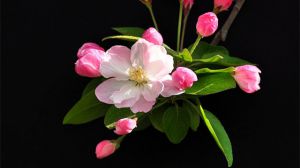
How to grow crabapple flowers? Detailed guide to cultivation methods and precautions
Soil: It is best to use loose, well-draining soil, which can be prepared with leaf mold, peat soil, and river sand. Watering: There should not be excess water in the pot, nor should it be too dry; keep it in a moist state. Light: In summer's high temperatures, shade and cooling are needed; in winter, give it plenty of sunlight. Fertilizing: In autumn, focus on phosphorus and potassium fertilizers; during the bud stage, apply fully decomposed organic liquid fertilizer.
-
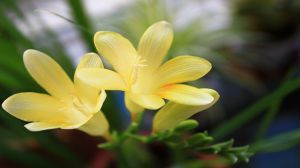
What Season Do Orchids Bloom? A Detailed Guide to Blooming Periods
There are many varieties of orchids, and different types bloom at different times. For example, Cymbidium goeringii blooms from January to March; Cymbidium sinense blooms from December to February; Cymbidium ensifolium blooms from May to October; Cymbidium faberi blooms from March to May, and so on. In addition, the exact blooming time also depends on the region; with different climates, their blooming times vary slightly.
-

What is the difference between moss rose and sunflower? A quick guide to tell them apart
Appearance differences: moss rose has a small flower disc and comes in many colors, while sunflower has a large flower disc and is only yellow; seed differences: moss rose seeds are not edible, while sunflower seeds are edible; effect differences: moss rose can treat various external injuries, while sunflower is mainly used to lower blood pressure and blood lipids; flowering period differences: moss rose blooms only in June and July, while sunflower can bloom in both summer and winter.
-
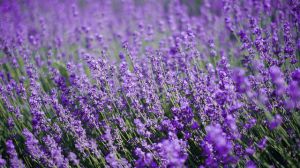
When Does Lavender Bloom? A Detailed Guide to Its Flowering Period
Lavender generally blooms from June to August, but with good care during the flowering period it can bloom even better. During flowering, water appropriately so the potting soil stays on the dry side; provide plenty of light and it can be kept in a bright spot indoors; keep the temperature suitable, with 26 to 32 degrees being optimal; and supplement with fertilizer, but do not apply nitrogen fertilizer.
-

Don't know how to care for succulents in August? Keep this complete four-season care guide
Climate conditions across the country cannot be generalized. This article is for reference only. Specific care should be combined with local conditions. January cultivation focus: give a small amount of water. Environmental conditions: at the end of winter, the climate is rather cold, and the growth of succulents...
条件筛选